Likeness
Notes from beside the image
A Shadow Taken began because I saw someone post about an artifact they had found while exploring an old piece of property.
It wasn't a daguerreotype.
But the idea caught.
What if someone found an old photograph that had never been meant to be found?
I started researching early photography.
That's how I found daguerreotypes.
And that's how A Shadow Taken began.
At the center of the novel is a young woman in the 1850s who has her likeness captured in a daguerreotype and later buries it because she does not want anyone to see it.
More than a century and a half later, someone digs it up.
Then the image spreads.
People enlarge it, restore it, colorize it, speculate about it. Other images surface. Museums become interested. Descendants are found. Technology begins making her face do things the woman herself never did.
And she cannot say no to any of it.
One of the questions beneath the book has become:
How much of your own likeness do you actually own?
And what happens to that ownership when you're dead?
Before today, I had read a great deal about daguerreotypes.
I knew they were made on polished silver-coated copper. I knew the surface could behave almost like a mirror. I had read descriptions of the image seeming ghostlike, barely there from one angle and suddenly visible from another.
I had written about that effect.
I had never seen it.
Then I walked into the Poe Museum.
And there they were.
Several actual daguerreotypes.
Poe. Women he loved. Members of his family. Faces from almost exactly the photographic world I had been trying to imagine for the novel.
I moved in front of one.
The face faded.
I shifted again.
It appeared.
Another angle, and it was almost gone.
Then there it was again.
That was the moment all the research stopped being theoretical.
I had read that a daguerreotype could feel almost like a ghost image.
Today I watched one become a ghost.
And then come back.
I cannot overstate how profound that felt while writing a novel built around exactly that object.
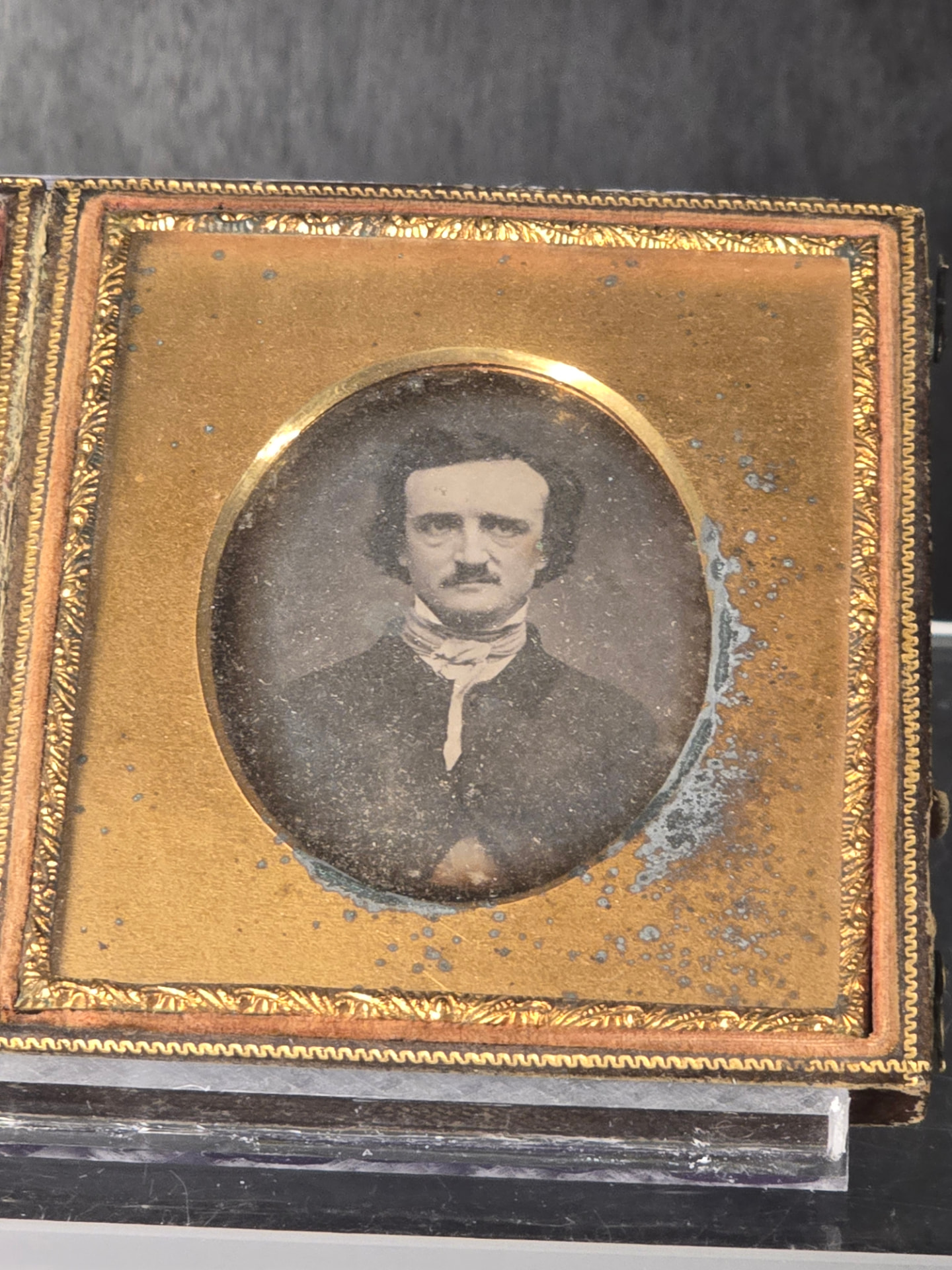
And then the museum handed me another problem.
One of Poe's photographic likenesses was shown to Elmira Shelton, the woman he'd loved when he was young and would become engaged to shortly before his death.
She did not think it looked like him.
Poe's sister Rosalie looked at the same image and considered it one of the best likenesses of her brother.
Two women who knew him intimately.
Same photograph.
Same face.
One sees Poe.
One doesn't.
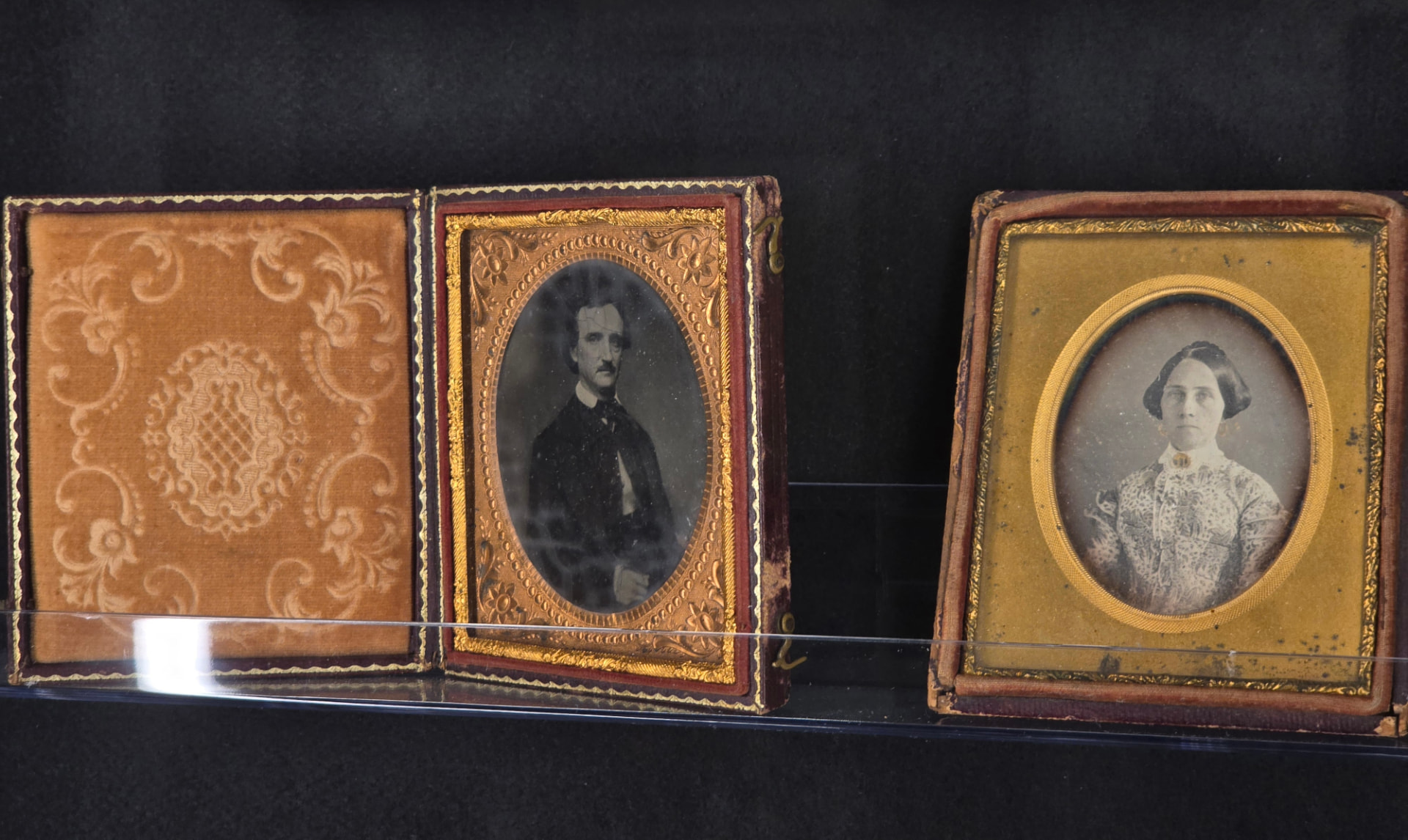
And Poe cannot settle the argument.
He cannot tell us which image felt most like him. He cannot tell us whether he would want strangers staring at his face nearly two centuries later. He cannot decide which of his possessions belong behind glass.
Other people decided.
His manuscripts survived.
His watch survived.
His furniture survived.
His socks survived.
His nail file survived.
Now we look.
That is exactly the territory A Shadow Taken keeps pulling me toward.
A likeness can outlive the person inside it.
And once it does, the living begin making decisions.
What gets preserved.
What gets displayed.
What gets reproduced.
What gets restored.
What gets altered.
What gets believed.
Now the technology can go further. A still image can be animated. A face can speak. A voice can be invented. Someone who has been dead for a century can appear to say things they never said.
Where is the consent in that?
Where does ownership end?
Who inherits a face?
I don't know.
That's why I'm writing the book.
But today, standing in front of those shifting silver images, I understood the question differently.
A daguerreotype does not simply preserve a person.
It makes you search for them.
And sometimes, even the people who knew them best cannot agree on who they see.