I Thought I Knew Edgar Allan Poe
Richmond, Virginia · September 2026
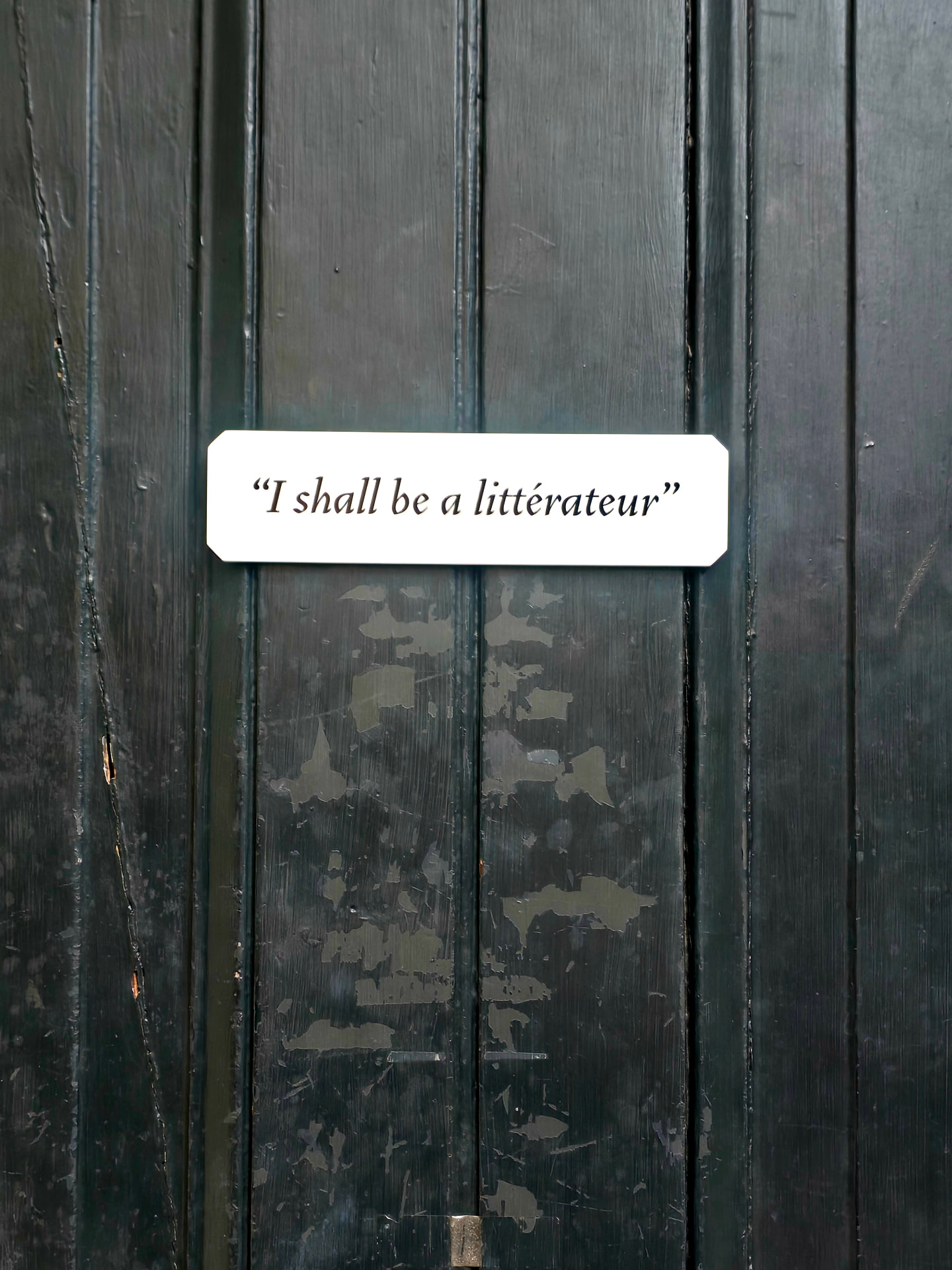
I thought I knew Edgar Allan Poe.
He was my first favorite author. The first writer I remember reading because I wanted to, and then wanting more. I loved the melancholy of him. I still do. There has always been something about art willing to sit with grief, darkness, longing, death, and the uncomfortable corners of being alive that makes me want to stay with it a little longer.
I fell in love with poetry before I fell in love with prose. Poe came first. Emily Dickinson followed soon after.
Both eventually left fingerprints not only on my writing, but on this website. The library in When Walls Weep is called Marginalia. The Margins here have a history too.
From the Margins — Why I Write in the Margins
So Poe has been with me for a long time, which is why Richmond surprised me.
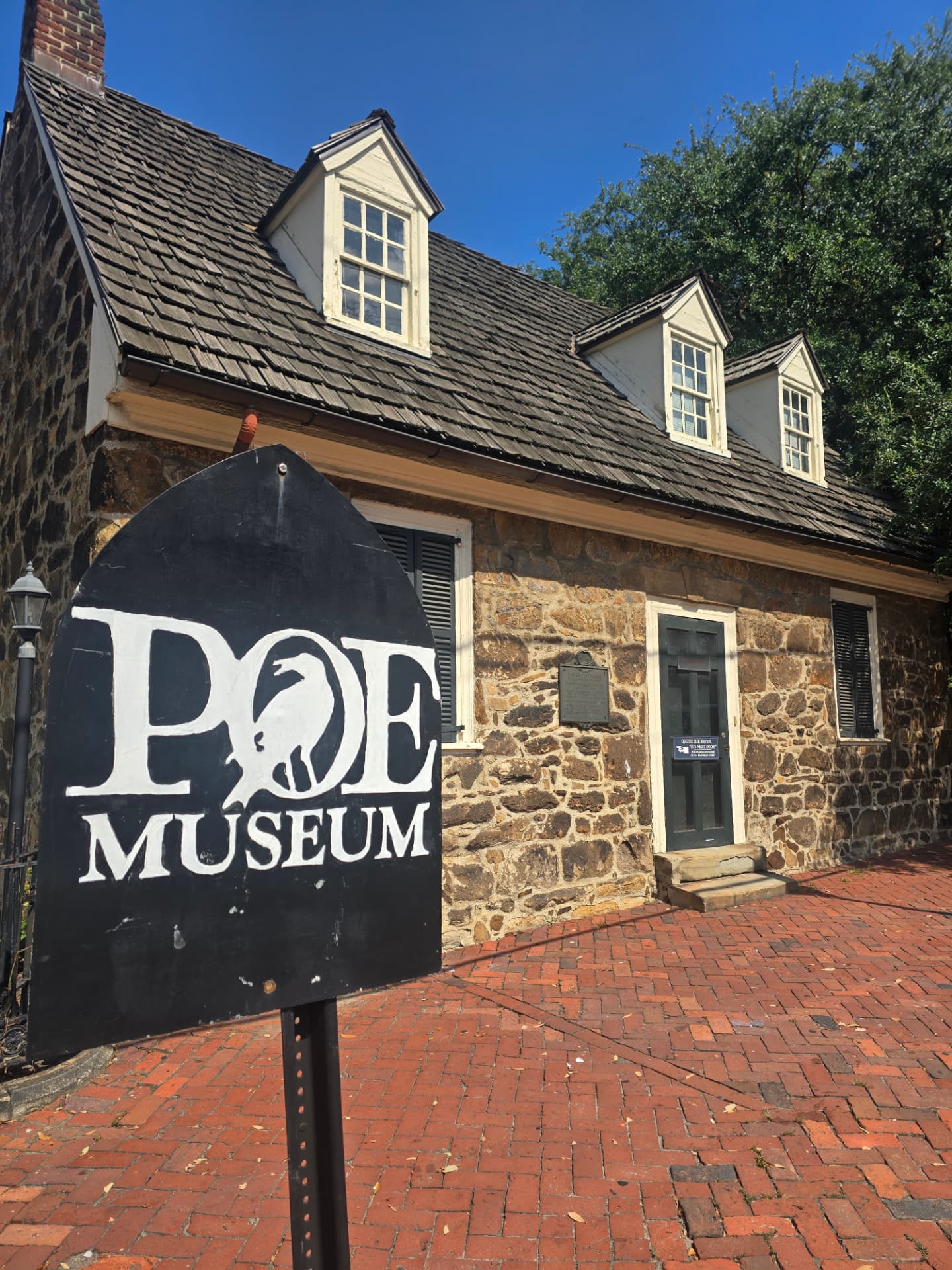
I had about thirty hours there and an afternoon to wander. Going to the Poe Museum wasn't really a question. I went because I thought I knew Edgar Allan Poe.
It turns out I knew his work.
I didn't know him.
There is a strange intimacy to seeing the ordinary things that belonged to someone who has become anything but ordinary.
His childhood bed is there. Beside it, I learned that as a boy Poe would wake from nightmares afraid that someone was in the darkness watching him.
And then I was standing there looking at the bed.
I couldn't help imagining little Edgar Allan Poe lying in that exact spot, awake in the dark, staring into a corner because he was certain something was staring back. Before he learned to write darkness so well, apparently he was afraid of it.
His childhood world survives in fragments too. Dark carved wood. Ornate furniture. Strange, beautiful objects with enough character to suggest stories of their own.
Everything had soul. Even the chairs.
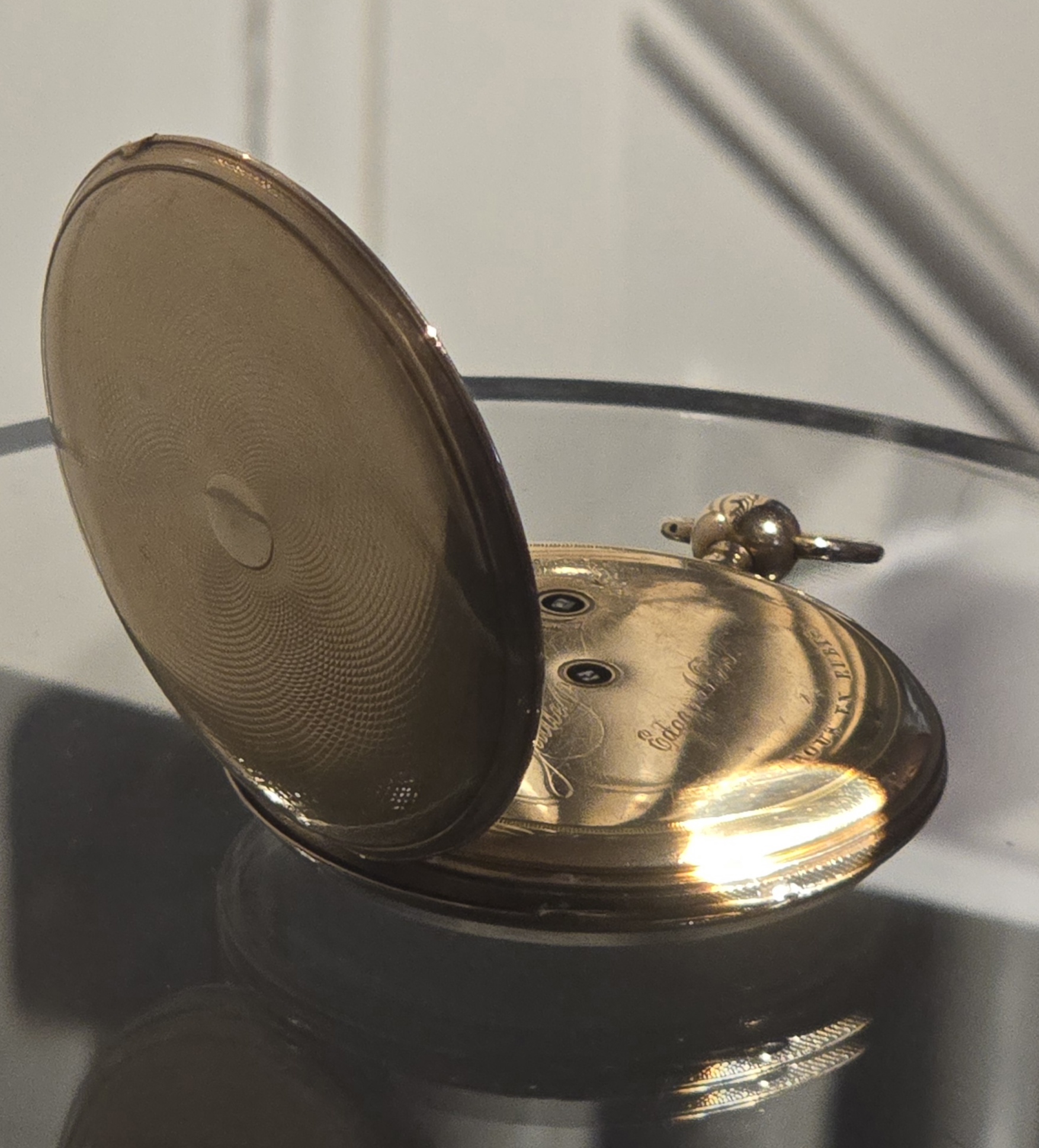
Then I found his pocket watch.
I collect watches. I have a lot of them, so seeing Edgar Allan Poe's actual pocket watch would have stopped me anyway. It is beautiful, and his name is engraved inside.
Then I learned that the sound of his own pocket watch helped inspire The Tell-Tale Heart, one of my favorite stories for as long as I can remember.
I loved that, because I know exactly what it is for an ordinary object to suddenly become something else. It happens to me all the time. A photograph. An old stereograph. A piece of embroidery. A strange word. Something somebody says without realizing I'll remember it. An ordinary thing catches somewhere in my mind, and suddenly there is the beginning of a story.
Poe had his pocket watch. I have my own collection of things that wouldn't leave me alone.
Some of his other belongings made perfect sense to preserve: his manuscripts, his desk, his photographs.
And then there were his socks. His boot hooks. His penknife.
His nail file.
I remember standing there thinking, Why do we have this?
A manuscript, I understood. But a nail file?
It wasn't an artifact when Poe used it. It wasn't Edgar Allan Poe's Nail File. It was just his nail file. Only later did an ordinary thing become important because the person who touched it became important.
Even Poe's success looked different from this side of history.
I learned that the best-selling book associated with him during his lifetime wasn't The Raven.
It was a textbook about mollusk shells.
Poe needed money, so he was paid fifty dollars to contribute to The Conchologist's First Book and lend his name to it. According to the museum, it sold better during his lifetime than the work we remember him for now. He was reportedly embarrassed enough by its success that his name disappeared from a later edition.
There is something wonderfully cruel about that. Poe spent his life trying to make a living from the writing that would eventually make him a legend.
His contemporaries bought the seashell book.
And then I saw the daguerreotypes.
I stopped.
Of all the things I expected to find in a museum devoted to Edgar Allan Poe, I had not expected to find the object at the center of the novel I had just started writing.
Until very recently, I didn't know much about daguerreotypes. Then I began writing A Shadow Taken.
The novel begins with a daguerreotype made of a young Appalachian woman in the early 1850s, so I had spent the past few weeks learning everything I could about them. I knew how they were made. I knew their size. I knew about their cases and polished silver surfaces. I knew the image could shift between positive and negative depending on the light.
I had learned all of that.
I had never actually seen one.
And I hadn't gone looking for one. I had gone to Richmond to see the museum of my favorite author.
And there they were.
Actual daguerreotypes. Several of them.
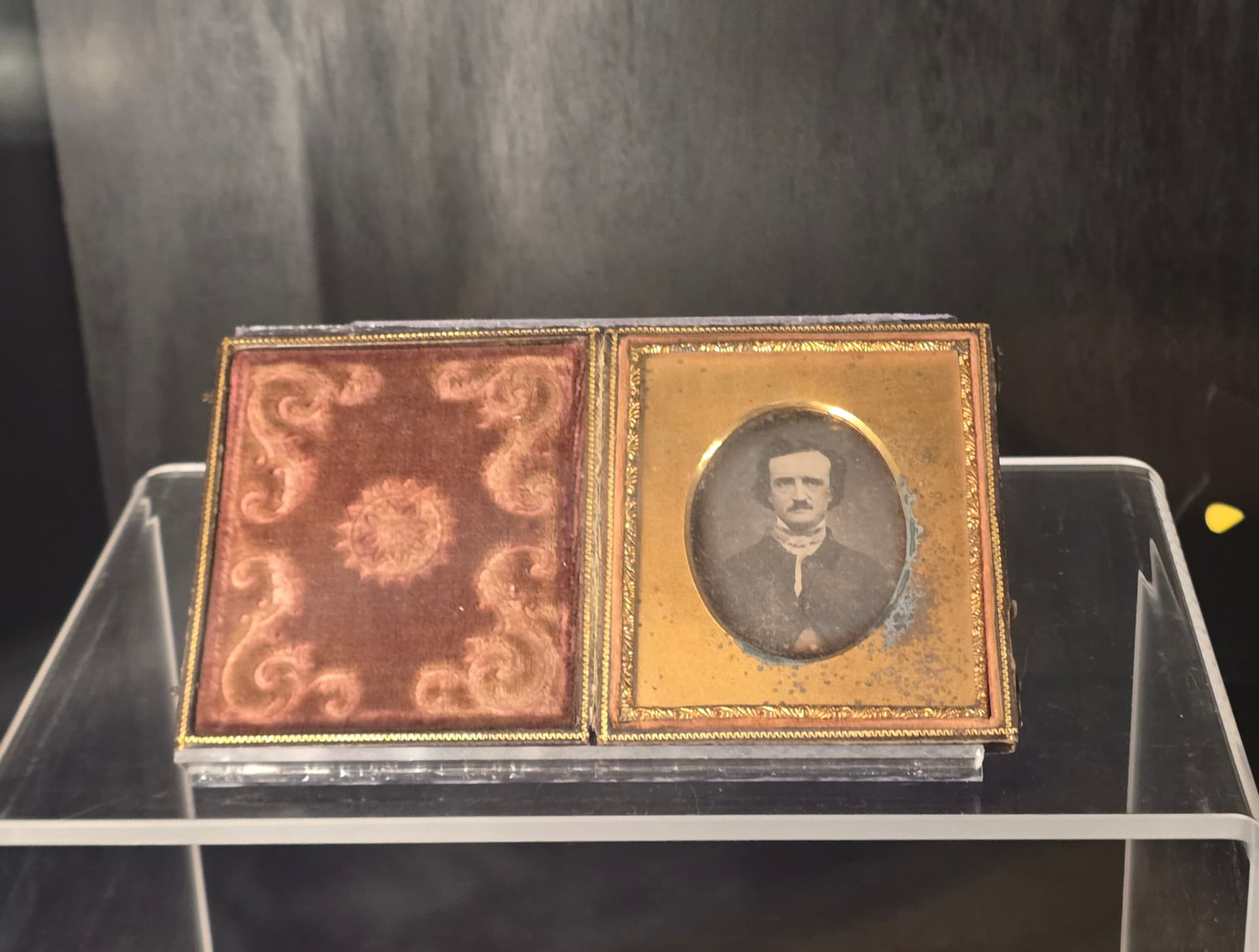
I moved in front of one and watched the image change with my own eyes.
That was the difference.
I had read about it. I had started writing about it. But now I could move my head and watch Poe's face shift, disappear into the plate, and return. The light matters. Your position matters.
You have to find the person.
The central object in the book I had just begun writing was suddenly right in front of me, at the museum of the first author I ever loved.
I don't know how to make that sound less profound to me than it was.
I don't particularly want to.
And then it got better.
One photographic likeness of Poe was shown to Elmira Shelton, the woman he'd loved when he was young and would become engaged to shortly before his death. She essentially said that nobody who had actually known Poe would recognize him from it.
His sister Rosalie looked at the same image and considered it one of the best likenesses of her brother.
His fiancée looked at the photograph and saw someone who wasn't Poe. His sister looked at it and saw Poe.
Same image. Same man.
Different truths.
Considering the book I had just started writing, that stopped me all over again.
The rest of the museum kept separating the man from the legend I thought I knew.
I had no idea Poe died at forty.
Forty.
For some reason, I had always imagined him growing old. Maybe that's what happens when someone's work survives for nearly two centuries. You confuse the age of the legend with the age of the person who created it.
Poe never got to be old.
His life was filled with loss. His wife, Virginia Clemm Poe, was his first cousin. She was thirteen when they married; he was twenty-seven. She developed tuberculosis and died at only twenty-four.
Poe survived her by two years.
I saw her mirror.
That stopped me too.
There is something strange about looking into a mirror a dead woman once used to look at herself.
The glass doesn't remember her.
But it was there.
Near the end of Poe's own life, he found his way back to Elmira Royster, the woman he'd loved when he was young. Her father had disapproved of their relationship and intercepted Poe's letters while Poe was away. Elmira believed he'd forgotten her. She eventually married someone else.
More than twenty years passed. Then they found each other again.
They planned to marry.
Poe died ten days before the wedding.
And his death is its own Poe story.
He left Richmond on September 27, 1849. Then he disappeared.
Several days later, he was found semi-conscious at a polling place in Baltimore, reportedly wearing another man's clothes. He never explained what had happened.
During his final night in the hospital, he repeatedly called out the name Reynolds.
Nobody knows for certain who Reynolds was.
Nobody knows for certain what killed Edgar Allan Poe.
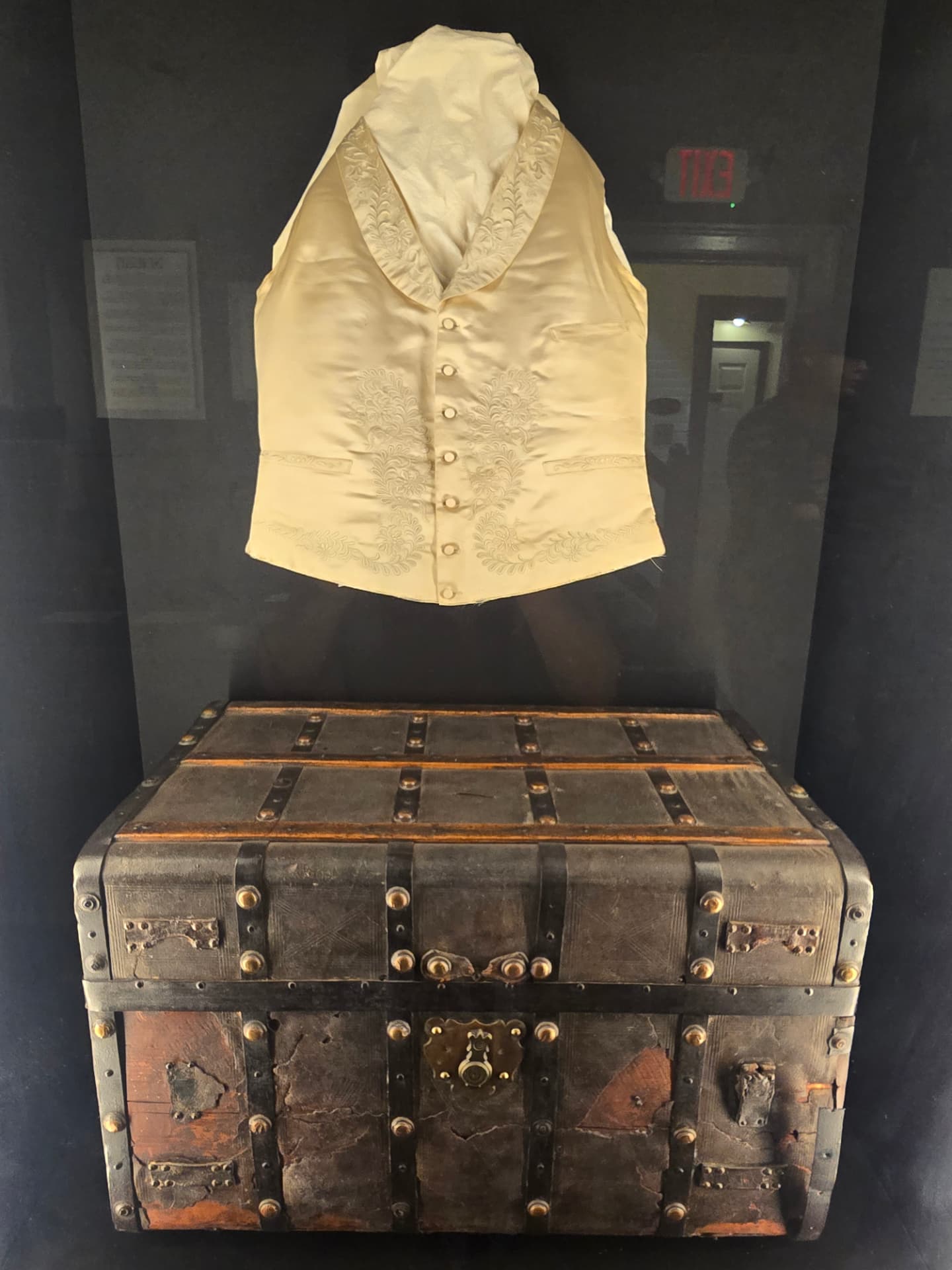
And back in Richmond, much of what Poe owned was sitting in a trunk at the Swan Tavern because he owed them money.
The tavern had taken his trunk because Poe couldn't pay his bar tab.
Inside were his clothes.
And his manuscripts.
Edgar Allan Poe, who would become one of the most recognizable writers in American literature, had his manuscripts sitting behind a bar because he couldn't pay what he owed.
I love this detail.
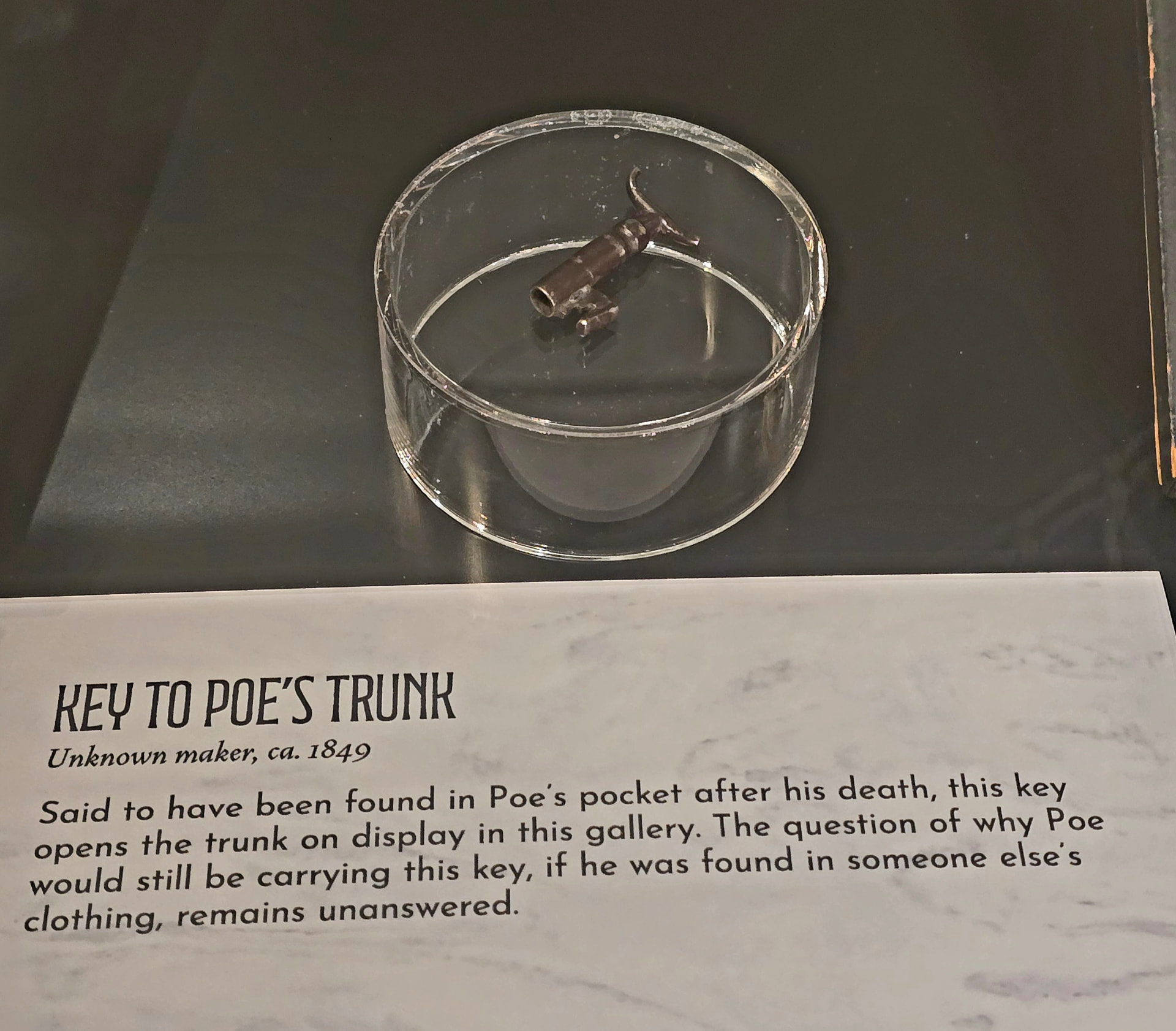
And then comes the key.
After Poe was found in Baltimore in clothing that reportedly wasn't his, a little key was reportedly still in his pocket.
The key to that trunk.
Another man's clothes.
Poe's key.
His manuscripts waiting behind a bar in Richmond.
No explanation.
It is difficult to imagine a more Poe ending for Poe.
Except perhaps for the cat.
His beloved cat Catterina reportedly died the same day he did. Poe was in Baltimore. Catterina was hundreds of miles away at his home in Fordham, New York.
They weren't together.
They died on the same day.
Of course they did.
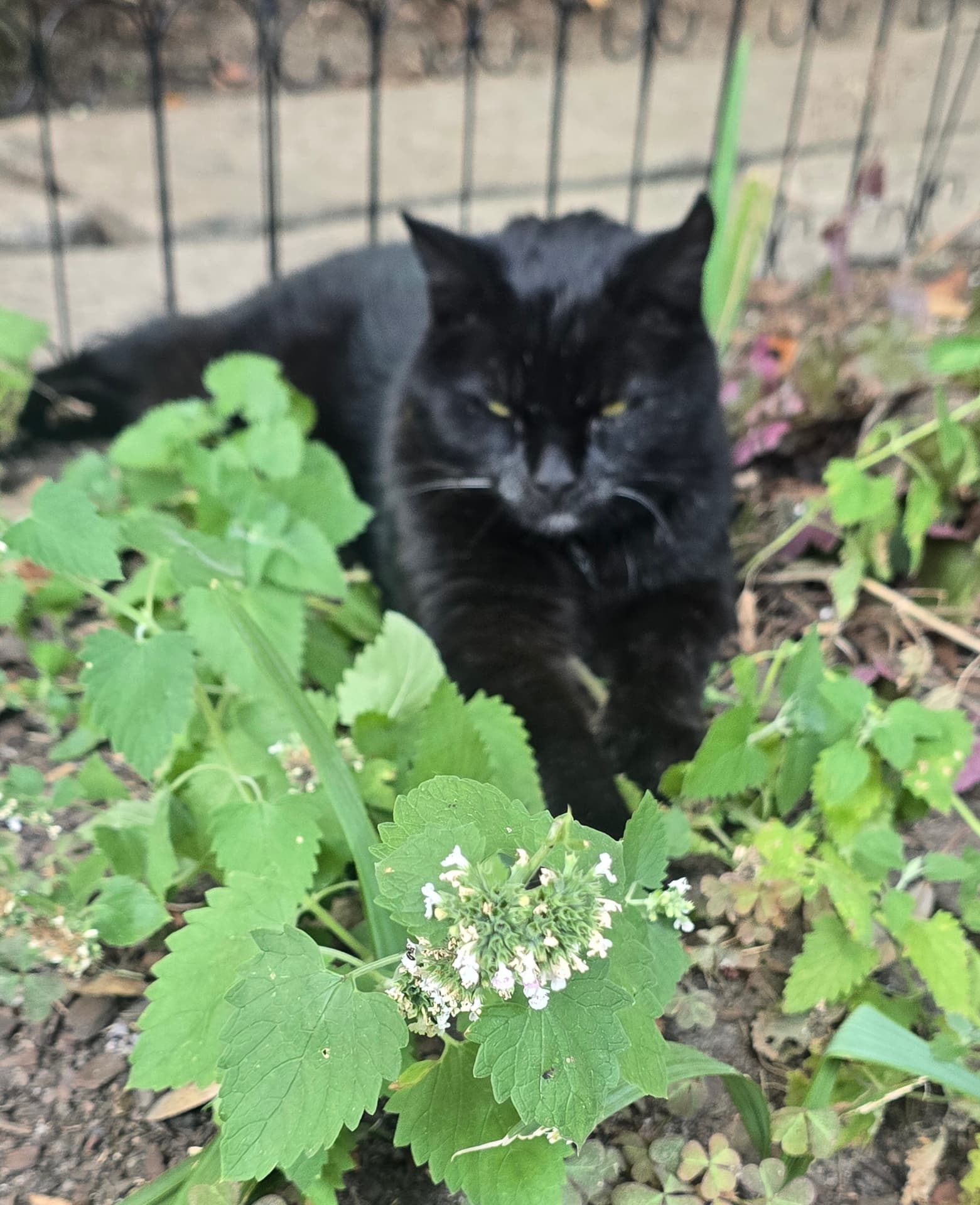
The Poe Museum has cats now too. There are moments when the universe lacks subtlety.
By the time I walked out of the museum, I knew far more about Edgar Allan Poe than I had when I entered. And somehow I felt less certain that I knew him.
I liked that.
The legend had become a person again. A little boy afraid of the dark. A man listening to his watch. A writer who needed fifty dollars. A husband who buried a young wife. A man planning a future he didn't get to have. Someone who owned a nail file and couldn't pay his bar tab.
Human.
I stopped at Poe's Pub before heading to Hollywood Cemetery.
I walked in around the middle of a Friday afternoon and the place was packed. Nobody acknowledged me.
Eventually I found the only empty stool at the bar and asked the bartender if I could sit there. He looked at me as though I had asked a deeply stupid question.
Yes.
So I sat.
For the first several minutes, I genuinely wondered if I was having a stroke. I couldn't understand anyone.
The man beside me would whisper something to the bartender. The bartender would answer a completely different question. Then the man would correct him, except I couldn't understand the correction either, and somehow a drink would eventually appear.
To my other side was an older man who looked, appropriately enough, a little like an elderly Edgar Allan Poe. He was fairly drunk, intermittently falling asleep, periodically announcing that he should probably eat something, and repeatedly asking the bartender whether he could go outside to smoke a cigarette.
The bartender ignored him. He asked again. Nothing. Again. Nothing.
This went on so many times that I started wondering whether the bartender could hear him.
Eventually he was granted whatever permission he apparently believed was necessary to go outside and smoke. He returned coughing violently, produced an alarming amount of bodily fluid into his hand, wiped it away with some napkins, and resumed drinking.
Several people later shook that hand.
I watched this happen.
Then I ordered lunch: a Captain Morgan and Diet Coke and sliders with American cheese, all the way, with fries.
The man beside me immediately turned toward me.
"That's exactly my order."
I thought he meant it looked good.
He did not.
Every Friday, he explained, he came to Poe's Pub and ordered exactly what I had just ordered. Same drink. Same sliders. Same cheese. Same toppings. Same fries.
The bartender confirmed it.
I had never been there before. I had simply opened the menu and ordered what sounded good.
By then I'd realized something else. Most of these people knew one another. They were locals. They came here every Friday.
The conversations I couldn't follow weren't necessarily supposed to make sense to me.
But even after I understood that, they remained strange. People whispered. Someone else answered. Two people seemed to conduct entirely different conversations at one another and somehow both walked away satisfied.
Maybe they had all known one another long enough that understanding wasn't required anymore.
Or maybe I still don't know what was happening in Poe's Pub.
Either way, I ate the other man's Friday lunch and went to visit the dead.
I went into Hollywood Cemetery with a list.
Naturally, the grave I wanted to find most belonged to a vampire.
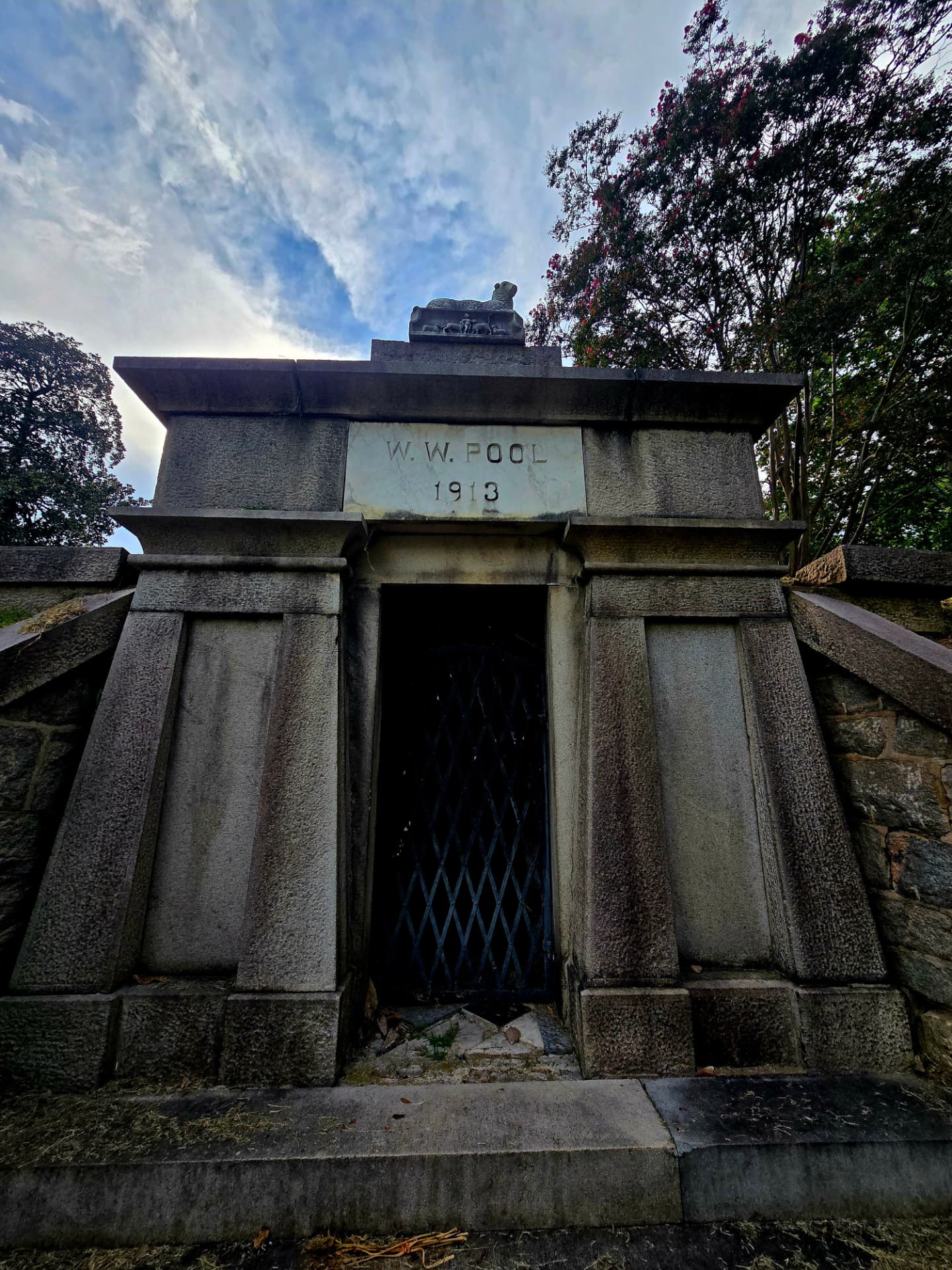
W. W. Pool was not a vampire.
This has apparently done very little to help his reputation.
Richmond's vampire legend became tangled with the collapse of the Church Hill railroad tunnel in 1925. After the disaster, stories grew around a terribly injured, bloodied figure fleeing the tunnel toward Hollywood Cemetery.
As stories do, it changed in the telling. The injured man became something stranger. Eventually, the legend attached itself to W. W. Pool and his suitably ominous mausoleum.
There was one fairly substantial problem.
Pool died in 1922.
Three years before the tunnel collapsed.
Folklore was apparently willing to overlook this.
I was too.
Then I went looking for the Iron Dog.
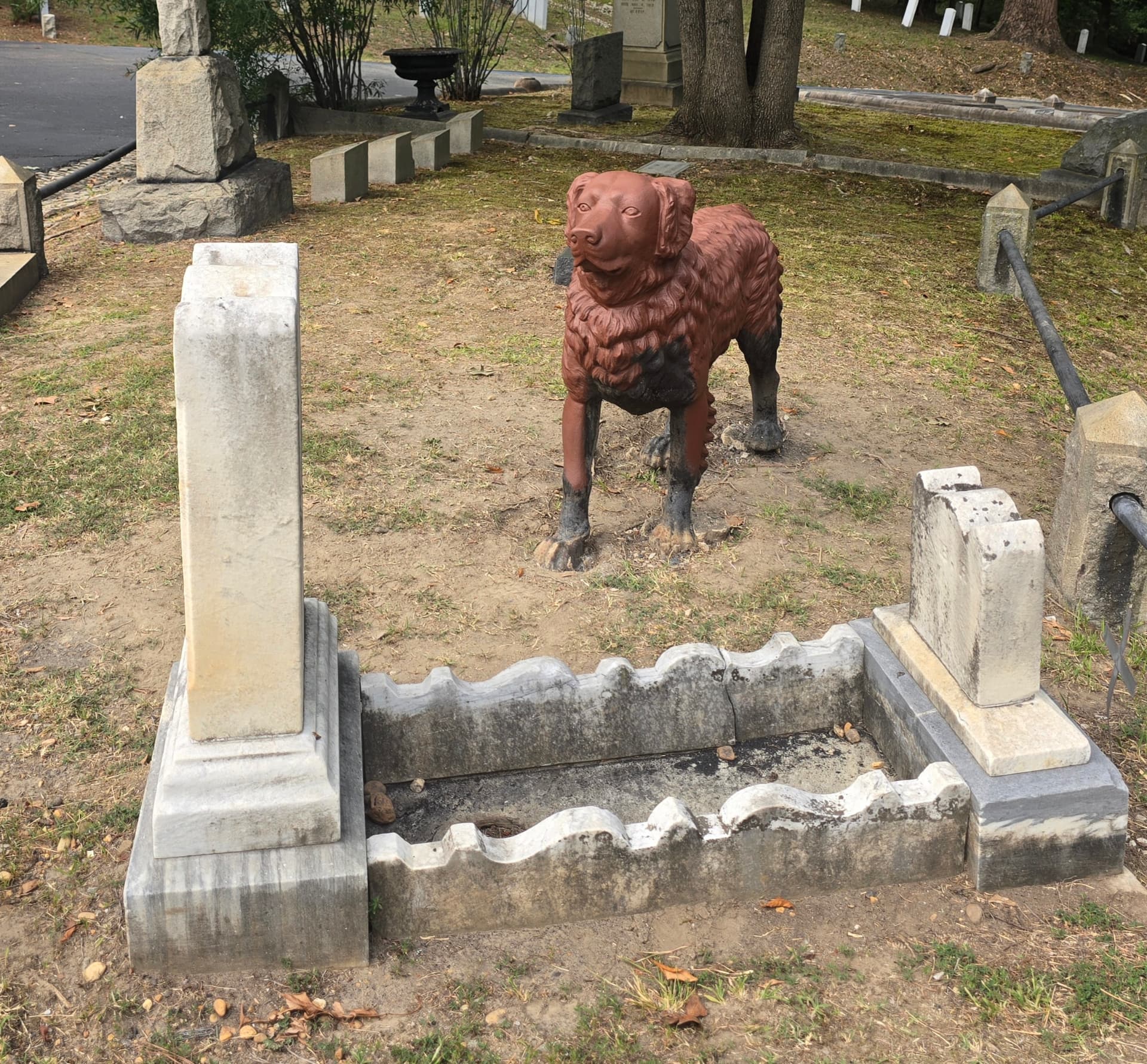
A cast-iron Newfoundland stands watch over the grave of a little girl. History and folklore have tangled there too. One version says the dog belonged to the child and was moved to her grave after she died. Over time, the dog became something more.
A guardian.
People still leave things for him.
Whatever part is history and whatever part has been polished by retelling, standing there makes the story simpler.
A child died.
The dog stayed.
After that, I stopped caring quite so much about my list.
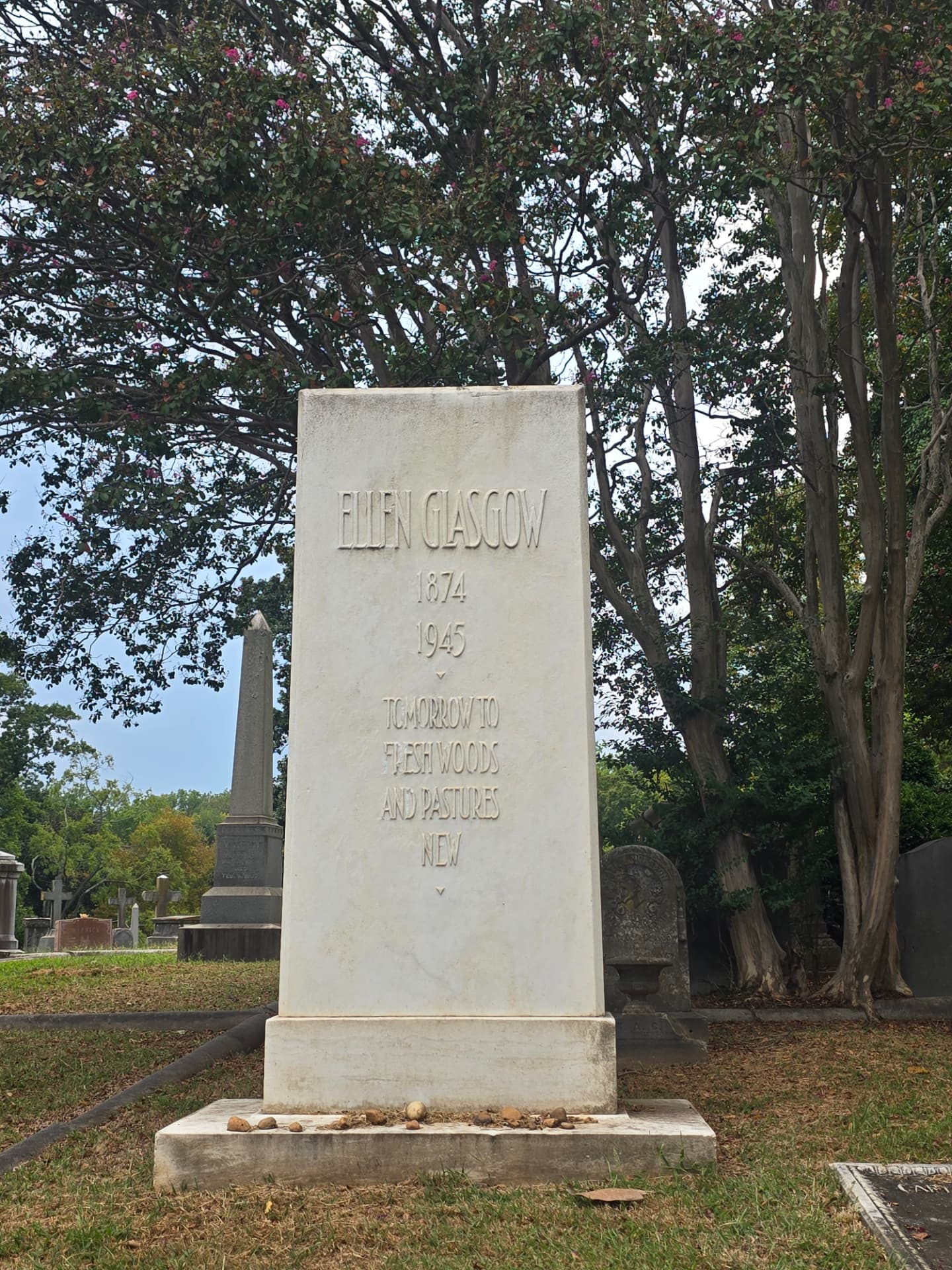
I saw presidents and writers and enormous mausoleums. I found novelist Ellen Glasgow, whose monument is almost startlingly spare. Her name. Her years. And:
Tomorrow to fresh woods and pastures new.
People had left little stones along the bottom.
Someone still comes.
But some of the graves that stayed with me most belonged to people I'd never heard of.
Not nobodies.
Just people who had been nobody to me until I stopped and read their names.
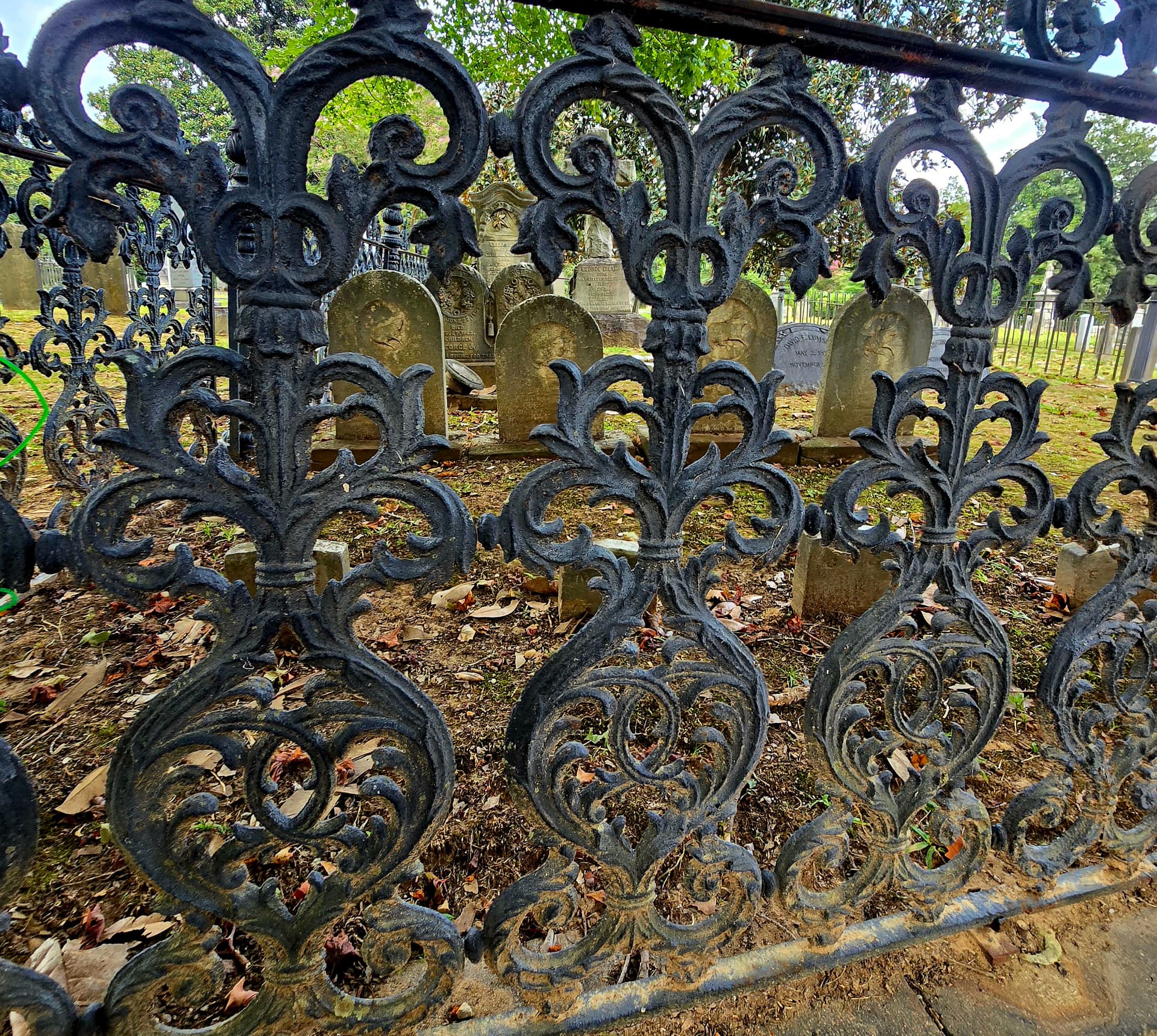
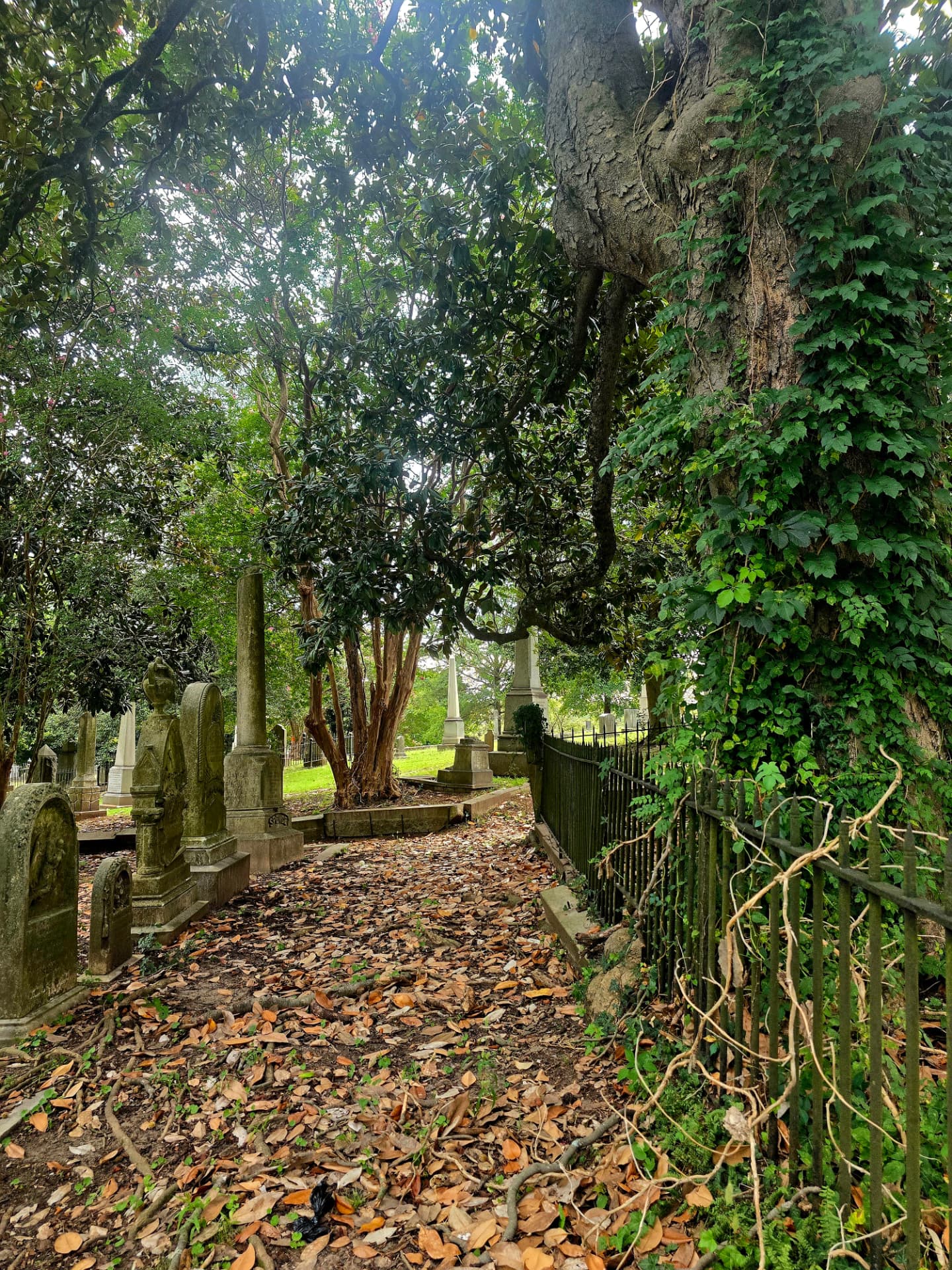
I found beautiful epitaphs and strange ones. A woman remembered as a pioneer for women. Another stone that simply said At Rest. A mother's broken marker patched back together. Children sleeping in stone. A tree carved from stone, complete with ferns at its base. Angels turning green. Iron disappearing into ivy. Roots quietly rearranging things humans had once placed carefully and expected to stay put.
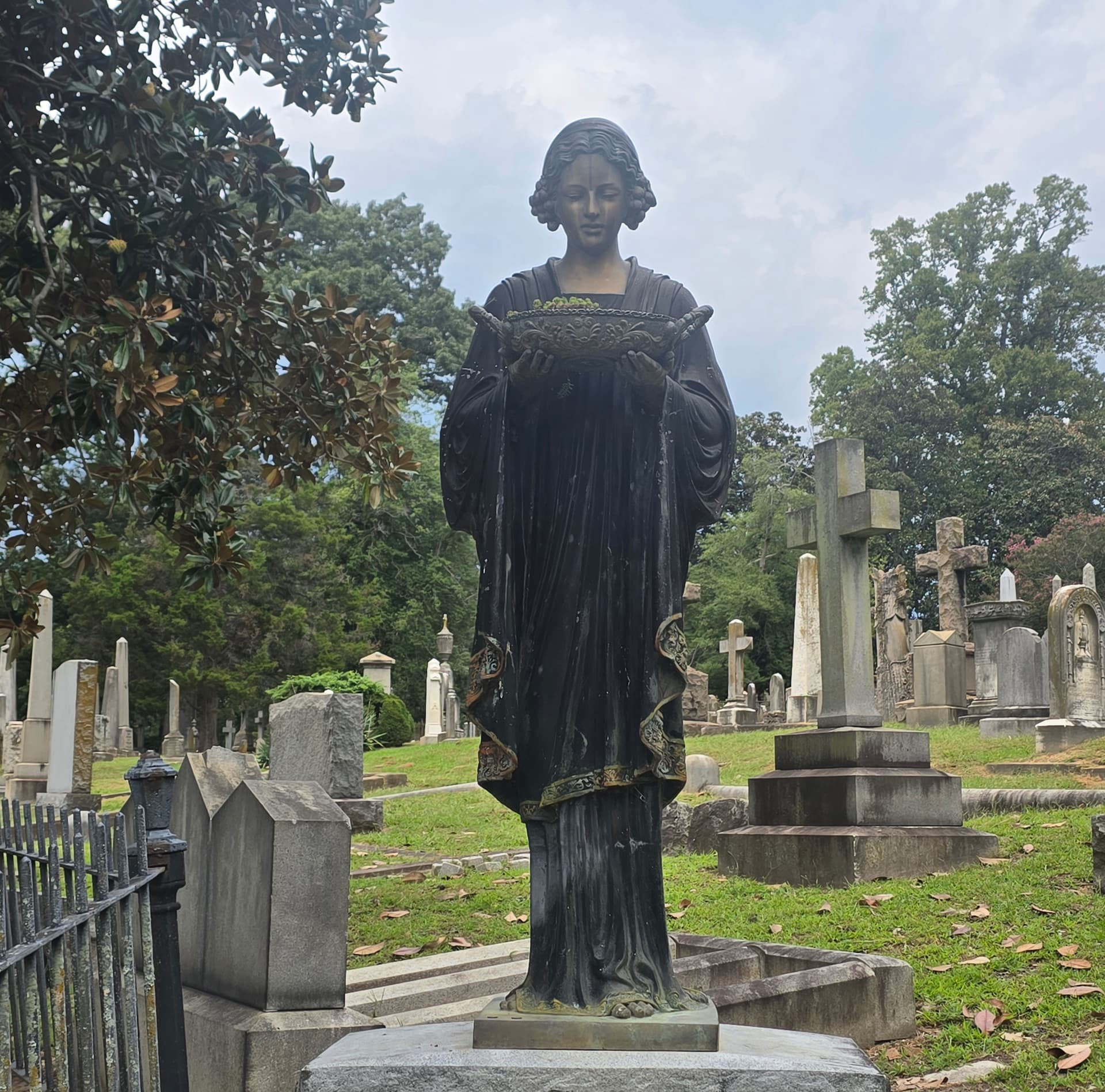
Some families had tried desperately to tell me who their person was. Some had given me only a name.
Some of the names were disappearing.
And then I stopped at a pair of green mausoleum doors.
I hadn't gone looking for them. I just liked the doors.
Then I noticed the name carved above them.
LINEWEAVER.
That word caught.
I'll tell you what it did later.
Somewhere among all those graves, I thought about Poe's nail file again.
His nail file survived. His watch survived. Virginia's mirror survived. His key survived. His photographs survived.
And here were entire people slowly becoming unreadable.
I had spent the first half of my afternoon inside a museum devoted to preserving the remnants of one human life.
I spent the second half walking through thousands of lives being slowly returned to the earth.
By the time I reached Presidents Circle, the sky had been changing for a while.
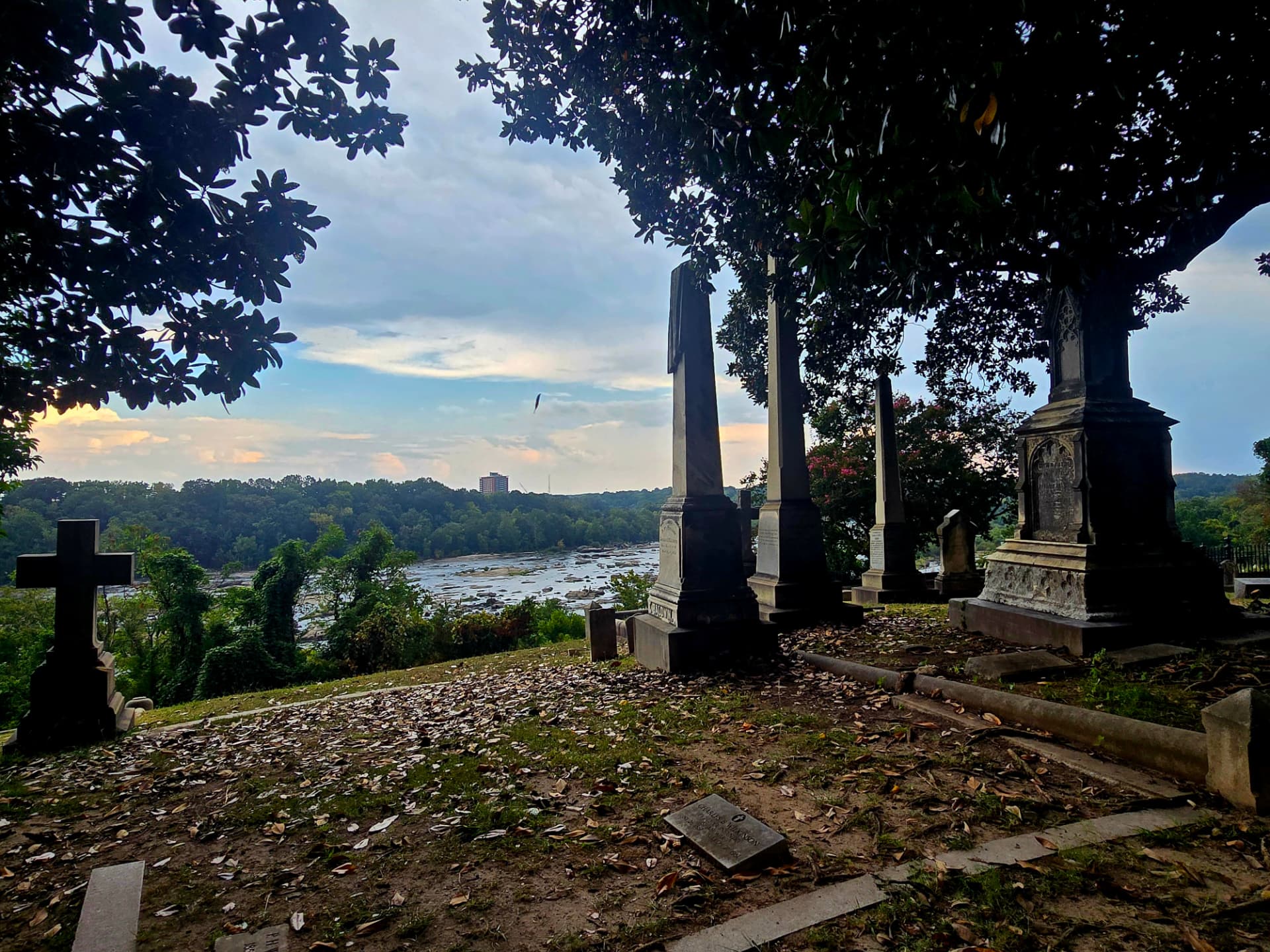
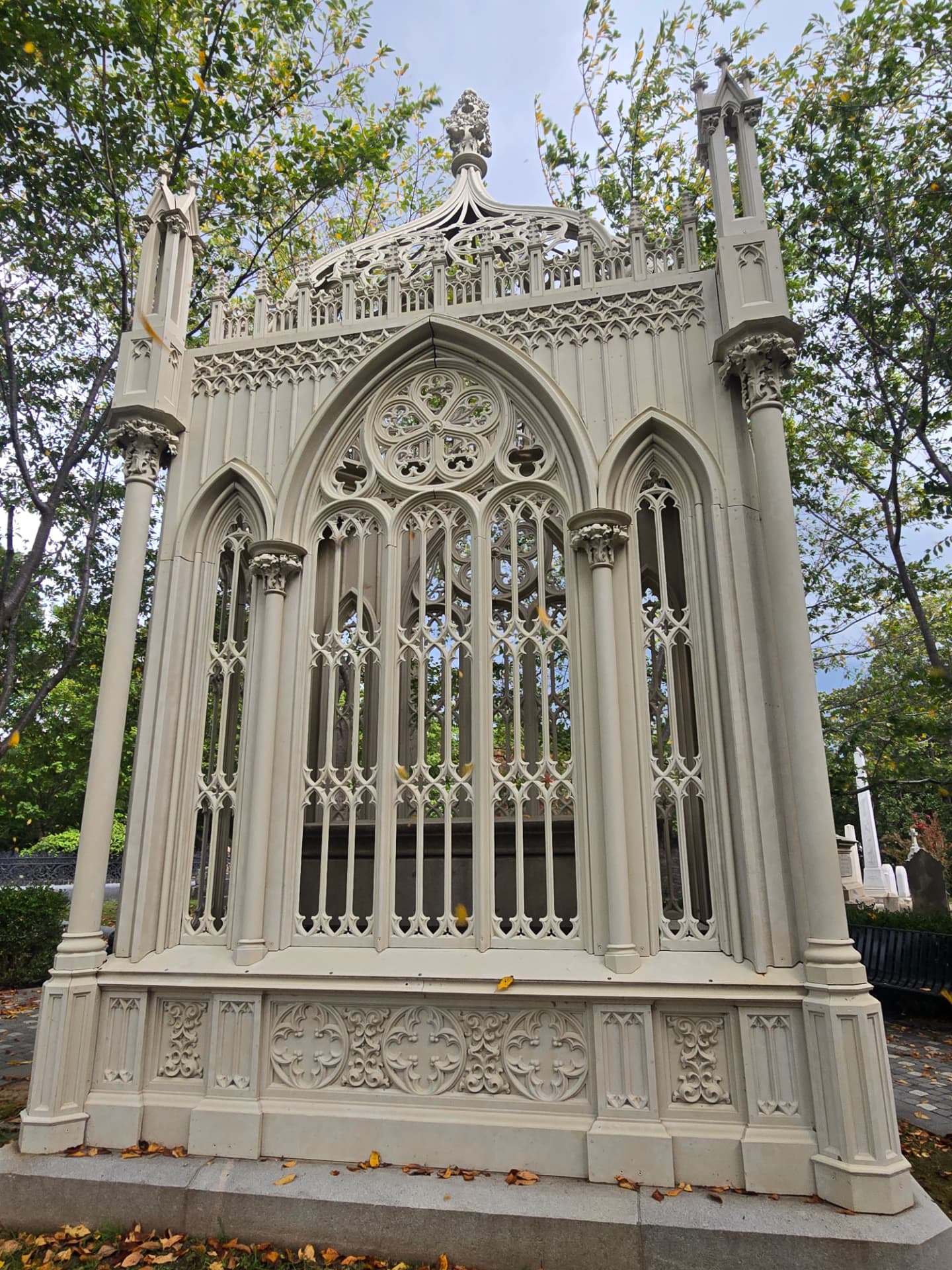
I found James Monroe's enormous cast-iron Gothic tomb, the Birdcage, and beyond it the cemetery fell away toward the James River.
I knew the sky was getting darker. I also knew there were still graves I wanted to see.
So I did what I sometimes do when something interesting is happening in front of me and a problem is developing slightly farther away.
I made it Future Nikki's problem.
Then my phone told me Richmond was under a severe thunderstorm warning.
Seventy-mile-per-hour winds.
Quarter-size hail.
I looked around.
I was deep inside a cemetery filled with enormous old trees.
Future Nikki had arrived.
I ran.
Past angels and obelisks. Past mausoleums and names I hadn't gotten to read. Past graves I'd meant to stop for.
The wind was picking up. The sky had gone from beautiful to threatening, and suddenly all those enormous trees I'd been admiring looked considerably less charming.
There were still graves I wanted to find.
There are always more graves I want to find.
They would have to stay dead without me.
I made it through the gate and into an Uber before the storm caught me.
Somewhere between Poe's pocket watch and the cemetery gate, I had collected far more than I went looking for.
Some of it followed me home.
The rest, I suspect, is still waiting in the margins.