I Wrote It Before It Happened
Notes from beside When Walls Weep.
The story I put down made me its main character.
I have not worked on When Walls Weep in almost a year.
It has always been the novel I intended to publish first. It is my most complete manuscript. But life became loud, and I put it down.
On November 1, 2025, I stopped writing long enough to look at a beach house that neither Q nor I intended to buy. As fate would have it, I became consumed with making an offer, buying the house, closing on it, renovating it, opening part of it as a vacation rental, and documenting the entire process.
I established an LLC for the rental. I built its website, developed its brand and marketing strategy, and gave the house a name: A Place in the Sun. Somewhere along the way, I became a five-star host across every platform.
At the same time, I began building another kind of house: NBodied Writing House, the publishing house that would eventually hold my novels.
I wrote other manuscripts. I followed other ideas. I kept creating rooms and wandering into them.
All the while, When Walls Weep remained where I had left it.
Shelved.
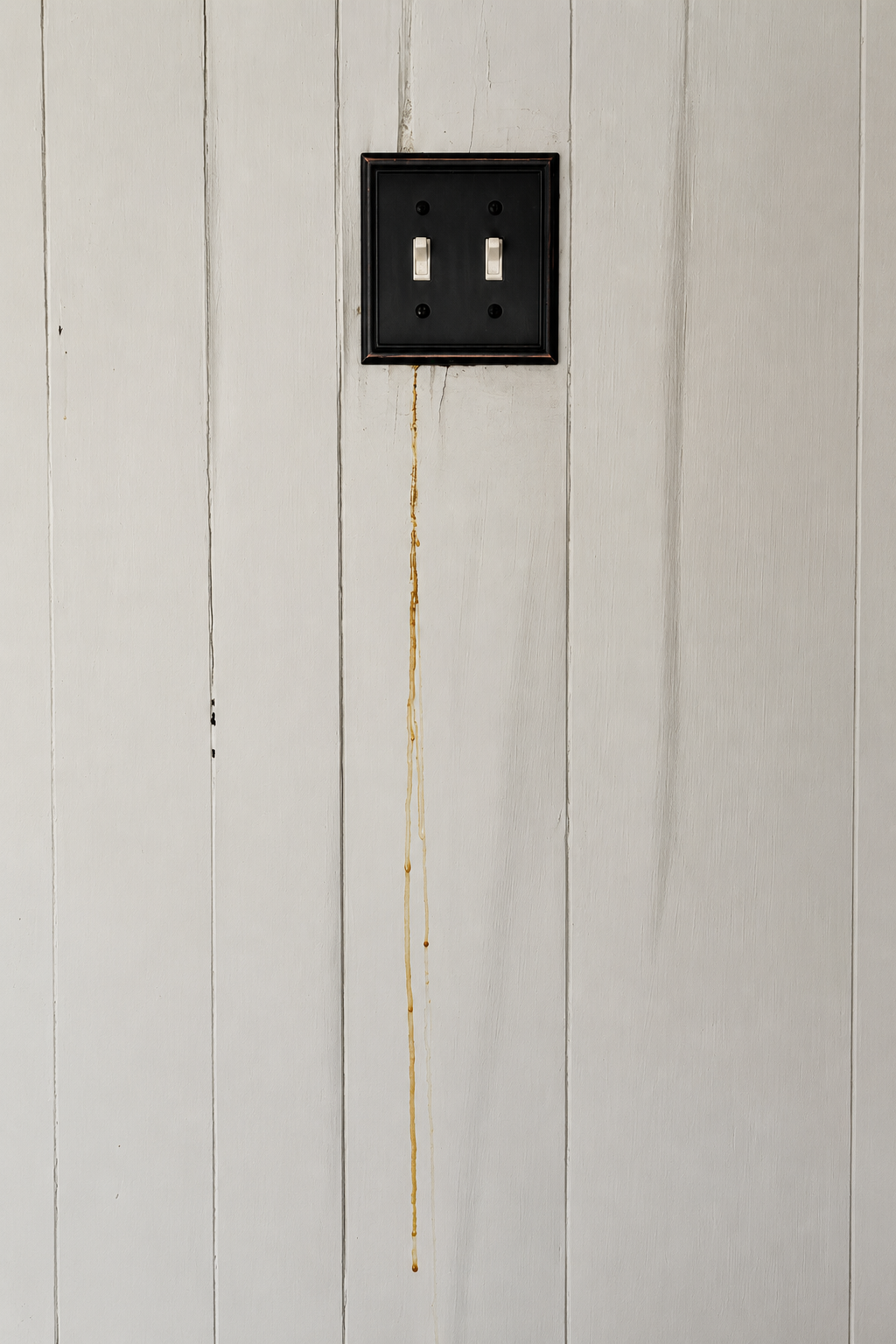
Meanwhile, the upstairs walls in our rental began to weep.
Literally.
It started in late May, around the same time we opened the house to guests. We had already restored and freshly painted those walls as part of the renovation. They were clean when we opened the house. Then, within weeks, they began writing themselves over.
Long trails appeared down the walls. Moisture gathered where it did not belong. New stains formed after we thought we had stopped them. At times, the darkened streaks looked less like tears and more like blood.
For months, Q and I watched it happen in front of us. We investigated the roof. We repaired a mini-split. We photographed the damage and followed one possible cause after another while thin, discolored trails continued to emerge and run down the faces of the walls.
We called it condensation. We called it water damage. We called it baffling.
We called it expensive.
I am a writer who is always looking for symbolism. I collect strange coincidences, hidden meanings, and ordinary things that become uncanny when viewed from the right angle.
And still, I never called it weeping.
Not once.
Last week, after months of searching, we finally discovered the cause. We took the necessary steps to stop it and made plans to restore the damaged walls in December, once the vacationers disappear.
Then, tonight, on a commute flight to Fort Lauderdale for work, I opened When Walls Weep again.
I intended to begin editing—to return to the unfinished pages and finally complete the book I have always planned to make my debut novel.
Instead, I was slapped across the face with my own words.
The novel opens with Maribel buying the Ward House. She begins restoring it and starts a video blog to document the process.
Then she discovers that the walls weep.
I wrote that opening before I found this house—before I dreamed of buying one, before I had a renovation to document, before I opened a rental, before Q and I stood together and watched water mysteriously draw itself down walls that belonged to us, and before I began building a Writing House of my own.
Long before any of this happened, I changed the title of the novel from The Last Ward to When Walls Weep.
I remember telling Q the new title. He looked at me as though I had grown ten heads.
What did that even mean?
I explained what it meant for walls to weep and why it was such a fitting Gothic metaphor for the story I was writing.
I no longer remember exactly when or how the title came to me. I hope its origin is buried somewhere in my notes. I vaguely remember Mary Shelley’s Frankenstein having something to do with it.
But I remember explaining the phrase.
Then, more than a year later, the phenomenon I had defined for him appeared inside our house—and neither of us used the words I had already given it.
For months, I told people what was happening. I described the moisture, showed them the stains, explained the mystery, and apologized to guests.
Over and over again, I described the title of my own novel without recognizing it.
Only after we found the cause, stopped the problem, and made plans to restore the walls did I return to the manuscript and finally see what had been in front of me since May.
After landing, I texted Q about the realization that had struck me midflight.
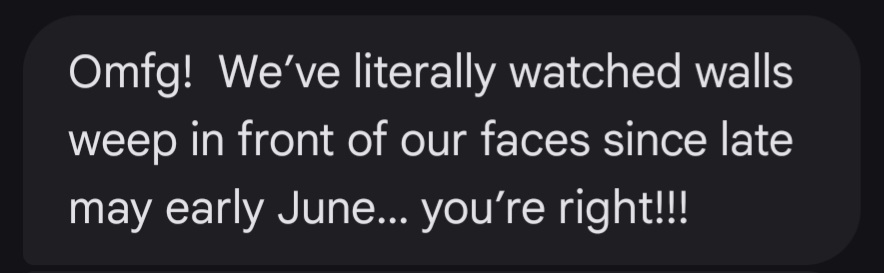
He had watched it happen too. He had not connected it to the novel either.
For almost a year, I believed I had stepped away from When Walls Weep.
I had not.
I left a novel about a woman buying and restoring a house so I could buy and restore one of my own.
I left a character documenting her renovation so I could document mine.
I left her trying to understand the inexplicable evidence appearing on her walls while I spent months investigating the marks appearing on mine.
And while I was living inside the opening of one story, I was restoring a literal house, building a rental business, constructing a figurative Writing House, adding shelves for other books, and creating entire rooms for other characters.
The story I had put down did not remain quietly inside the manuscript.
It followed me out and made itself at home.
It began haunting me in the most literal way a story could: by writing its title down my walls.
And somehow, I failed to recognize it until the week I returned to the page where I had written it.
That is the part I cannot stop thinking about.
I did not write the novel because my walls wept.
My walls began weeping after I wrote the novel, and I did not recognize the story I was living until the week they stopped.
I thought I was returning to the manuscript as its author.
Instead, I discovered that the story had made me its main character.