I Learned Something Every Day in Terceira
Volcanoes. Vineyards. Whales. Bulls. Cloaked women. And an island that made it very difficult to stop asking questions.
I have a problem when I travel.
I don't seem to know how to simply go somewhere. To relax.
I want to know why the walls are built that way. What grows there. Who built them. Why that woman in the old photograph is wearing that enormous cloak. Why the grapes are planted inside little walls of black stone. Why everyone is gathered around a field drinking beer and staring at a bull.
I want to cross thresholds.
I want to walk down ancient and new paths.
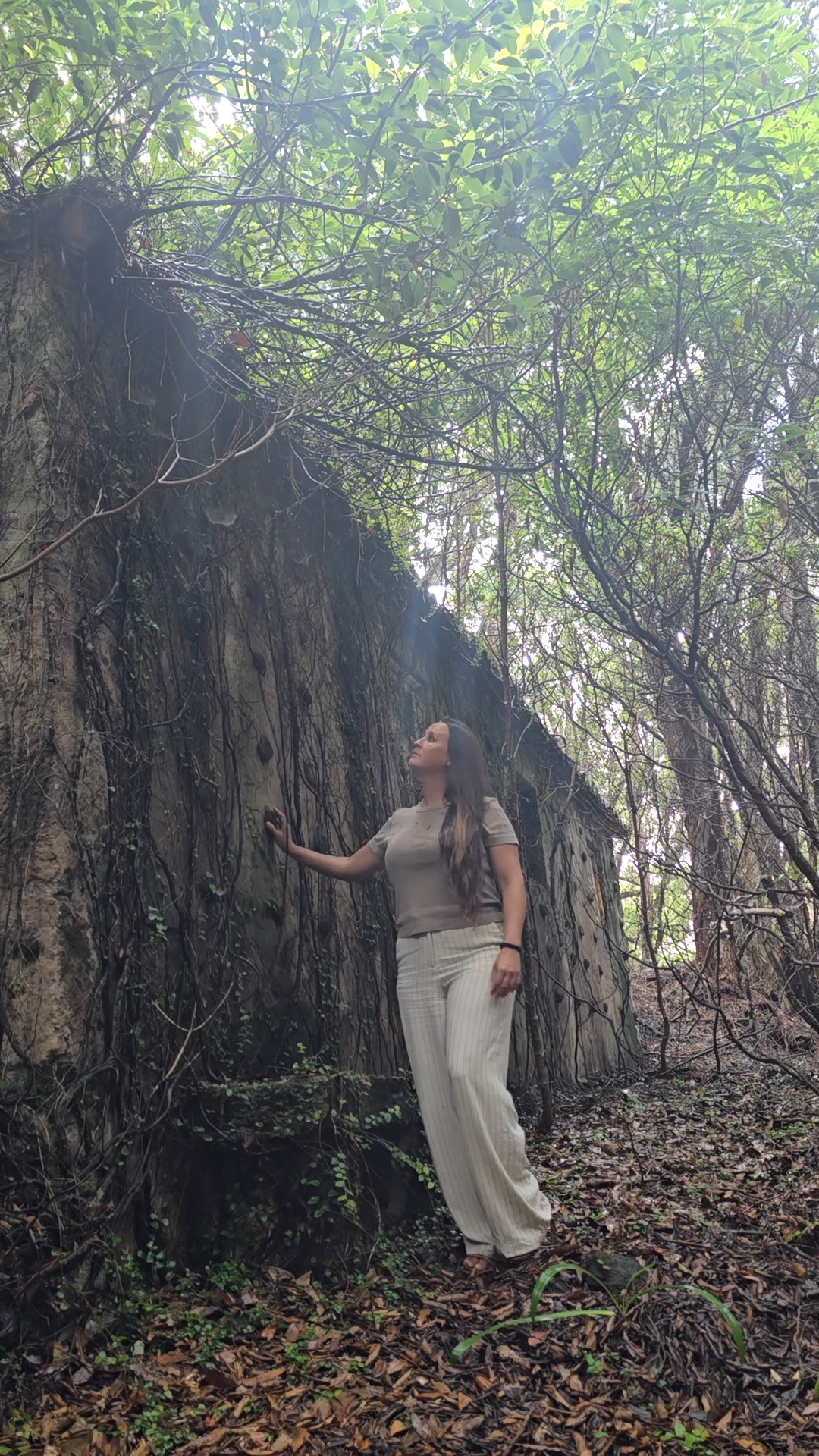
I want to know what happened in the abandoned building being swallowed by the woods. Why someone chose that color paint for their graffiti.
I want to ask questions.
Fortunately, Terceira is an excellent place to have this particular problem.
Because I learned something every single day I was there.
And the more I learned, the more questions I had.
An Island That Talks Back
The first thing I loved about Terceira wasn't a volcano or a vineyard or even the ocean.
It was the people.
I don't speak Portuguese.
Not even the optimistic tourist version of I don't speak Portuguese where what you really mean is that you can order dinner and ask where the bathroom is.
I mean I don't speak Portuguese.
At all.
And it didn't matter.
Again and again, people met my ignorance with kindness.
They didn't just meet me halfway, they came the whole way.
People would apologize to me and say, “My English isn't very good,” and then proceed to have an entire fluent conversation with me in English while I stood there thinking, Your English is better than mine.
Some seemed genuinely delighted to practice it. Some simply wanted to help a stranger. And sometimes somebody just wanted to make a friend.
Where were we from?
Why had we come to the Azores? Were we visiting any other island beside Terceira?
What had we seen?
What did we think of their island?
So we talked.
A lot, which I am particularly good at.
I was impressed by how kind and accommodating people were, but also by how curious they were. There was an openness to conversation that made being a stranger feel less like being an outsider.
Which is probably how a vacation kept turning into research.
Ask one question on Terceira and there is a very good chance someone will give you a story.
And I am catastrophically susceptible to stories.
Descending into a Volcano
Terceira doesn't merely let you stand on volcanic ground.
It lets you crawl inside it.
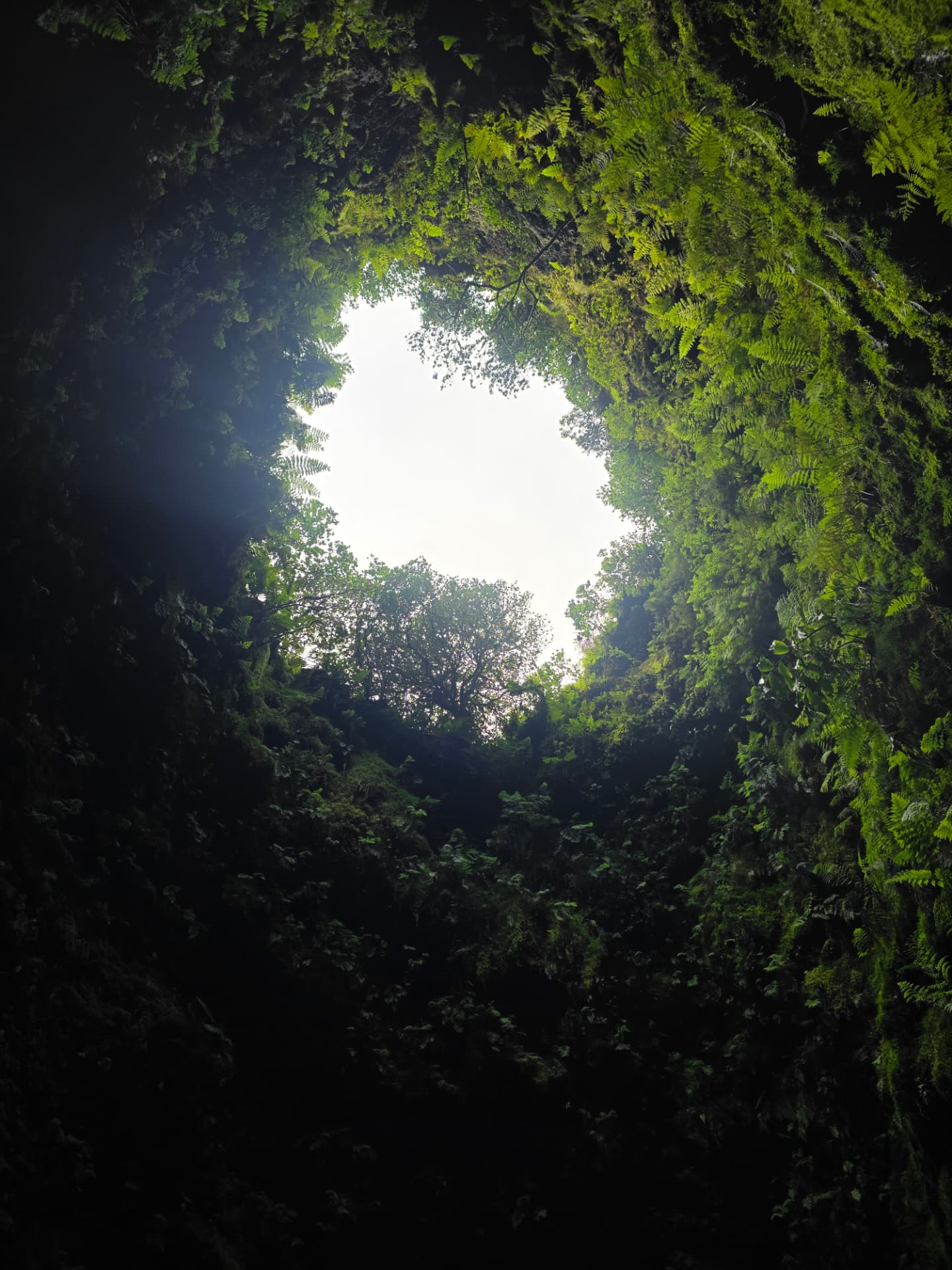
At Algar do Carvão, you descend into an ancient volcanic chimney beneath an opening so green with moss and ferns that it looks as though the forest is spilling down into the earth.
There is something disorienting about looking upward from inside a volcano.
Above you: daylight.
Around you: rock formed by something violent enough to build an island.
And somehow, growing over all of it:
ferns.
Moss.
Green.
Life.
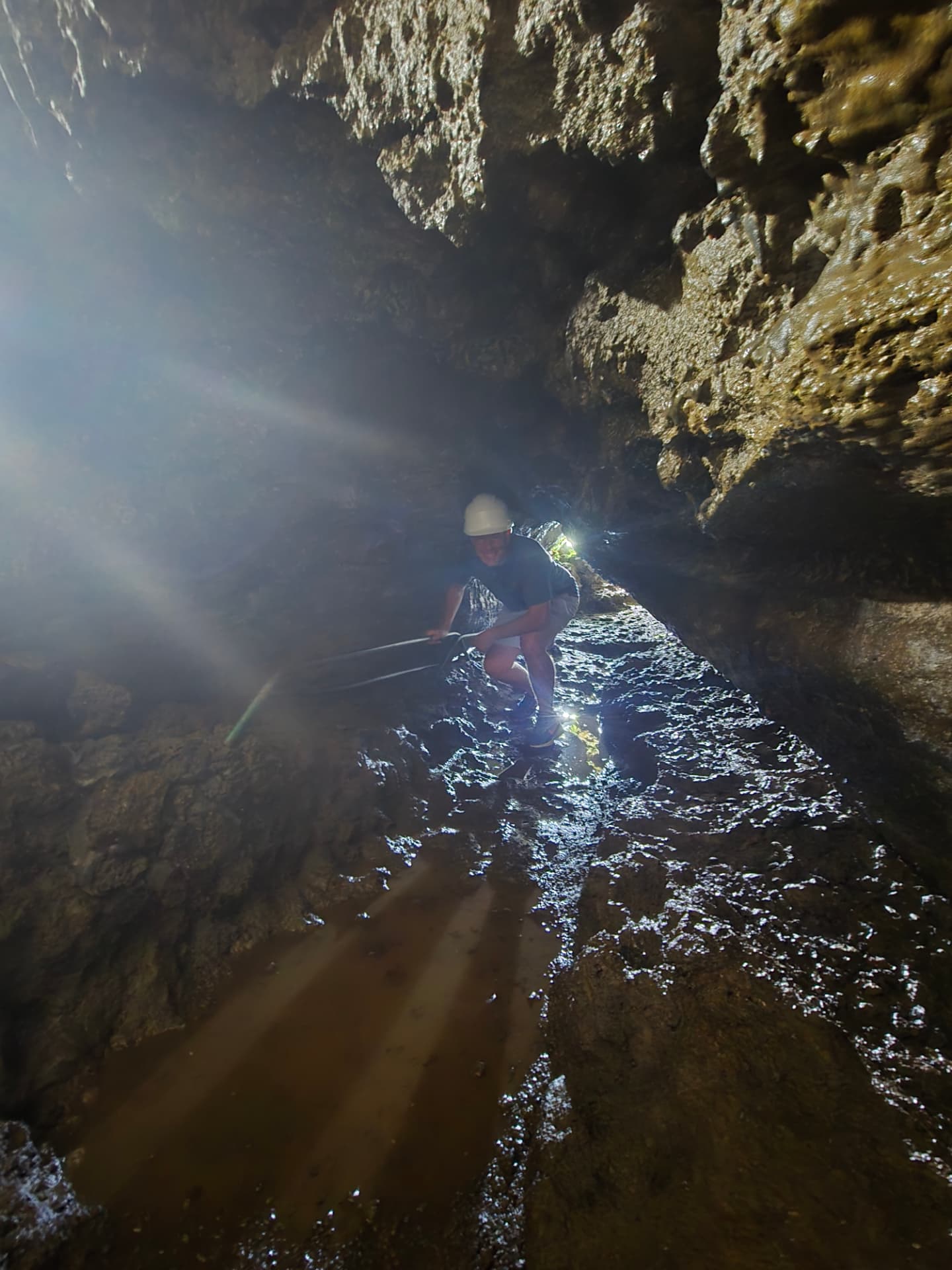
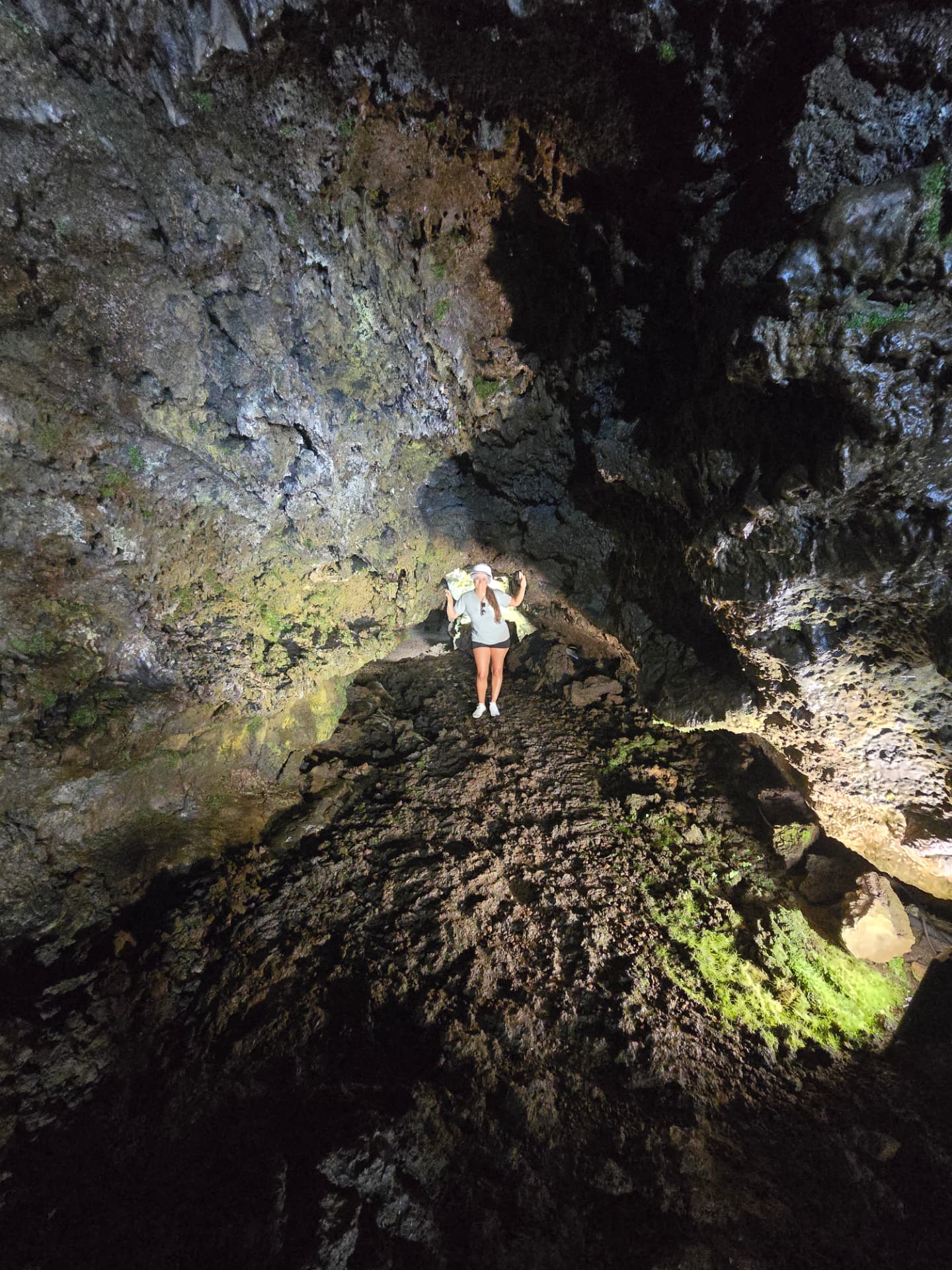
Then there was Gruta do Natal, a lava tube formed when the outside of a lava flow cooled and hardened while molten rock continued moving through the interior, eventually leaving the passage behind.
You put on a hard hat and crawl through what used to be the inside of a lava flow.
There are very few experiences that make geology feel less like something that happened a long time ago.
On Terceira, the island's volcanic history isn't background scenery.
You walk through it.
The caves.
The cliffs.
The black stone walls.
The soil.
The vineyards.
The swimming holes.
The island keeps telling you what made it.
The Woods Were Hiding Things
We hiked and drove Mistérios Negros, which may be one of the best-named trails on Earth.
The name means Black Mysteries.
Come on.
Of course I was going.
The trail winds through the interior of the island among dense vegetation and volcanic formations, including terrain shaped by the eruption of 1761.
It was beautiful.
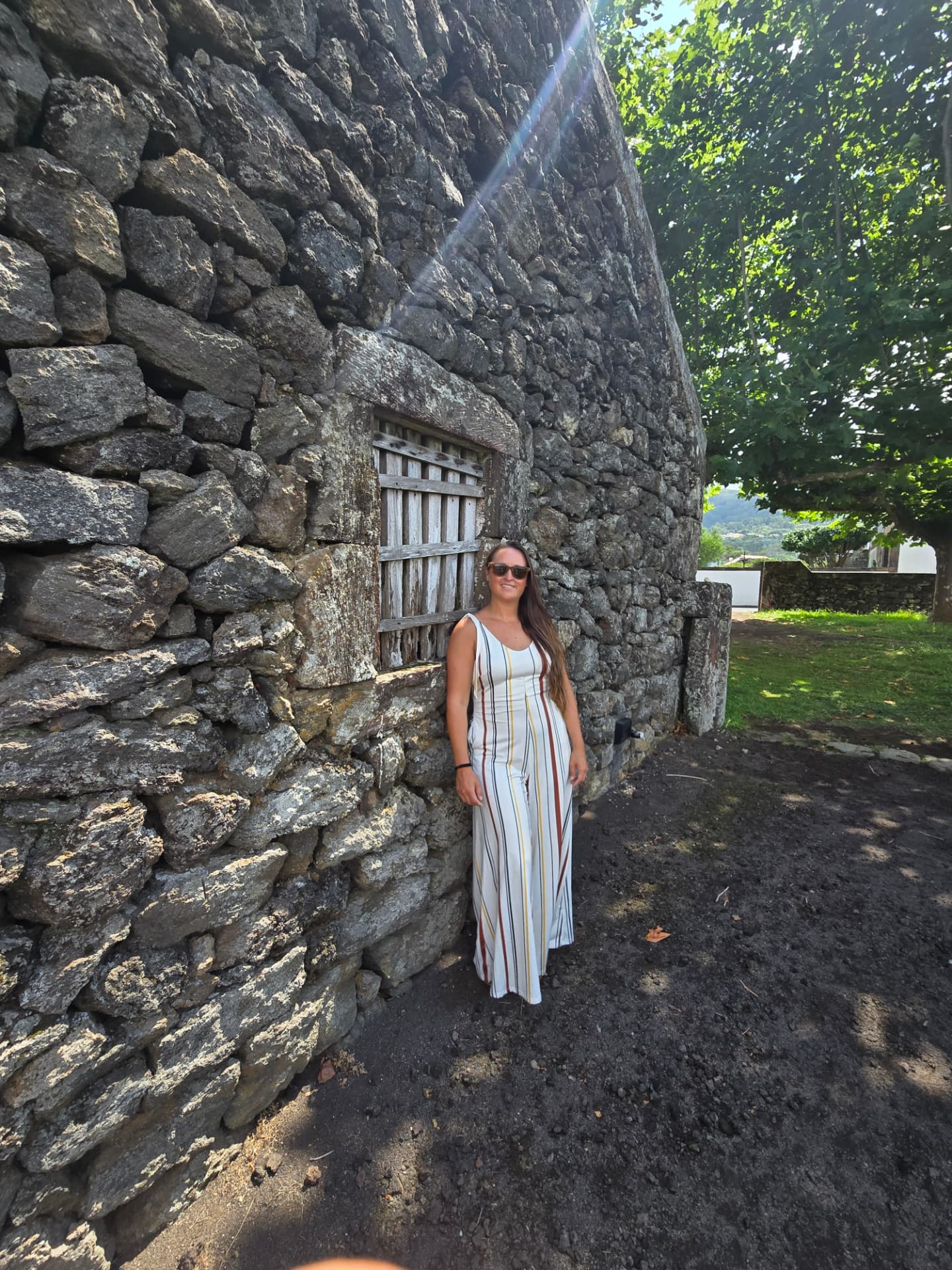
But what fascinated me were the things that looked as though the island had begun taking them back.
Walls disappeared under vines.
Ruins sat inside forests.
Trees grew enormous around old stone.
Moss colonized whatever humans had stopped maintaining.
There were abandoned structures where I had no idea what I was looking at, which naturally meant I needed to climb around them and stare into every opening.
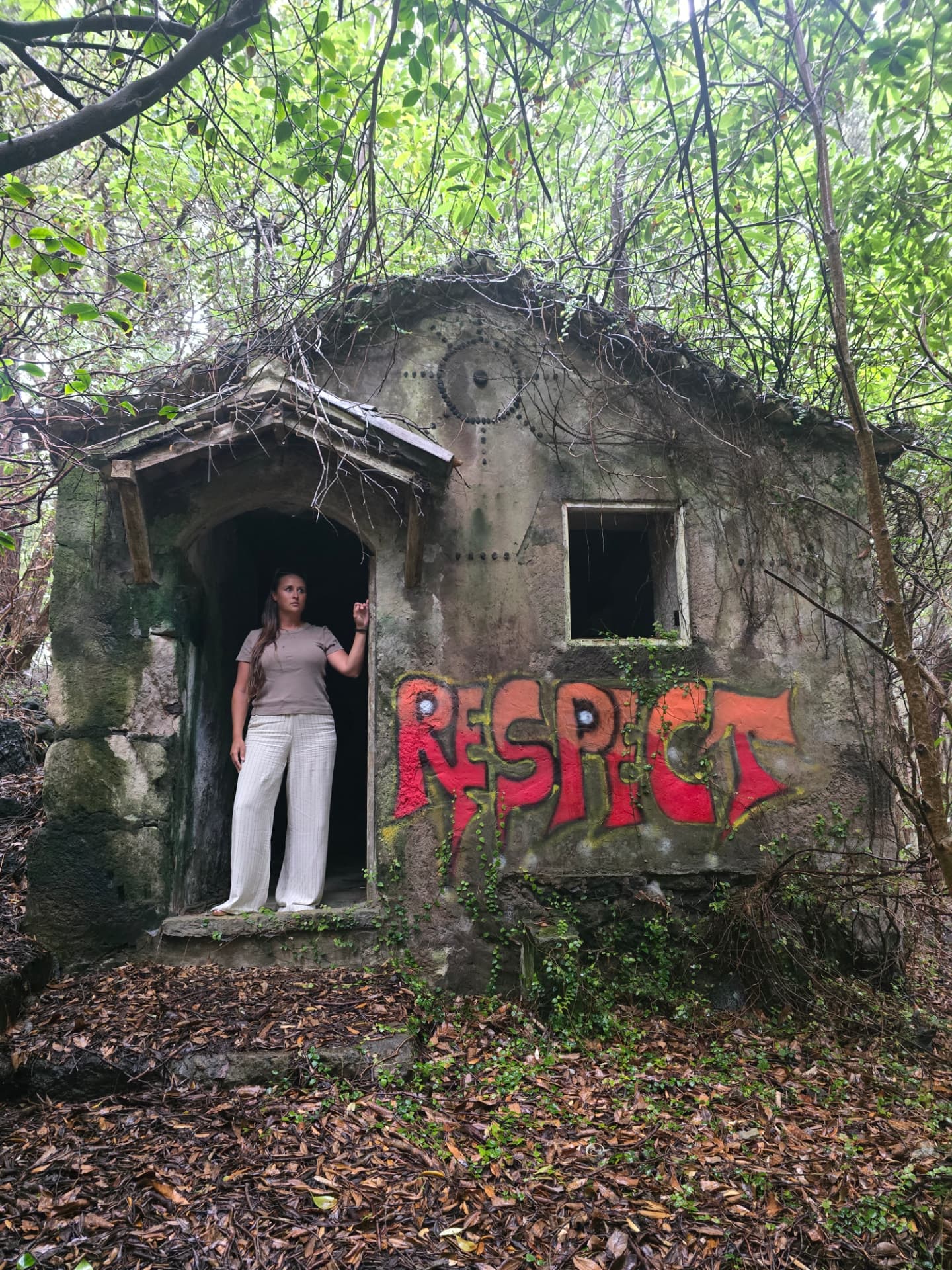
I kept standing in thresholds.
Looking through windows.
Peering around walls.
Which, in retrospect, is an almost embarrassingly literal photograph of how I move through the world.
There is something here.
What was it?
Who used it?
What happened?
Where does that path go?
And, most dangerously:
Could I use this in a book?
Wine Grown in Stone
Then there were the vineyards.
I have done wine tastings all over the world.
One of the best wine experiences I've ever had was at Dimas Adega in Biscoitos.
Not because there was a polished tasting room or an elaborate presentation.
Because there wasn't much distance between the wine and the people making it.
It was intimate.
Quentin and I sat talking with the man who tends the vines while he showed us the wines, provided information about the grape to the bottle, and explained the wine names and labels all while looking out over the vineyard toward the Atlantic.
We tasted our way through the wines.
Then the liqueurs.
While eating fresh cheese, bread and fig jam.
Questions turned into conversations.
We met the owner.
We met his sons.
We toured their traditional home.
And somewhere along the way it stopped feeling like a wine tasting and started feeling like we'd been invited into somebody's life for an afternoon.
It was wonderful.
Honestly, it was one of the best winery experiences I've ever had.
And, naturally, I wanted to know how everything grew.
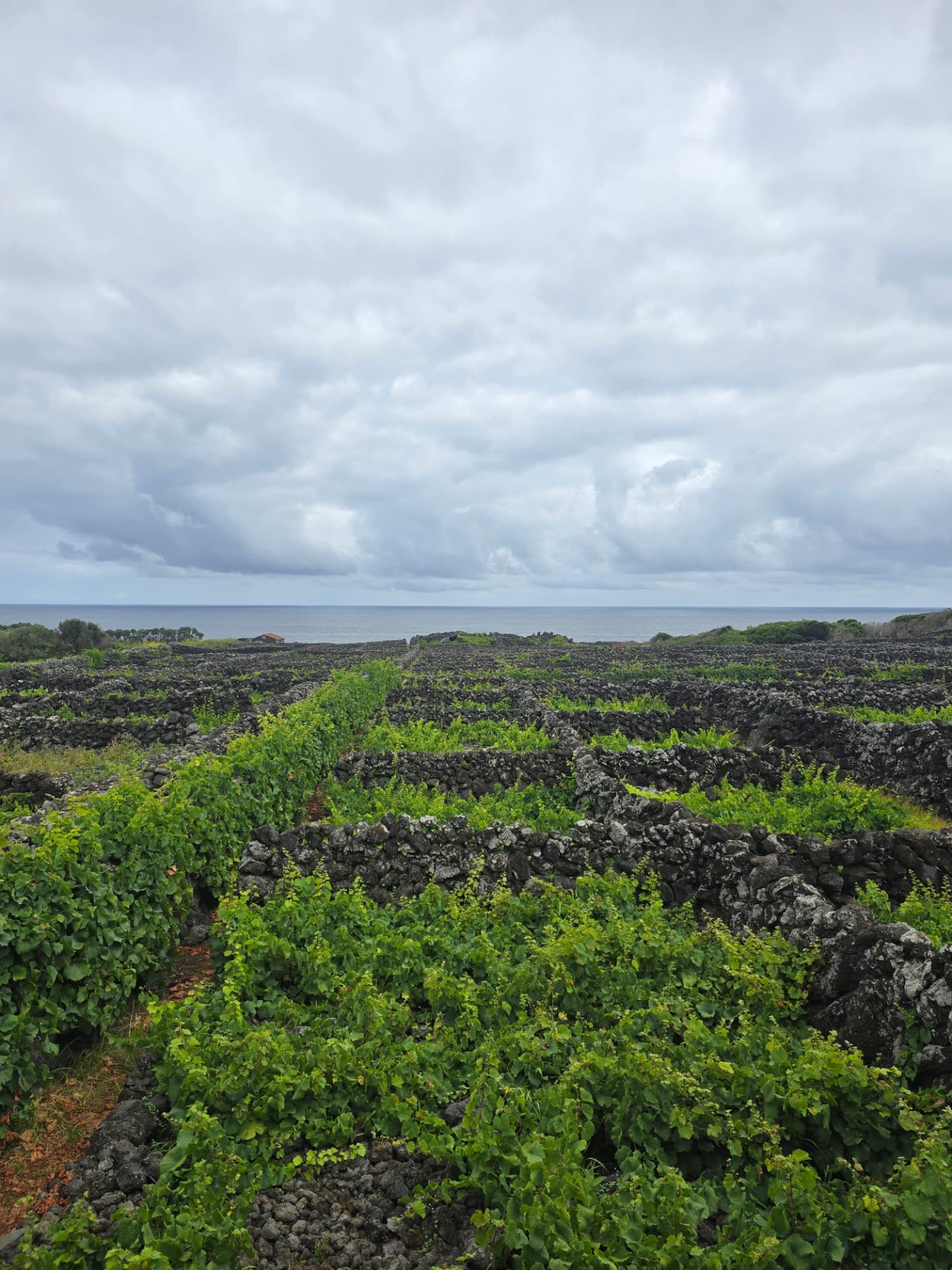
Because vineyards in Biscoitos don't look like the vineyards I was used to seeing elsewhere.
They look like mazes.
Black volcanic stone walls divide the land into small enclosures that protect the vines from Atlantic wind and salt. The dark volcanic rock absorbs warmth from the sun and releases it around the plants.
Stone that came from volcanic eruptions eventually became part of the system that allows grapes to grow on a windy island in the middle of the Atlantic.
I love things like that.
And then there were the fig trees.
We were told that figs are planted around the vineyards in part because the fruit gives birds something else to eat besides the grapes.
This should have been an innocent piece of agricultural trivia.
But I am writing a novel called FIGMENTS partly inspired by Sylvia Plath.
So the fig trees caused an entirely separate existential crisis.
I've written about that elsewhere in the windows.
We also visited Materramenta, where we walked through their vineyard and learned more about the grapes grown in Biscoitos.
The island is especially known for white wine, and we learned about the white varieties that thrive in this strange combination of volcanic stone, Atlantic wind and salt.
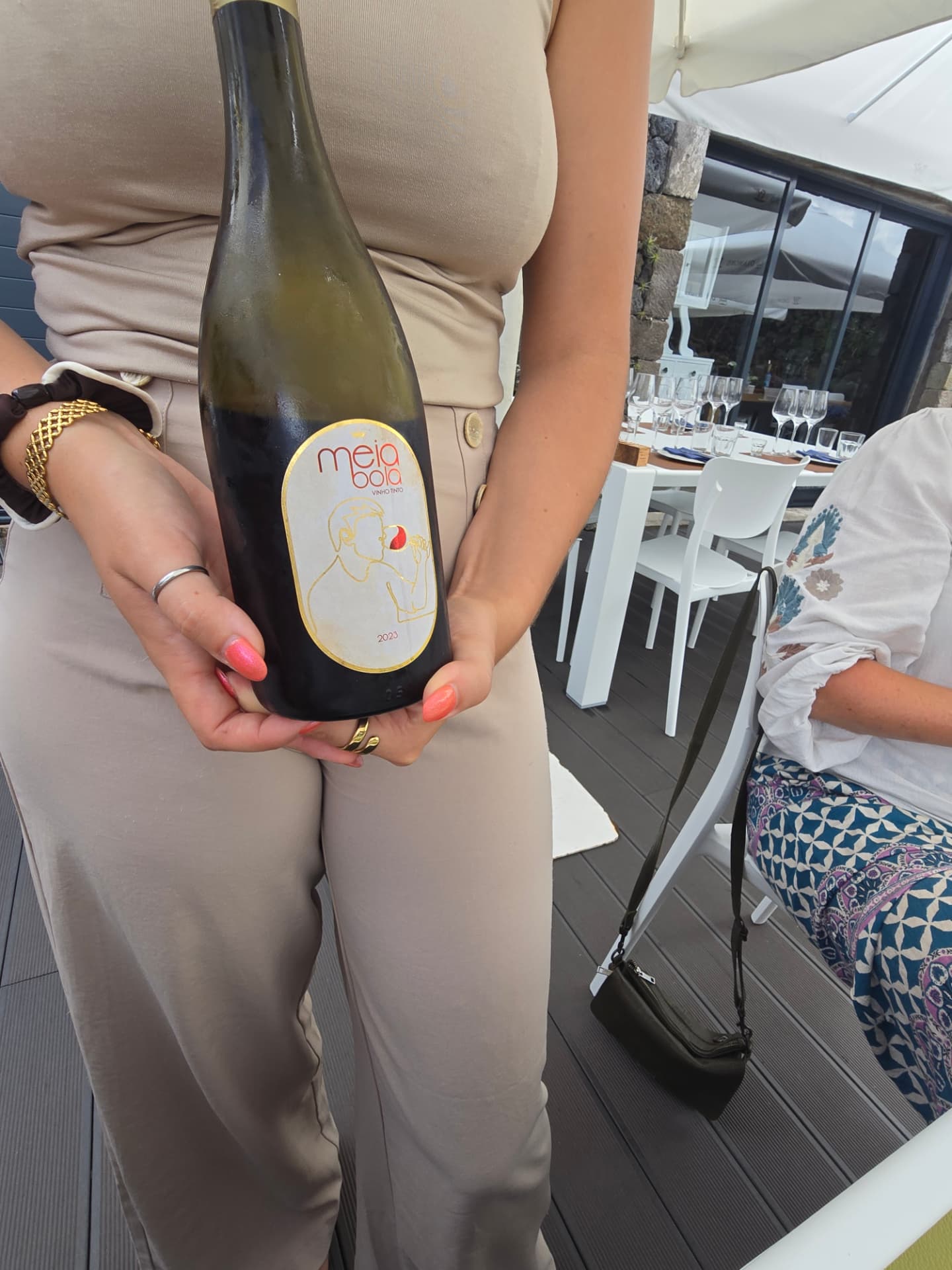
And then there was Meia Bola.
At Materramenta, we learned about Isabella.
The forbidden grape. The forbidden wine.
Isabella is an American grape variety that became important in the Azores after disease devastated older vineyards (which came with a playful jab towards Americans). It became closely associated with vinho de cheiro, the intensely aromatic wine that became part of Azorean drinking culture. Later European regulations complicated Isabella's place in commercial winemaking.
But Terceira didn't entirely stop making wine from it.
Materramenta makes Meia Bola, a red wine they said was from Isabella.
We were also told you can't buy it in stores.
If you want a bottle, you buy it there at the winery.
Naturally, we tried it.
It was the best red wine I had on the island.
Actually, it was one of the best red wines I've ever had.
Which seems deeply unfair for a wine I'm apparently going to have to fly back across the Atlantic to drink again.
Even the name reaches backward.
Meia bola literally means half ball, but historically on Terceira the expression was also used for a serving of vinho de cheiro.
So the bottle isn't merely carrying wine. It's carrying an old bit of island language with it.
Then There Were the Bulls
You cannot spend much time on Terceira in summer without eventually encountering a bull.
Sometimes quite literally.
The island's touradas à corda, or bull runs on a rope, are woven into village life.
These were not the Spanish-style bullfights I had pictured when someone first said bullfight.
The bull isn't killed.
Instead, it is controlled by handlers using a long rope while people demonstrate varying combinations of athleticism, courage, confidence and absolutely terrible decision-making by getting remarkably close to it.
We went to more than one, including one in São Mateus and another in one of the smaller towns.
At night, entire neighborhoods seemed to become grandstands.
People sat on walls.
People crowded balconies.
There was food.
Beer.
Families.
Friends.
And then someone released a bull and apparently everyone collectively agreed this was the best way to spend the evening.
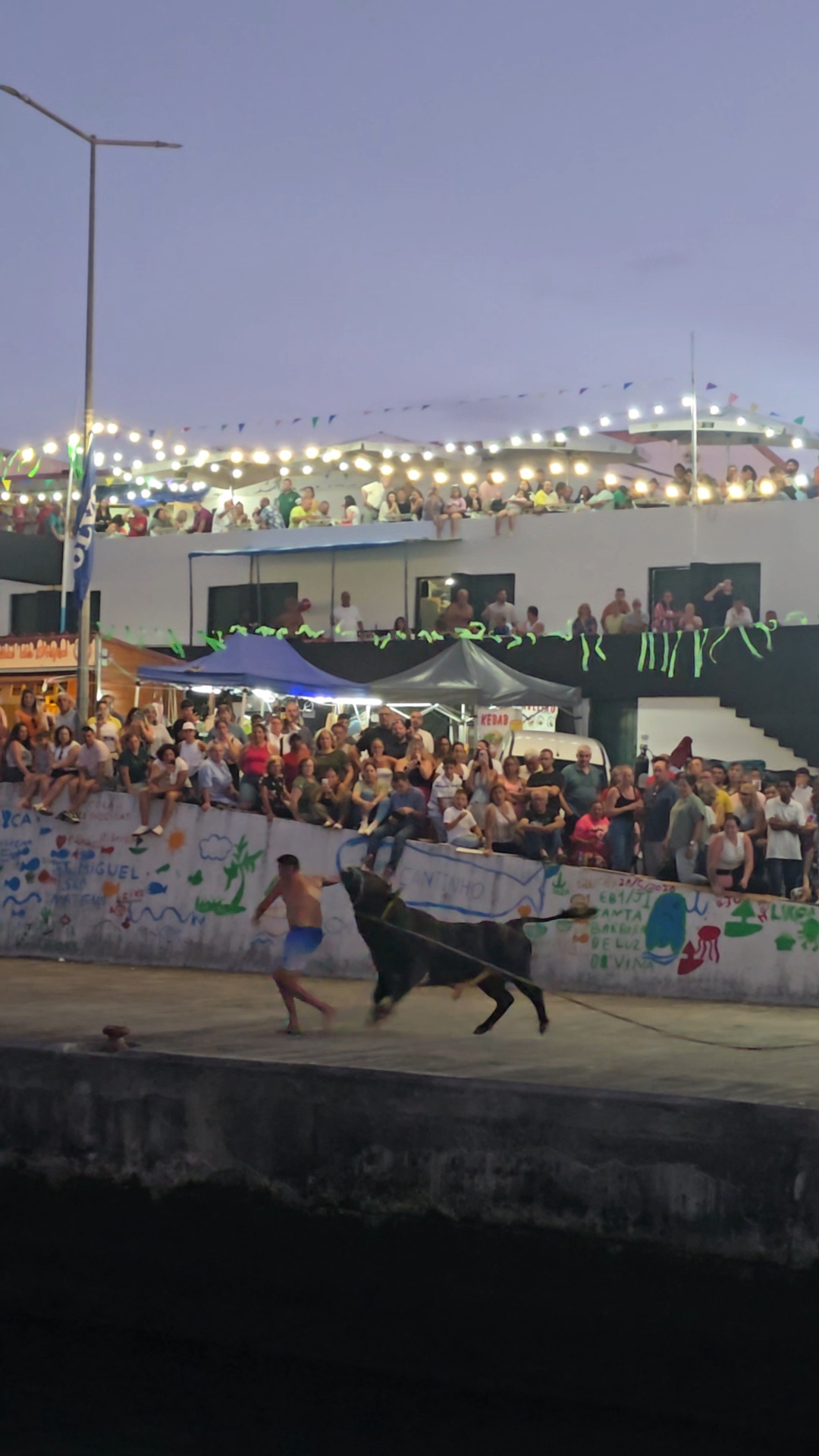
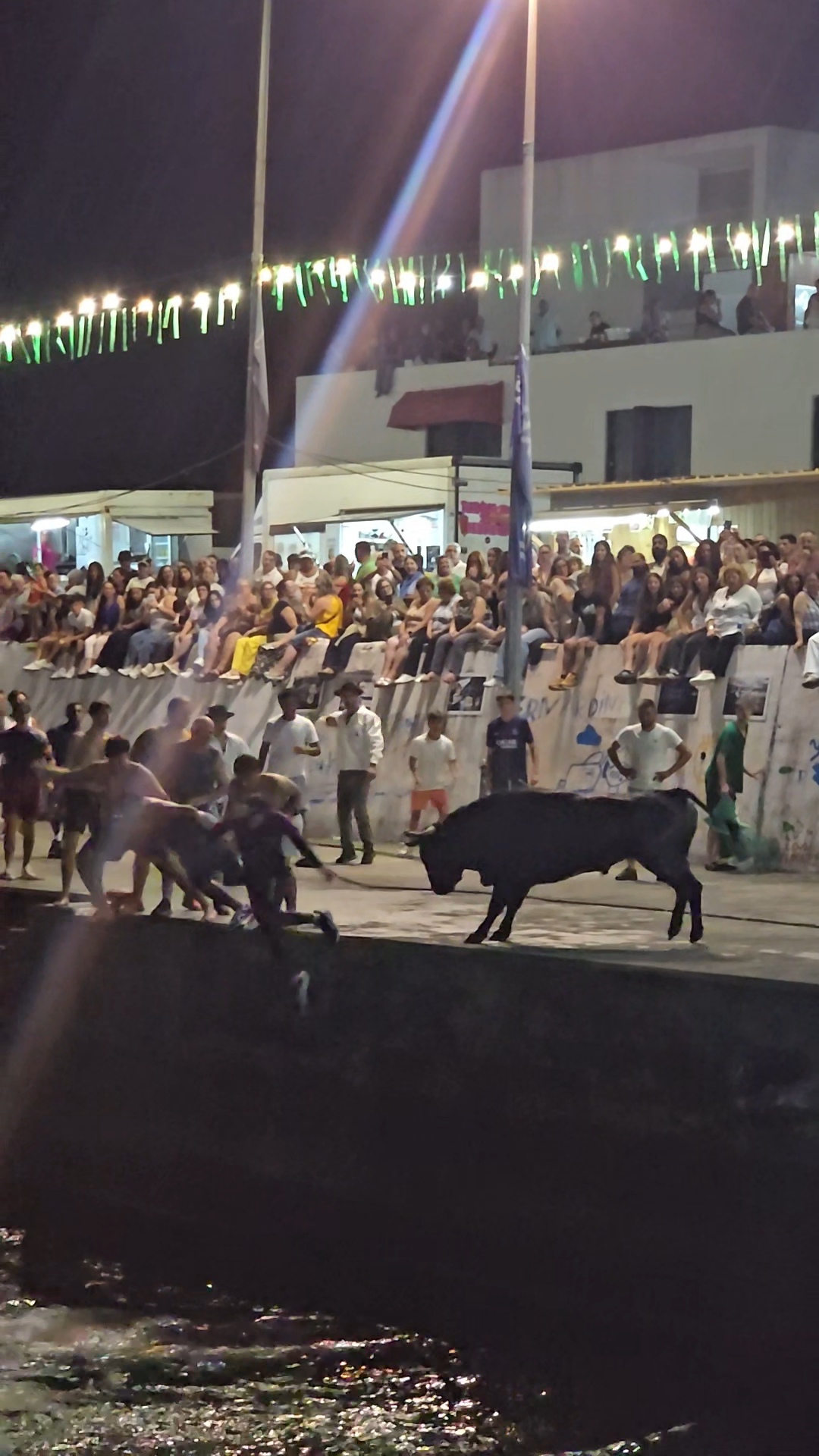
But one of my favorite parts happened before the bull run.
We stumbled upon one of the farms where the bulls are raised and happened to be there while they were going through the animals and deciding which bulls would go out that evening.
People gathered around.
There were trucks.
Food.
Kegs of beer.
Flowers.
Families and friends hanging around.
It was a party.
And it wasn't something arranged so tourists could see “local culture.”
We were simply fortunate enough to be there while people were doing what they do.
That's something I loved about Terceira.
It didn't feel like the island was performing itself for us. There weren't tourist traps.
We were just allowed to be there and join in while Terceira was being Terceira.
Out Toward the Goat Islets
We took a boat around the island and out toward the Ilhéus das Cabras, the Goat Islets where we learned about the history and folklore.
And then I got in the water.
Not a pool.
Not a protected swimming area.
The Atlantic.
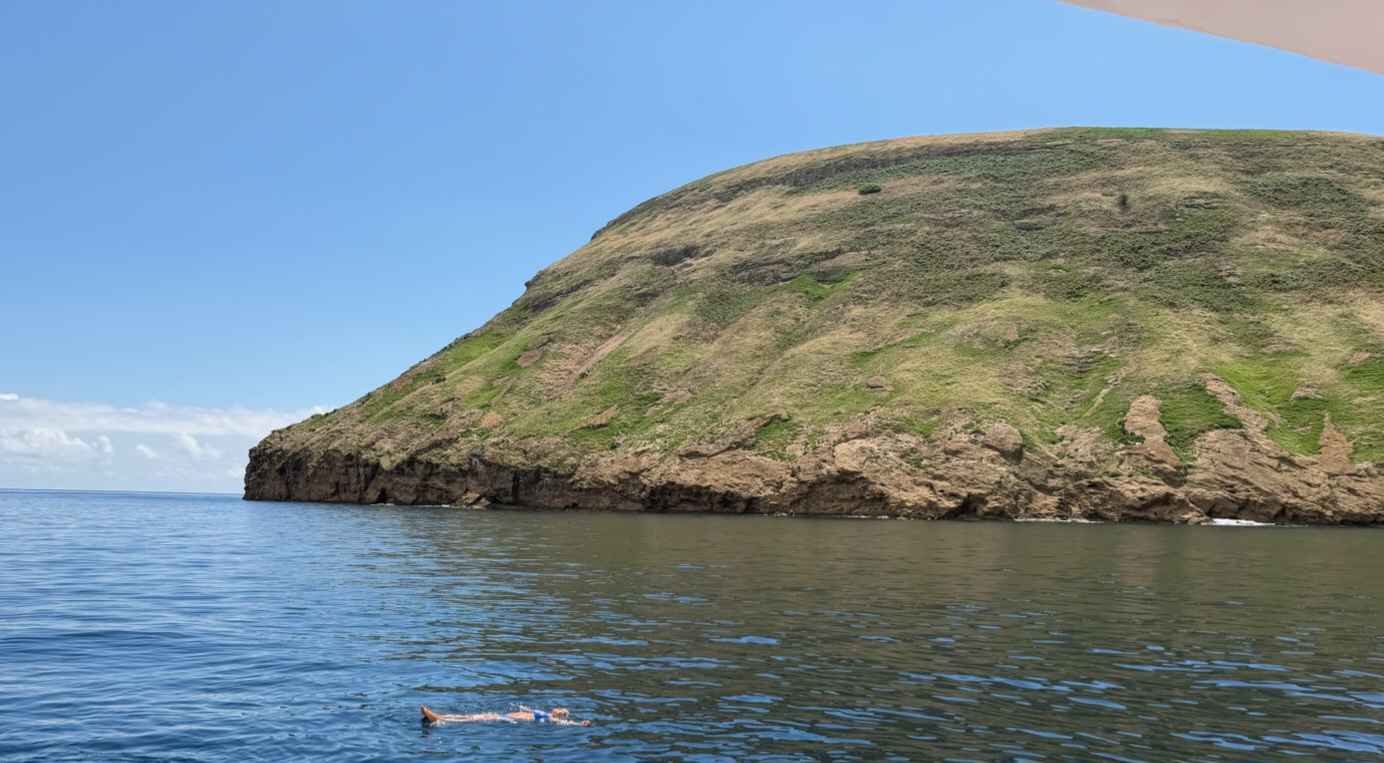
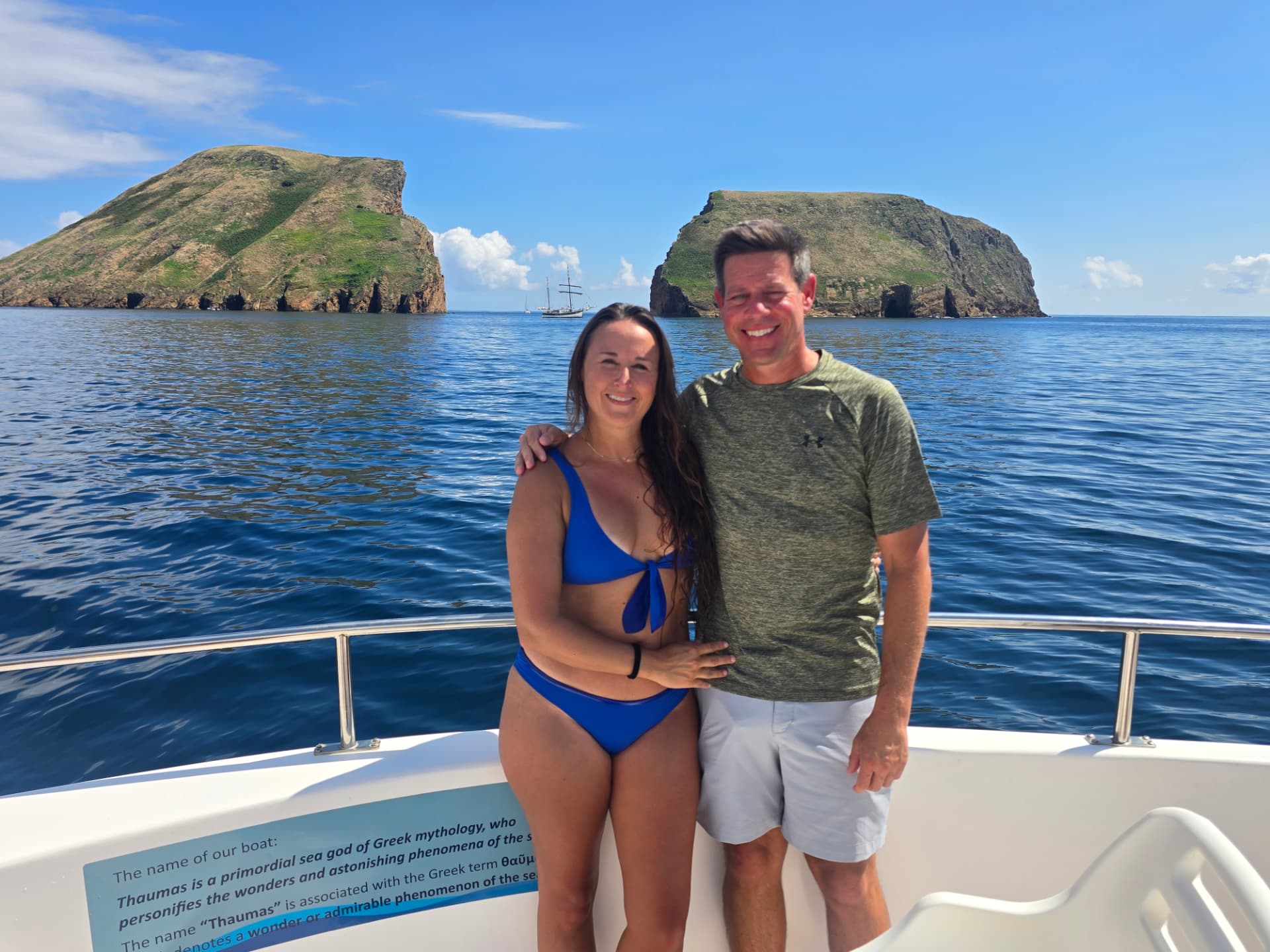
There is something wonderfully ridiculous about floating in the Atlantic and looking over at an enormous volcanic island rising out of the water beside you.
Terceira had already let me walk inside its volcanoes.
Now I was swimming beside pieces of them.
Whales, Dolphins, and Absolutely No Composure
We went whale watching too.
We found pilot whales.
And more dolphins.
Thousands.
We saw three different kinds of dolphins during the trip; spotted dolphins, common dolphins, and Atlantic bottlenose dolphins.
At one point they were launching themselves completely out of the water beside us as if putting on a show.
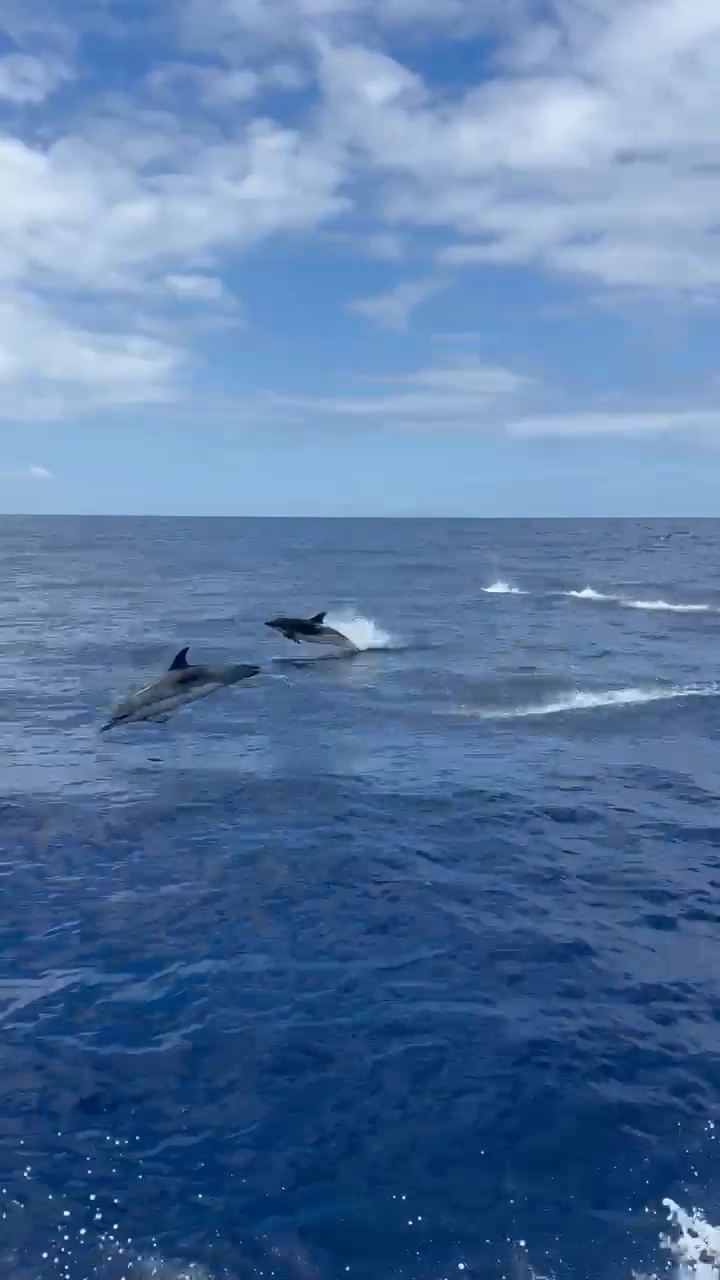
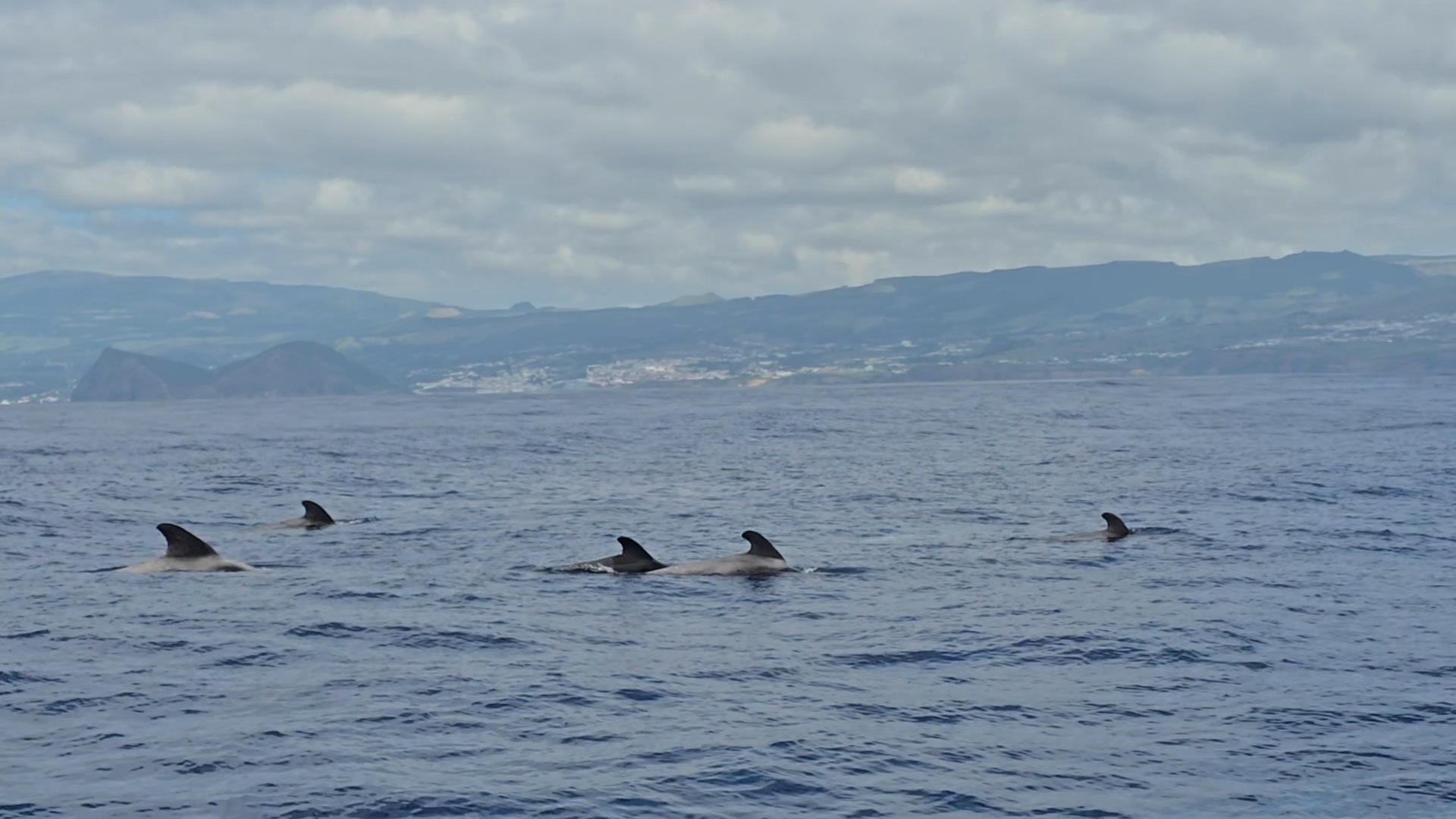
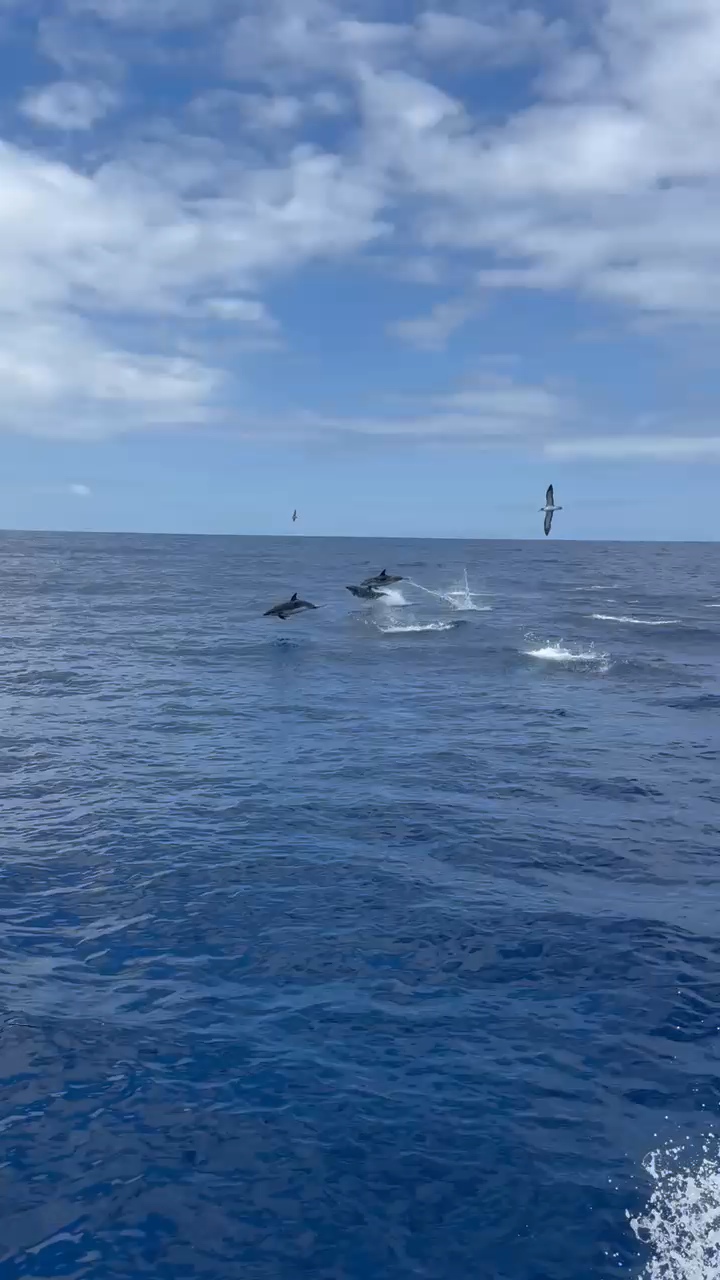
It is very difficult to maintain one's composure while dolphins are doing this.
I didn't try.
Swimming in the Volcano
Then there were the natural pools at Biscoitos.
This was different from swimming near the Goat Islets.
Here, Atlantic water moves through pools and channels formed by black volcanic rock.
And once again, Terceira makes it impossible to forget what you're standing on.
Or, in this case, floating in.
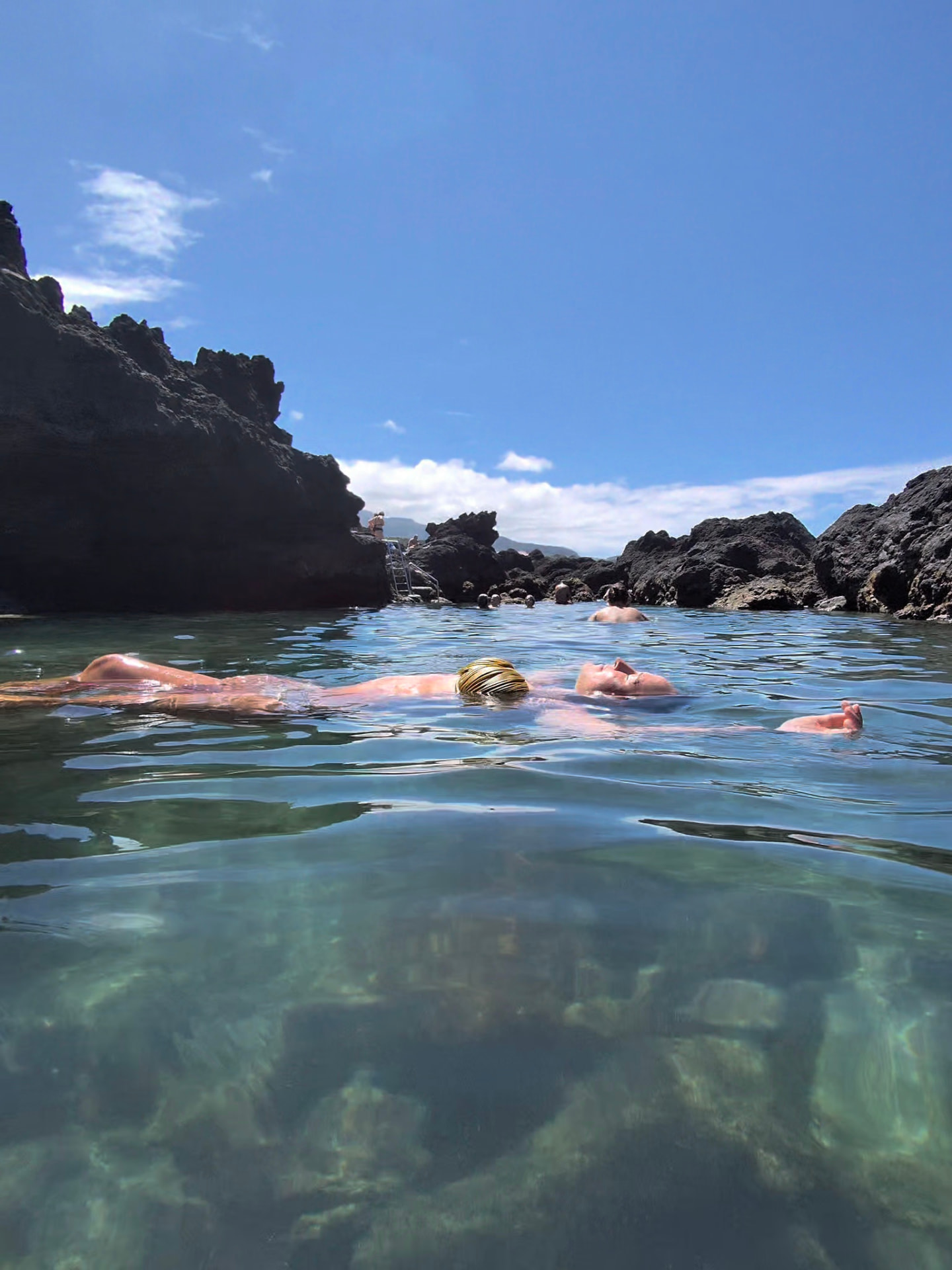
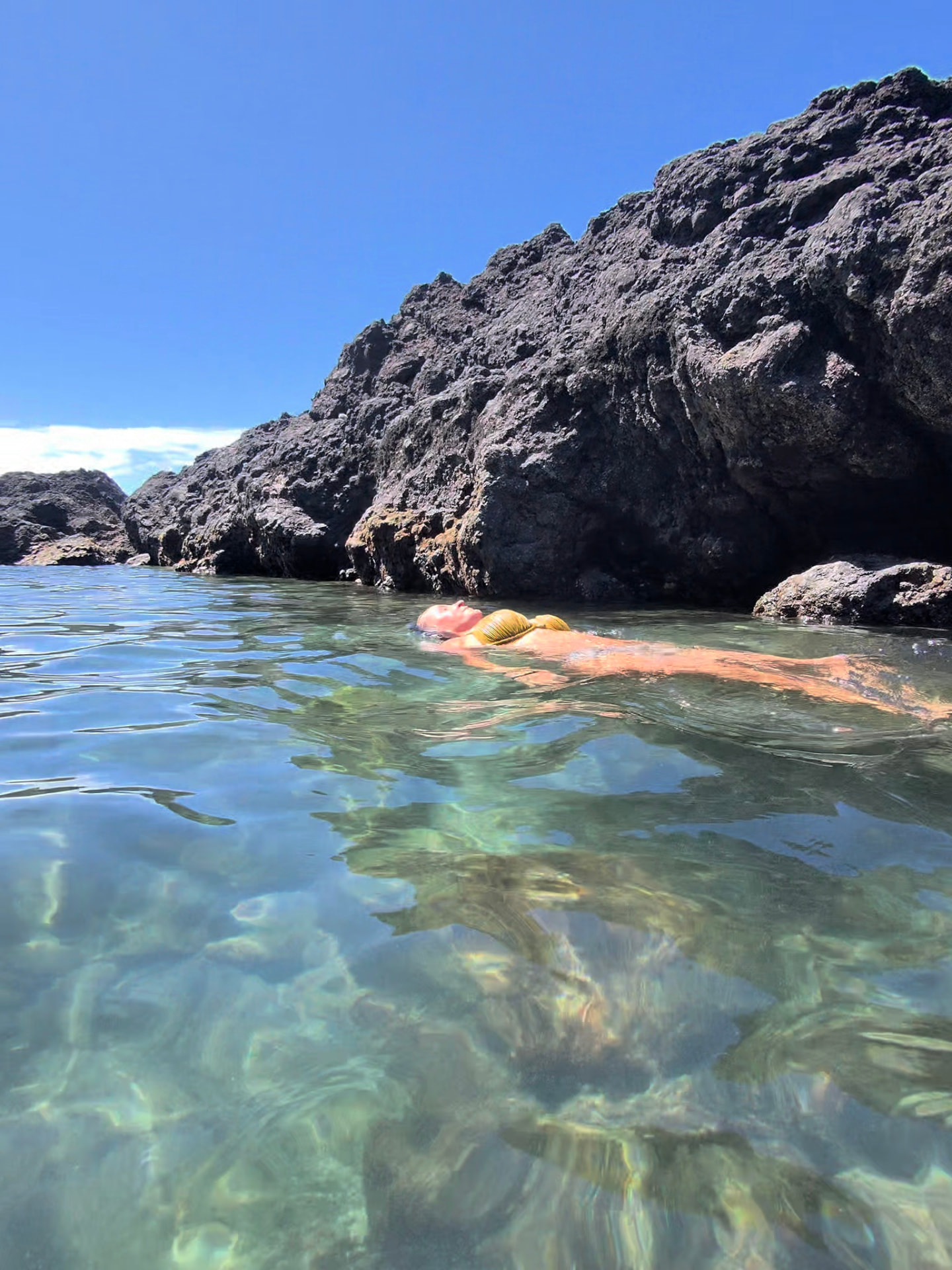
The water was cold. The rocks were warm. The sky was enormous.
And that was enough.
Somewhere Along the Way, I Learned the Island
We also took a side-by-side tour around the western side of Terceira.
We drove through rolling fog.
We wandered through towering trees.
We were covered in dust.
And somewhere along the way, something funny happened.
I had lost myself even though I knew exactly where I was.
This is particularly strange because Quentin and I are both pilots.
Put us in the sky and give us a bird's-eye view of the world and we can both navigate almost without thinking about it.
Terrain.
Coastlines.
Roads.
Water.
Landmarks.
A compass.
A map.
From above, geography makes sense to both of us.
It's second nature.
Put us on the ground, though, and apparently our brains abandon aviation and choose completely different operating systems.
Quentin navigates by order.
Street names.
Cardinal orientation.
This road connects to that road. We came from over there. We need to go west.
I navigate by chaos.
And trees.
This became increasingly obvious on Terceira.
A couple of times I'd tell him, “No, we've been down this road. Up ahead is going to be...” whatever I remembered being there.
And he'd look at me.
“How do you know?”
Because of that tree.
That stone.
Or the way the creek bends.
Or the particular vine climbing over that rock.
Or those wildflowers.
Or the way moss has grown over one particular wall
I couldn't necessarily tell you the name of the road.
I might not be able to tell you which cardinal direction we were traveling.
But I knew I'd seen that tree before.
Put me on a city grid and I can get lost despite the fact that somebody has very thoughtfully numbered and named everything for me.
Put me in the woods and I can navigate all day.
Because the landscape doesn't feel anonymous to me.
I remember.
And “remember” doesn't quite describe it either.
I become familiar with them.
Intimately familiar.
They start to feel less like scenery and more like individuals.
I know this sounds strange, but it sometimes feels as though they're speaking to me.
Not in words.
More like recognition. You've been here before. You know this place. It imprints on my soul.
I am the tree.
The road bends after me.
And once I've noticed something that way, I don't forget it.
Apparently I do the exact same thing with people.
All over Terceira, I kept pointing strangers out to Quentin.
“We saw him before.”
“That woman was at the other place.”
“That's the couple we passed on the trail.”
And he'd ask: “How do you know that?”
And I don't know.
I just know their face, which is fascinating for someone with no mental imagery.
Eventually we started laughing about it.
Quentin remembers roads.
I remember faces and trees.
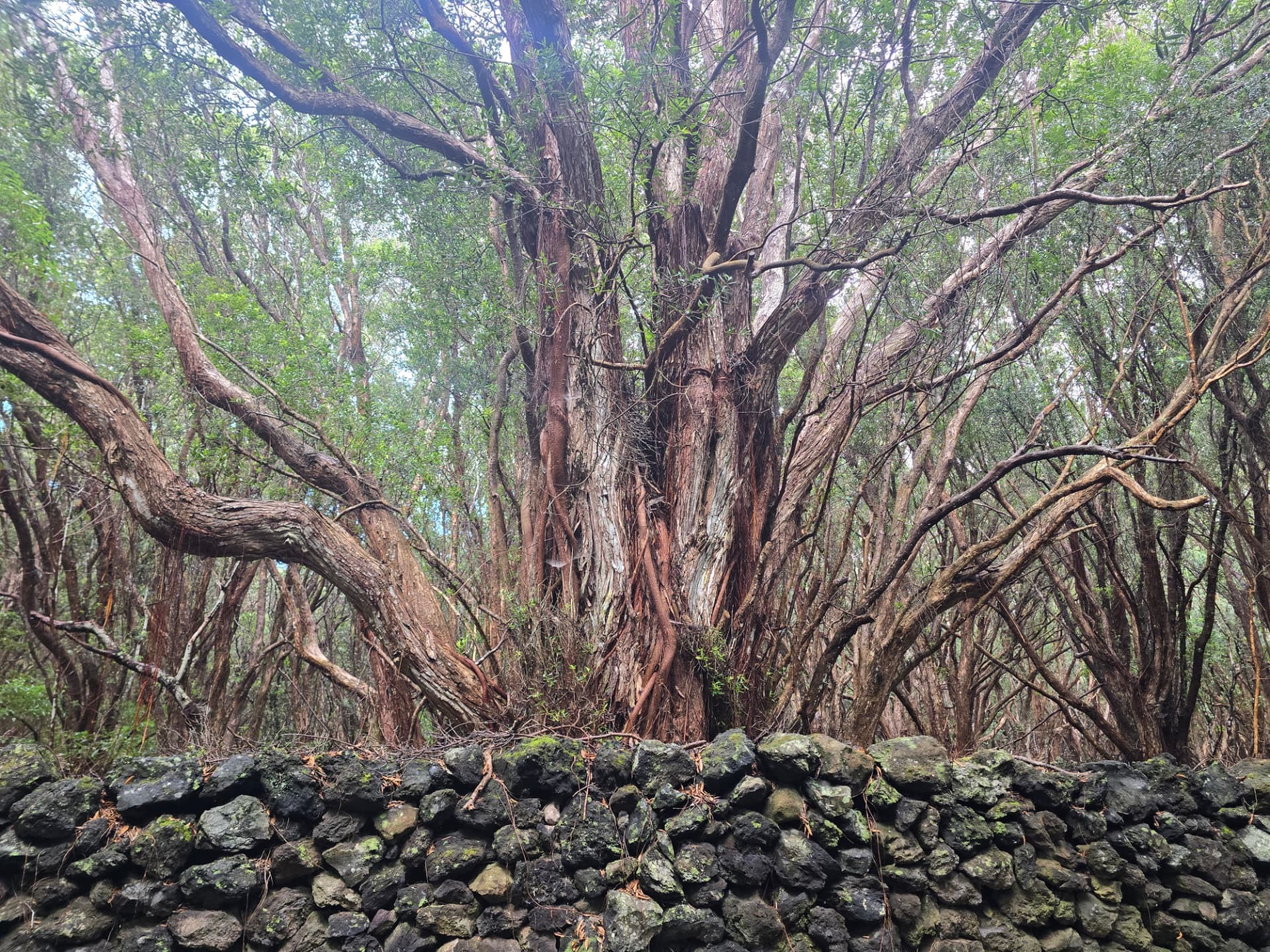
And by the end of the trip, something had shifted.
Terceira was no longer an unfamiliar location.
I was beginning to recognize it.
Not because I'd memorized a map.
Because some things speak to your soul.
The island had started acquiring familiarity one detail at a time.
And there was so much to recognize.
Moss everywhere.
Black volcanic stone.
Massive trees that seemed to have been standing there forever.
Hydrangeas rolling across hillsides in enormous clouds of color.
Wildflowers beside roads.
Queen Anne's lace.
Ferns.
Flowers absolutely everywhere.
Not only growing wild.
Hanging baskets spilling from buildings.
Flowers on balconies.
Flowers around windows.
Flowers growing on roofs and walls.
Colorful buildings lined up against streets, each one seemingly determined not to let the next one have all the fun.
Cats sitting in windows like tiny landlords.
Dogs barking from walls.
Cows lining the hilltops.
Chickens wandering around.
Roosters crowing. Not politely at dawn.
All day.
Apparently nobody informed the roosters that they had one job and a fairly specific shift.
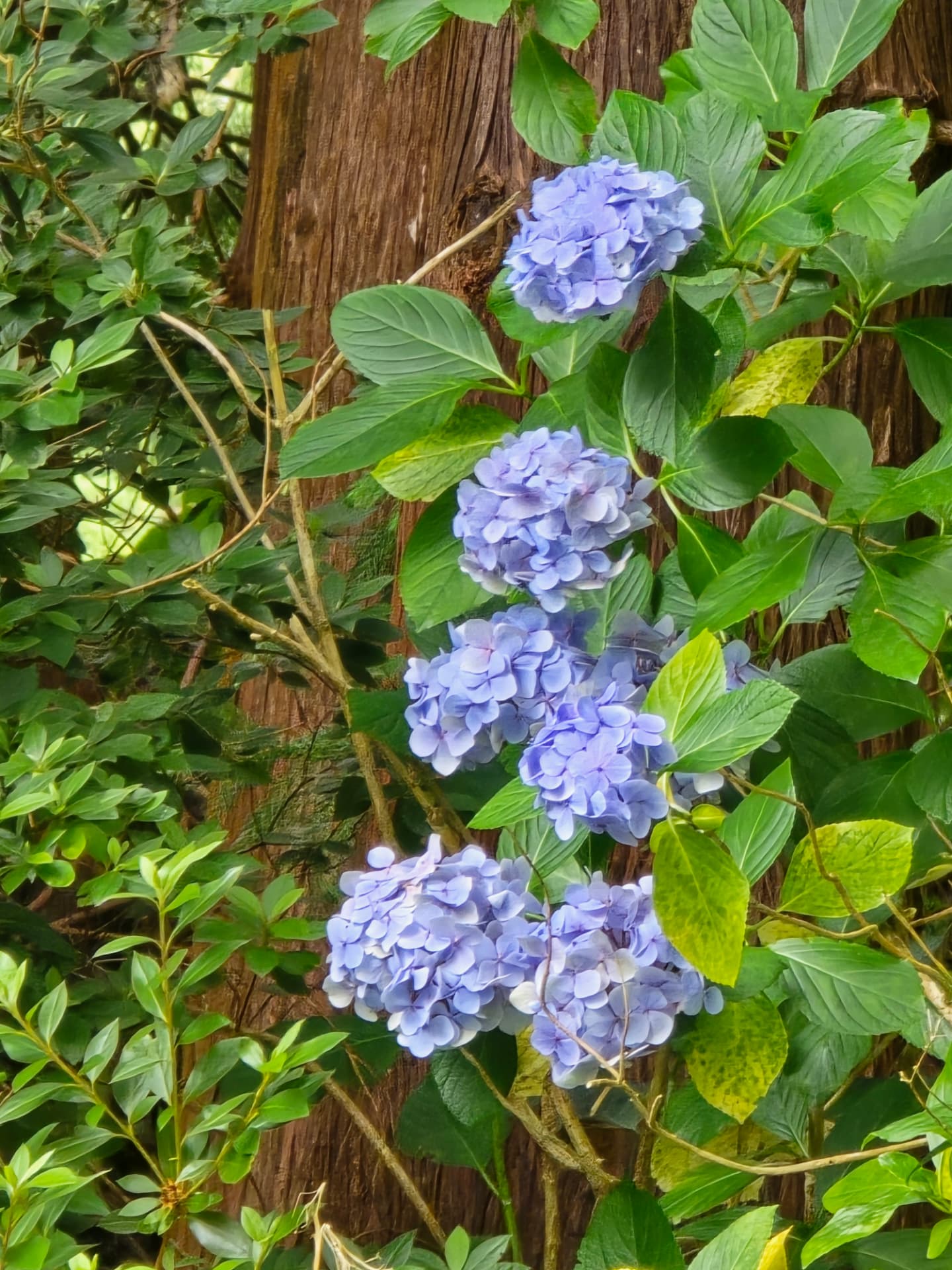
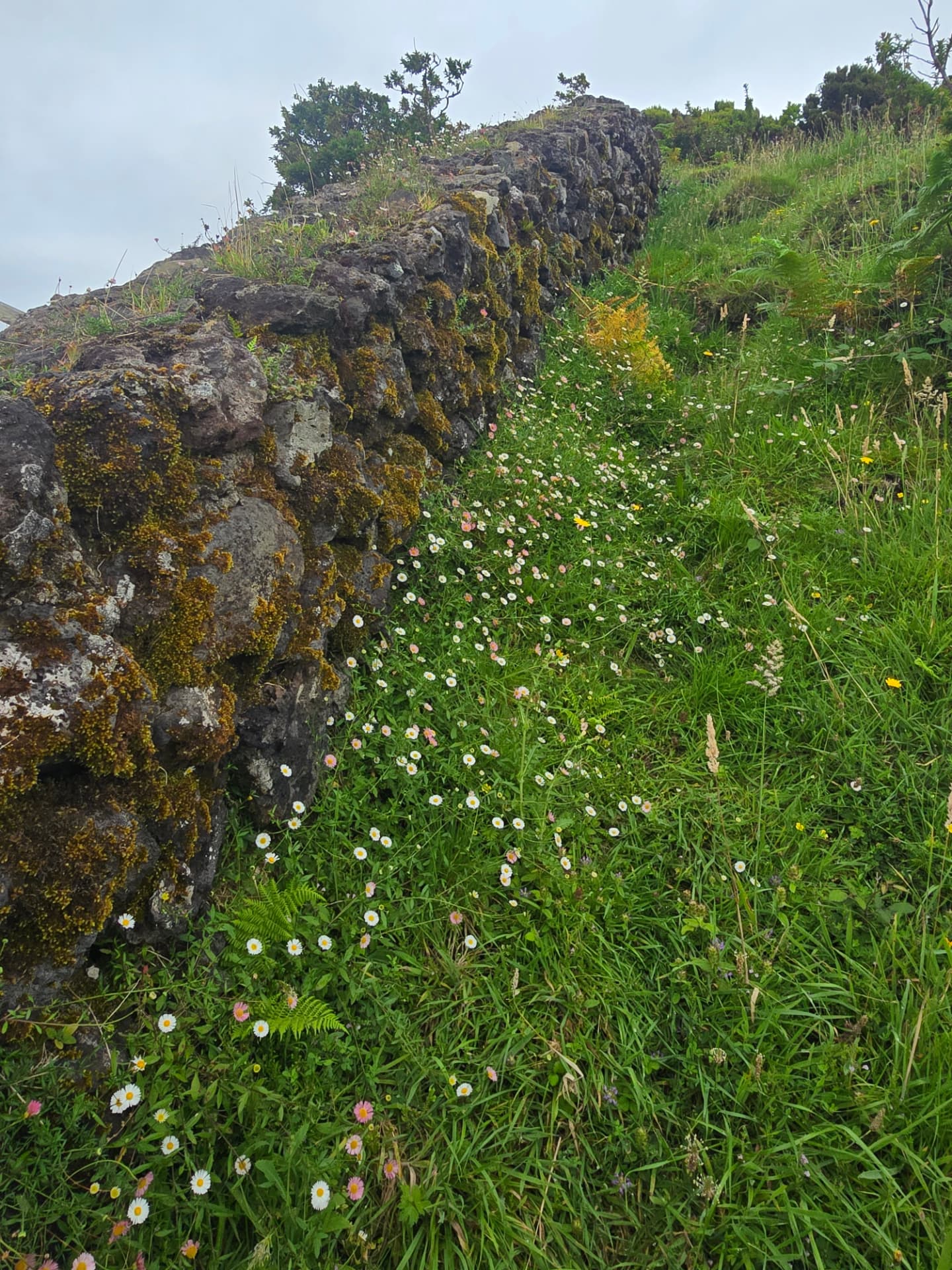
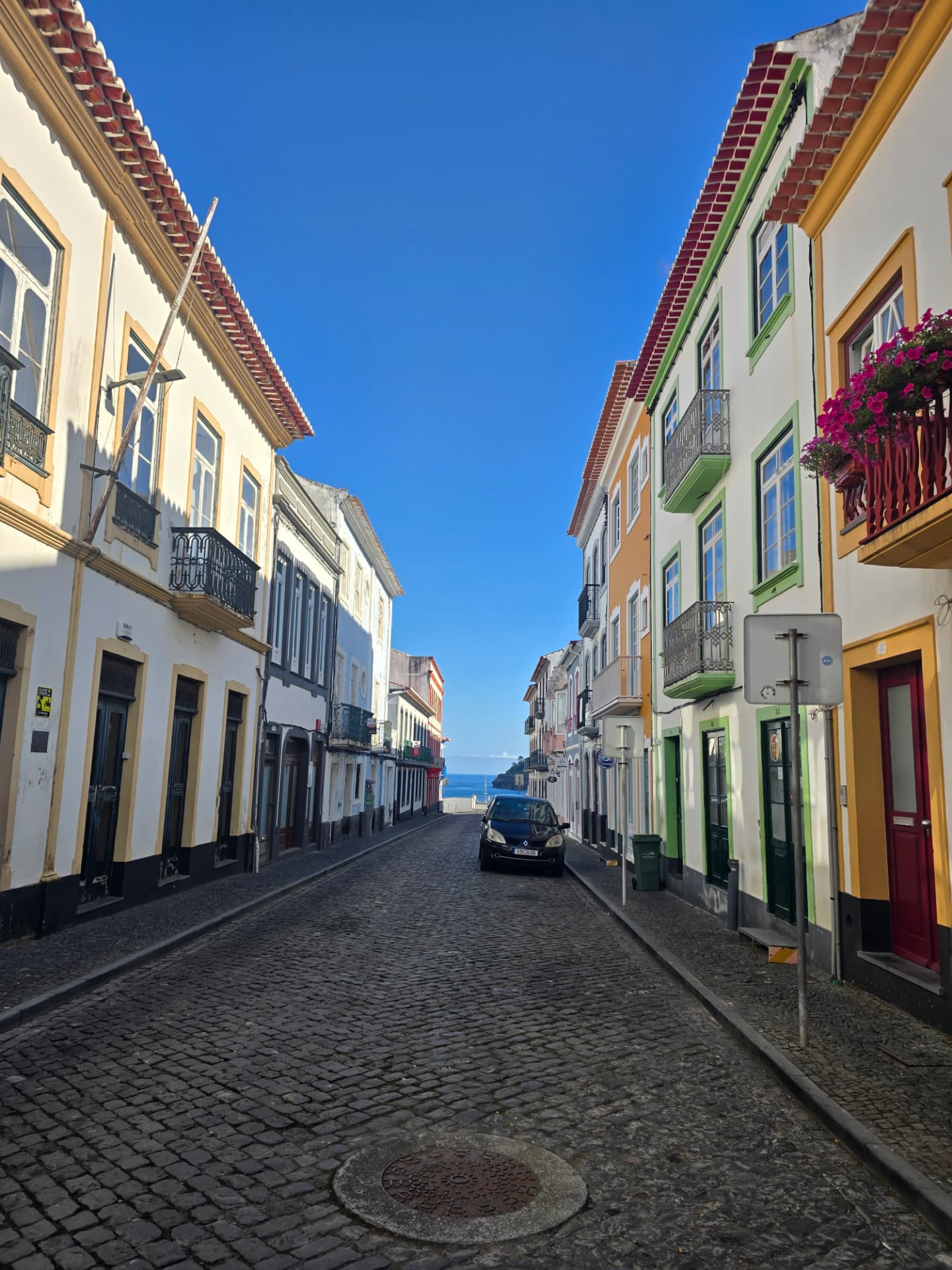
The island was beautiful in the big obvious ways.
Ocean.
Cliffs.
Volcanoes.
Rolling hills.
But I think I fell in love with it in the accumulation of smaller things.
And We Ate Very Well
There was excellent sushi at Ginsu.
There was Taberna do Roberto and a large family meal.
There were meals made from things grown, raised or caught astonishingly close to where we were sitting.
There were long dinners with friends.
There was sangria.
There was fig gelato.
There was food I ordered without being entirely sure what I was getting myself into.
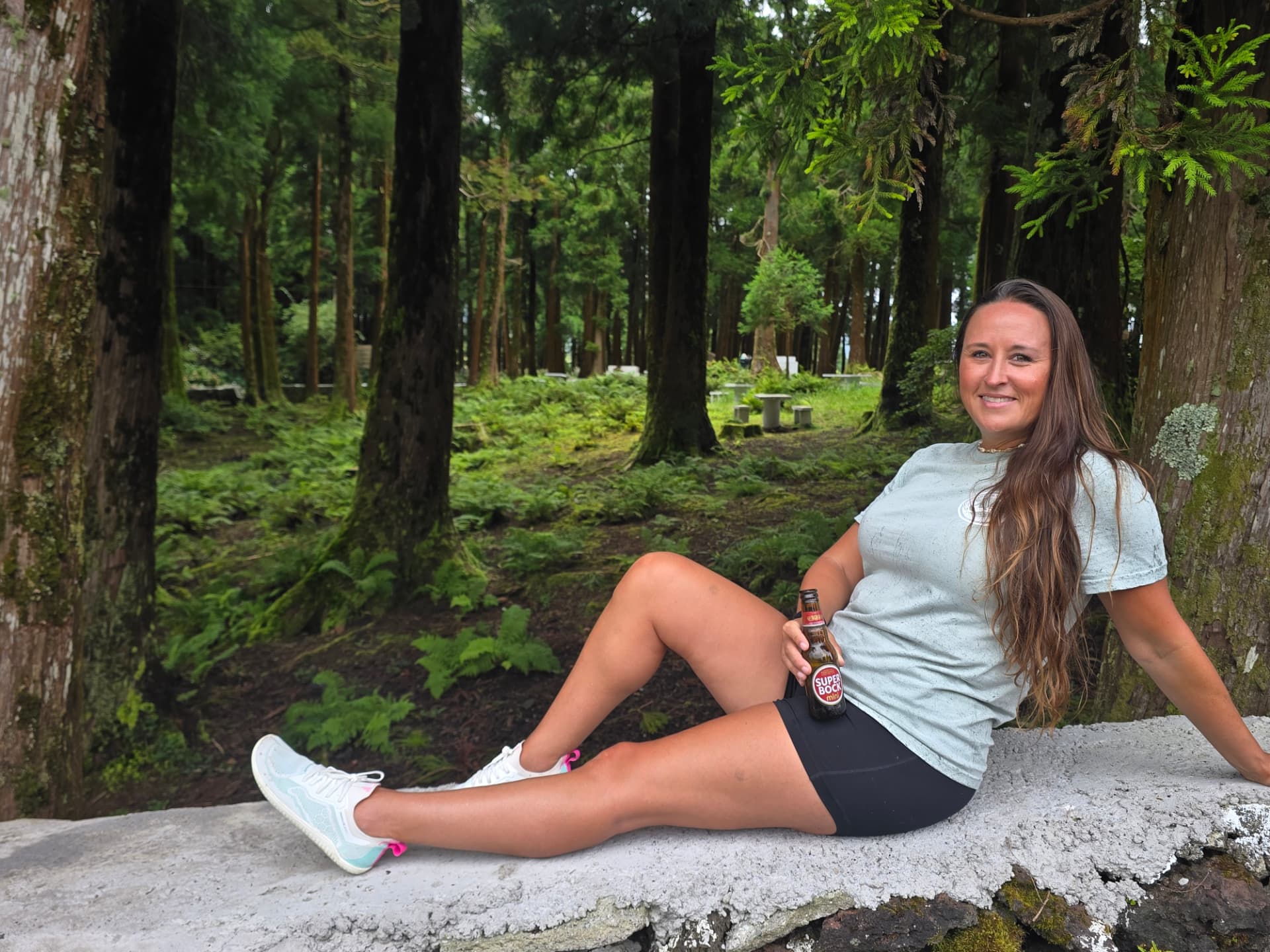
And there was a lot of Super Bock consumed in the woods and while sitting on stone walls because apparently even obsessive research occasionally requires hydration of a different sort.
The Women in the Cloaks Were Laughing
And because Terceira apparently wasn't finished giving me things to think about, I went to the Museu de Angra do Heroísmo.
There I finally saw an actual capote e capelo.
I'd already been seeing representations of the Mulher de Capote, the woman in the cloak, all over the island.
Souvenirs.
Photographs.
Artwork.
Liquor bottles.
Shop windows.
The traditional garment could envelop a woman in dark fabric beneath an enormous structured hood, obscuring much of her body and face.
And one of my favorite details was how that extraordinary shape was made.
The hood's rigid structure was traditionally supported with whalebone.
Of course it was.
An island garment built partly from the sea.
The cloak could conceal so much of the woman wearing it that anonymity became part of its history and folklore. I've written elsewhere about why finding these women mattered so much to me and to a novel I am writing.
But one of my favorite encounters with them happened somewhere much less solemn.
A bar.
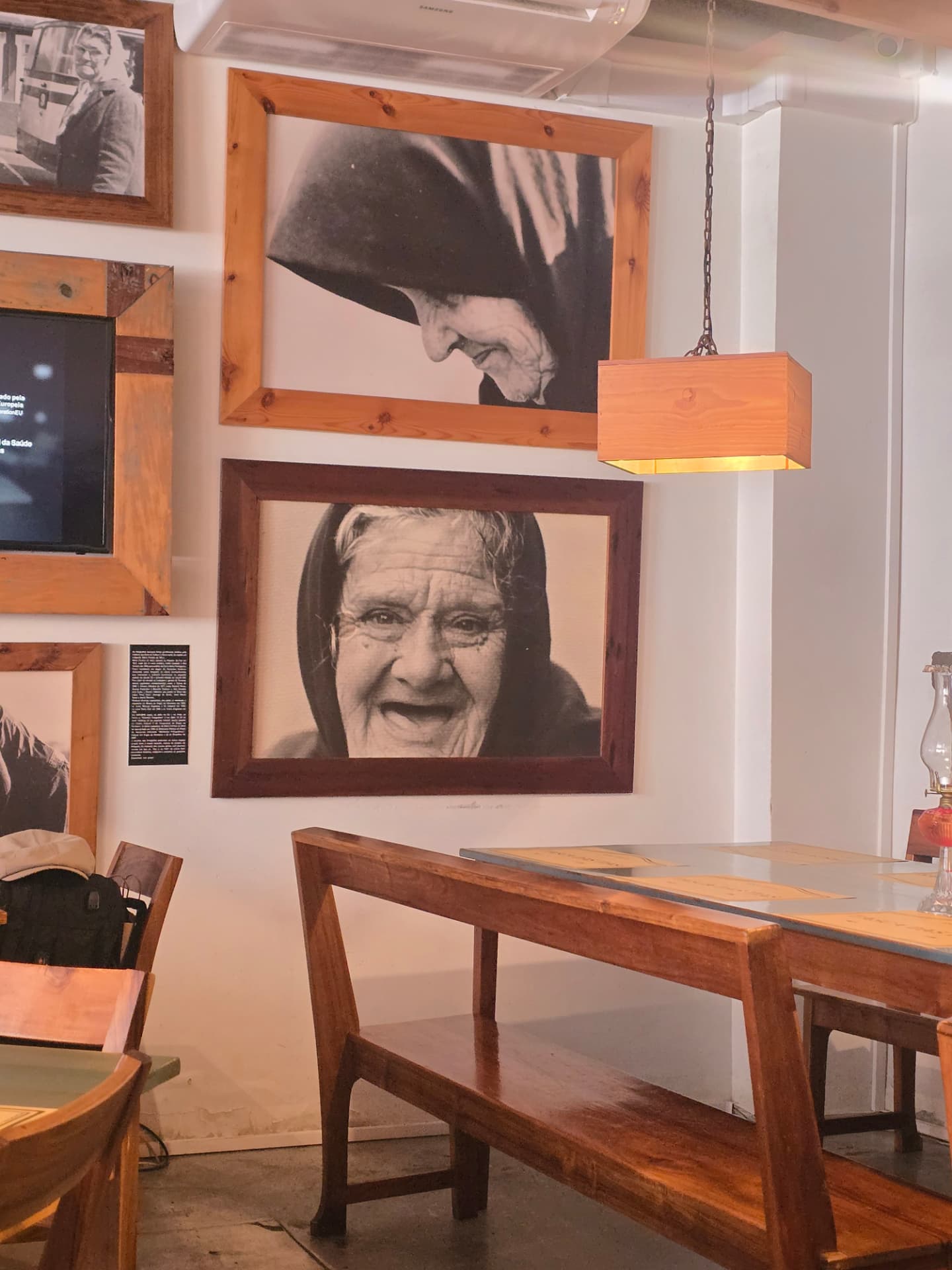
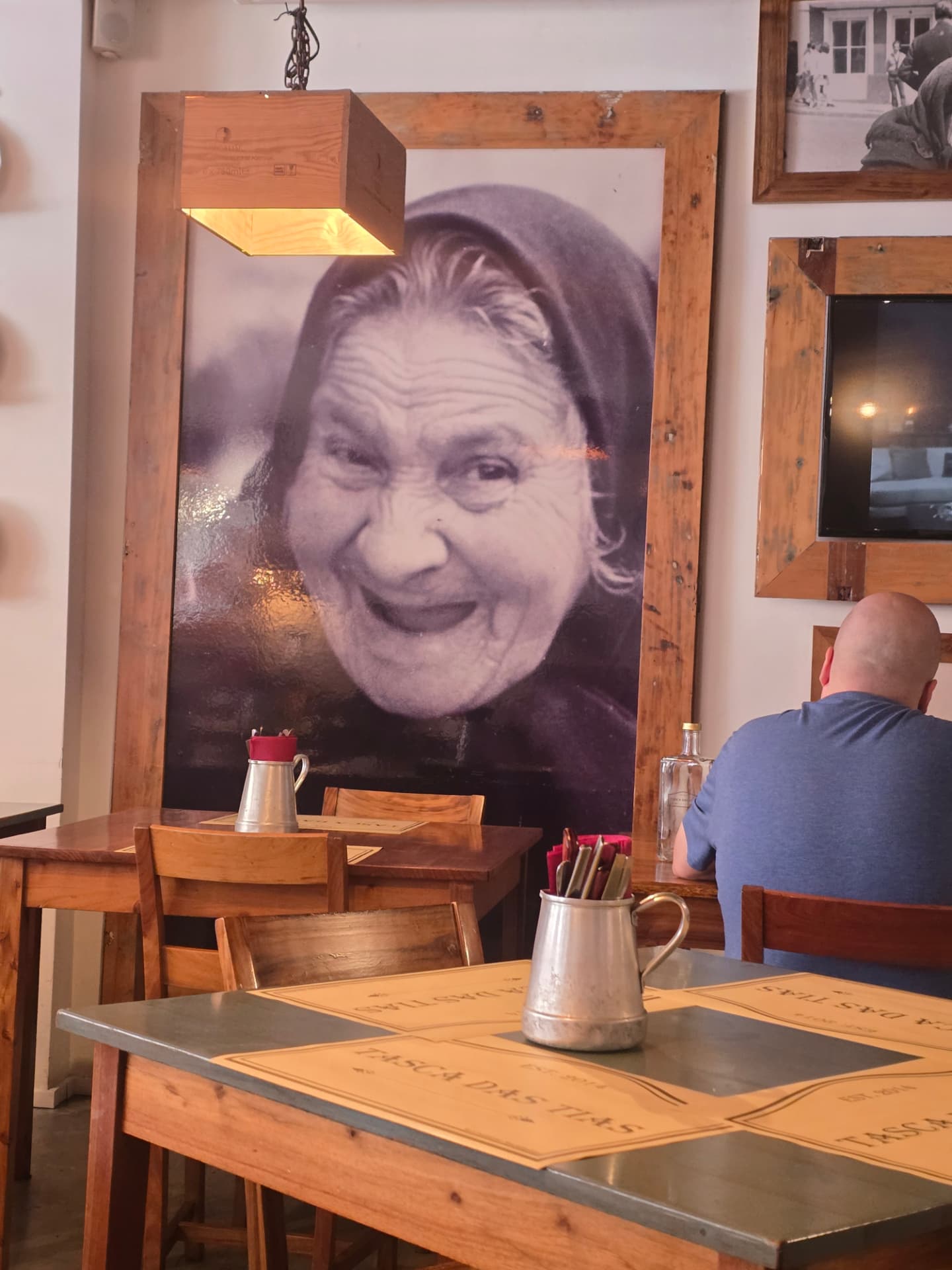
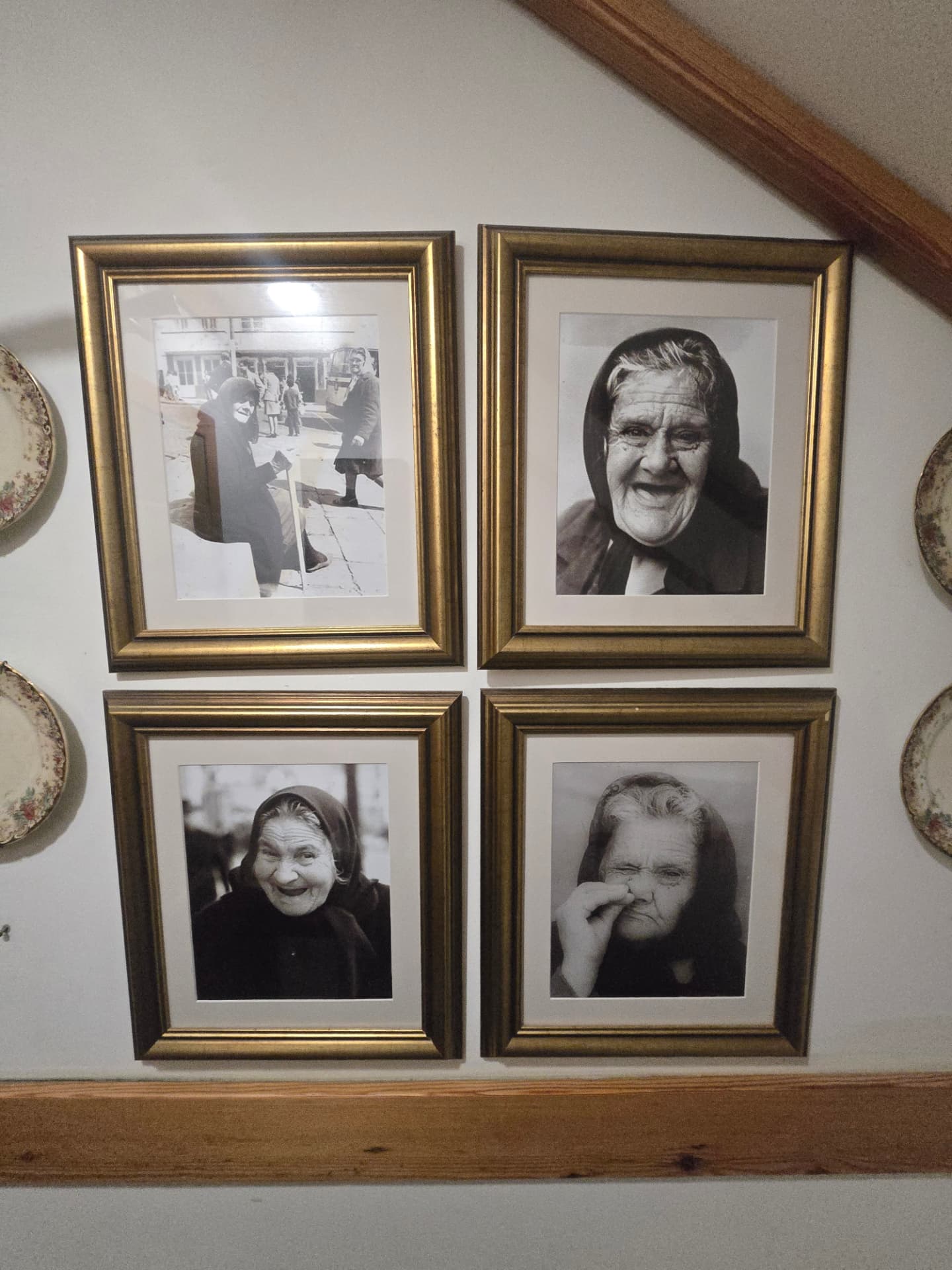
At Tasca das Tias, the walls were covered with enormous black-and-white images of women in their cloaks.
Except these women weren't staring solemnly into history.
They were laughing.
One was picking her nose.
Another looked like she'd just heard something absolutely scandalous.
One looked like she was about three seconds away from losing it entirely.
I loved them.
There is a tendency when we look backward to turn women into symbols.
The widow. The grandmother. The peasant.
The mysterious woman in the cloak.
We flatten them into whatever history decided they represented.
And then you see one picking her nose.
Suddenly she isn't a symbol anymore.
She's a person.
She probably had a filthy sense of humor.
She knew exactly which neighbor was sleeping with whom.
She got irritated.
She flirted.
She complained.
She laughed so hard somebody eventually took a photograph of it.
Those women on the wall felt alive. I think that's why I loved them so much.
I Didn't Need Terceira to Mean So Much
Terceira gave me an unreasonable amount of material and validation.
Cloaks.
Embroidery.
Fig trees.
Volcanic stone.
Wine history.
Old buildings disappearing beneath vines.
Forests growing over things humans abandoned.
Stories about women.
Stories about land.
Stories about people adapting to whatever an island in the middle of the Atlantic decided to give them.
Some of it has already worked its way into my writing.
More of it probably will.
But I don't want to make the mistake of believing a place has to become material before it has value to me.
Sometimes I was researching. Sometimes I was taking notes.
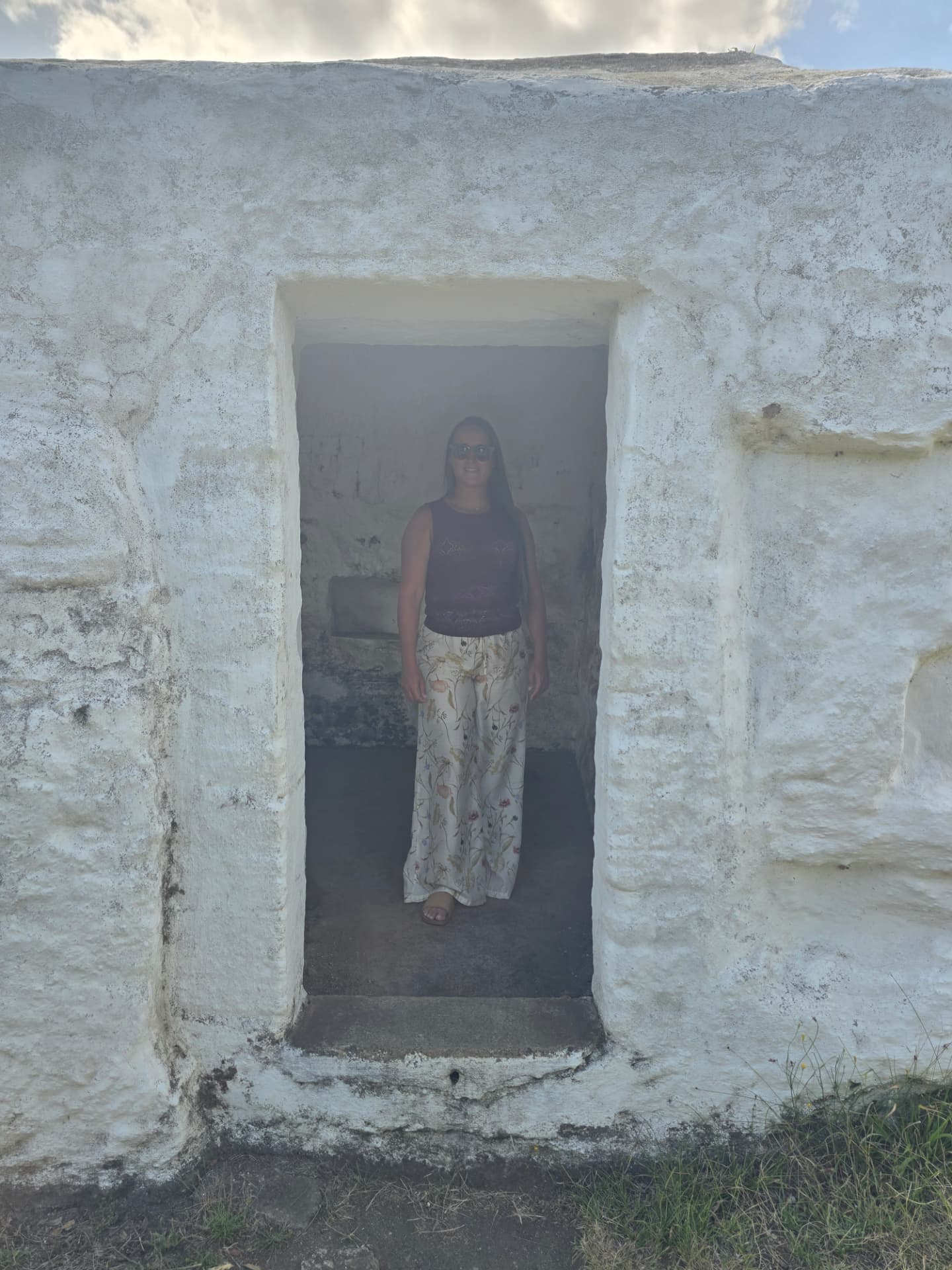
Sometimes I was standing in a doorway wondering who had stood there before me.
And sometimes I was drinking sangria.
Eating figs and cheese.
Swimming in the Atlantic.
Watching a bull chase somebody down a street.
Laughing at photographs of women who had been dead for years laughing right back at me.
Sitting in the woods drinking a beer.
Talking to people who spoke an entirely different language but repeatedly removed that language barrier themselves just so they could talk to me.
I came to their island without a single word of Portuguese.
And they welcomed me into their culture and into their homes.
I won't forget that.
I learned something every day in Terceira.
About volcanoes.
Wine.
Whales.
Agriculture.
Clothes.
Folklore.
History.
People.
And occasionally myself.
But mostly I remembered how much I love being somewhere I don't completely understand yet. Somewhere the world hasn't fully tamed.
Somewhere that makes me ask questions.
Somewhere that rewards looking a little closer.
And maybe that's why learning my way around Terceira felt so different from learning my way around most places.
Eventually, I didn't need to know the name of the road.
I knew the tree.
I knew the stone.
I knew the flowers.
I knew the bend.
The island had stopped being scenery and started becoming familiar.
Somewhere a path disappears into the woods and I have absolutely no idea where it goes.
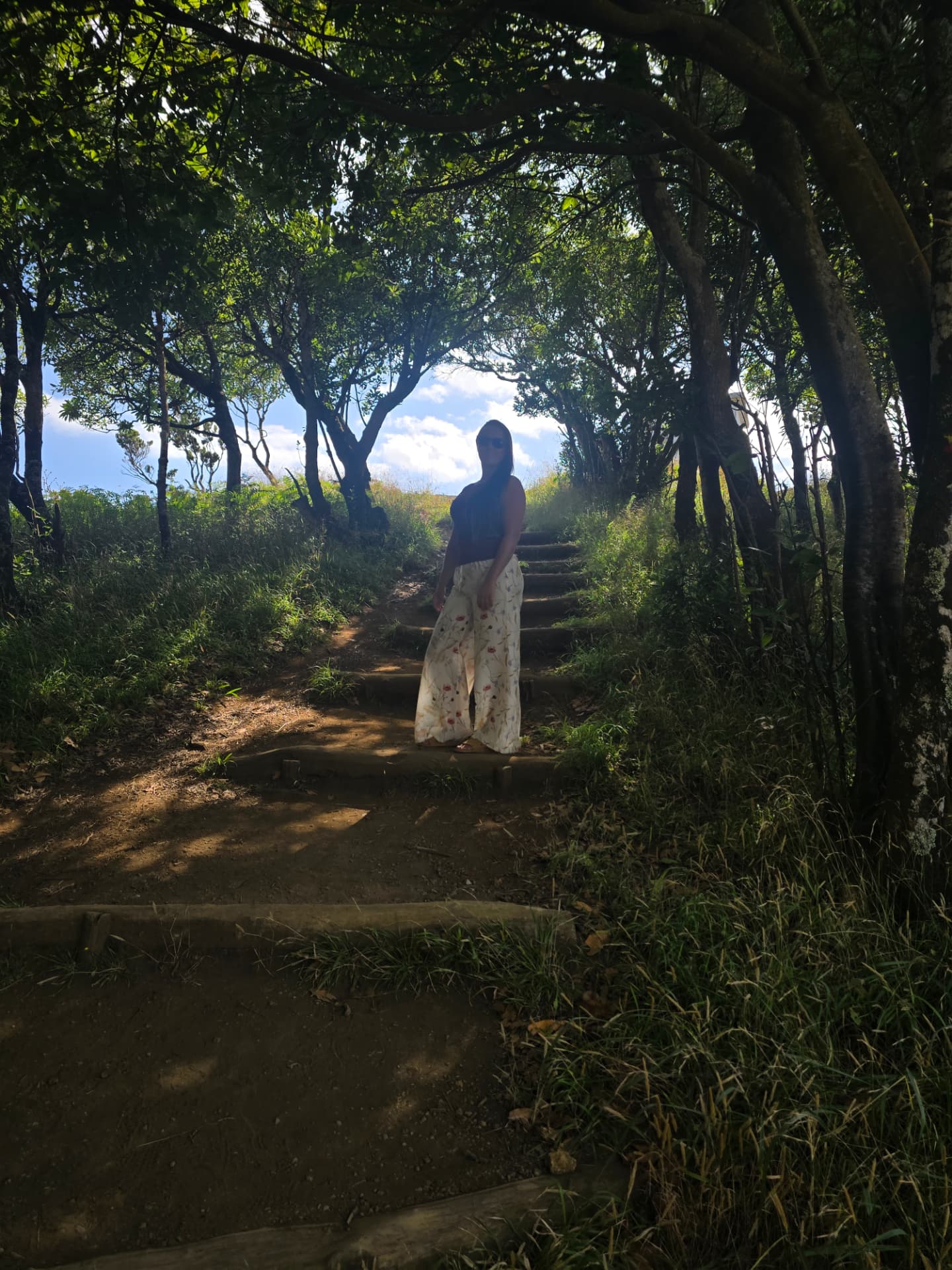
Those are usually the paths I take.