I Pulled a Thread in Terceira
I asked for a sign. An entire island came with it.
Before I came to the Azores, I'd been asking for a sign.
From God. The universe. Whatever is listening.
I've finally gotten serious about publishing the stories I've been carrying around for years, which apparently means I have also gotten serious about periodically wondering what the hell I am doing.
I wanted inspiration.
I wanted courage.
Mostly, I wanted some reassurance that I was on the right path.
I suppose I expected something subtle.
A feeling.
A moment of clarity.
Maybe a particularly meaningful sunset.
Terceira apparently decided subtlety was unnecessary.
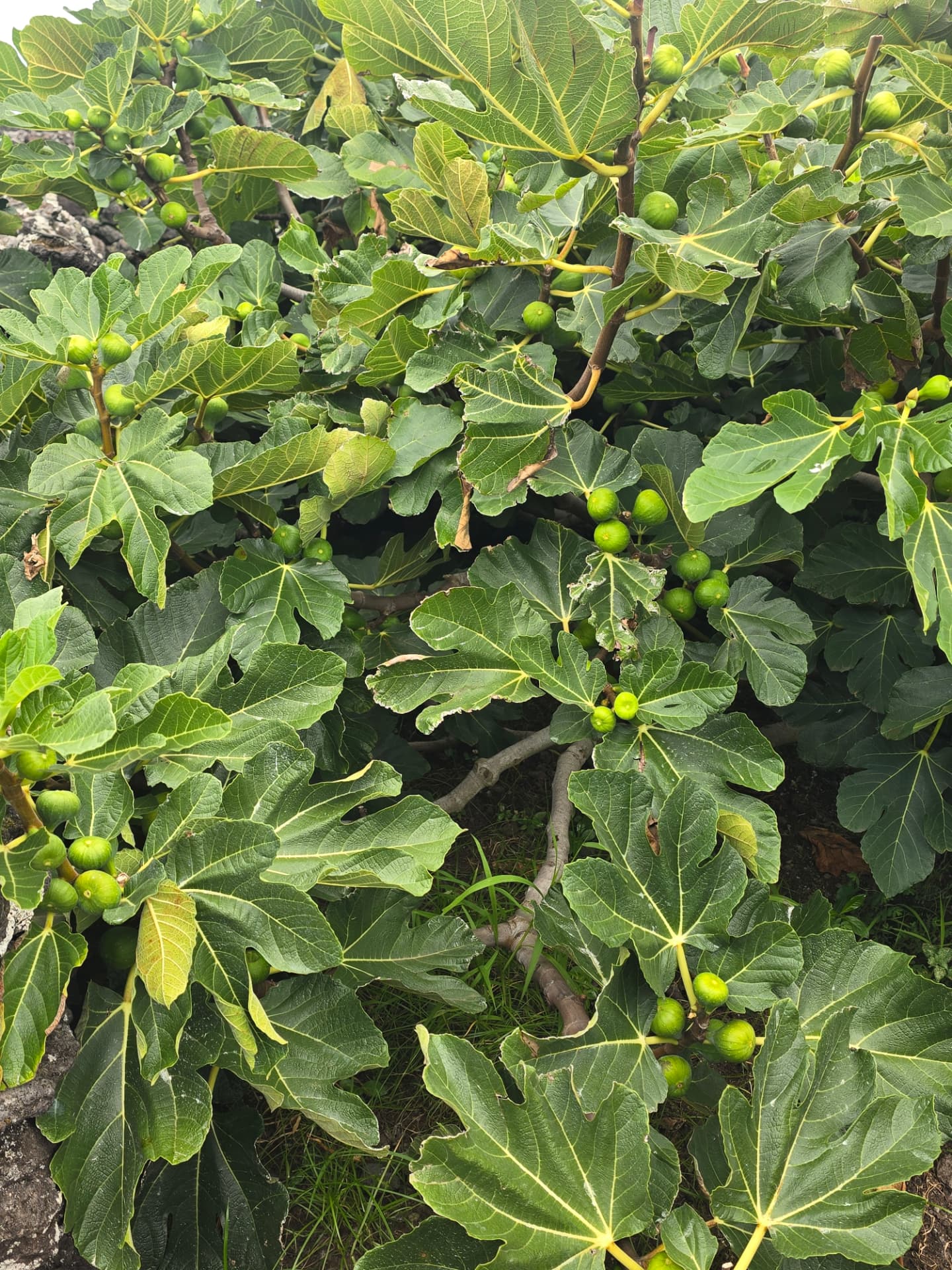
It started with the fig trees.
They are everywhere here and are purposely planted near wineries to distract the birds from eating the grapes.
Normally, this would be a mostly unremarkable observation about vegetation and farming practices on a volcanic Portuguese island.
Except I'm writing a novel called FIGMENTS.
And one of the foundational images behind FIGMENTS is Sylvia Plath's fig tree in The Bell Jar: all those branches, all those possible lives, and the paralysis of choosing which one to actually live.
FIGMENTS is about identity. The roles we're given. The characters we're expected to play. What happens when we confuse those roles with who we actually are.
Its tagline is:
Don't mistake the role you were given for your character.
The book plays with the Fates, spinning, spinsters, thread, choice, and the question of whether we're following a pattern somebody handed us or making one ourselves.
So.
Fig trees.
Everywhere.
Very funny.
Message received. Loud and clear.
Or so I thought.
Then I started noticing the cloaked women.
At first, I didn't know what I was looking at.
A strange little woman wrapped almost completely in fabric.
Then another.
Sitting on shelves.
In shop windows.
On liquor bottles.
Souvenirs.
Old photographs.
Artwork.
Everywhere I went in Angra, this mysterious cloaked woman seemed to be staring back at me.
Eventually, I did what writers do when we're supposed to be on vacation.
I started researching.
She was the Mulher de Capote: the woman in the cloak.
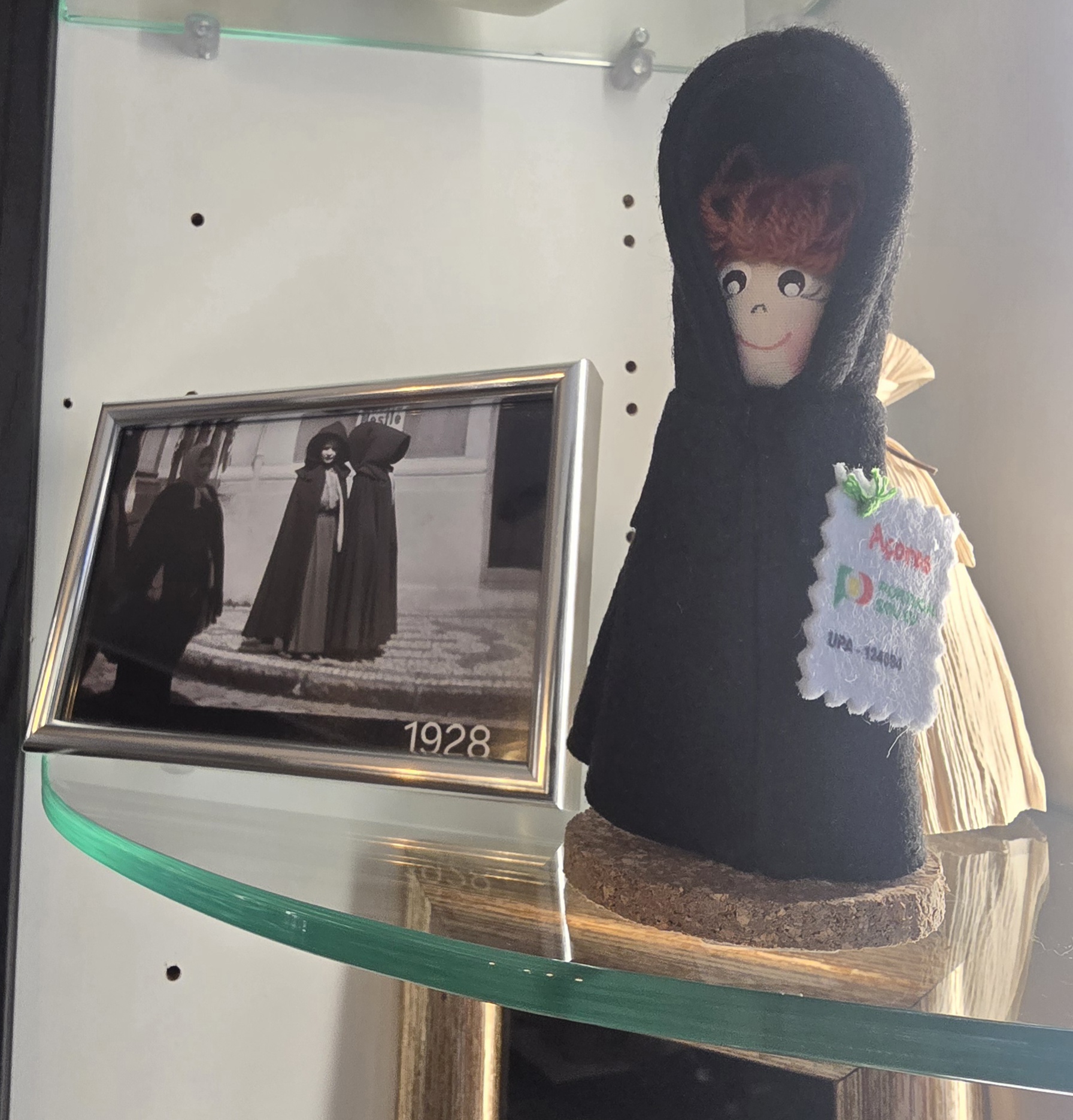
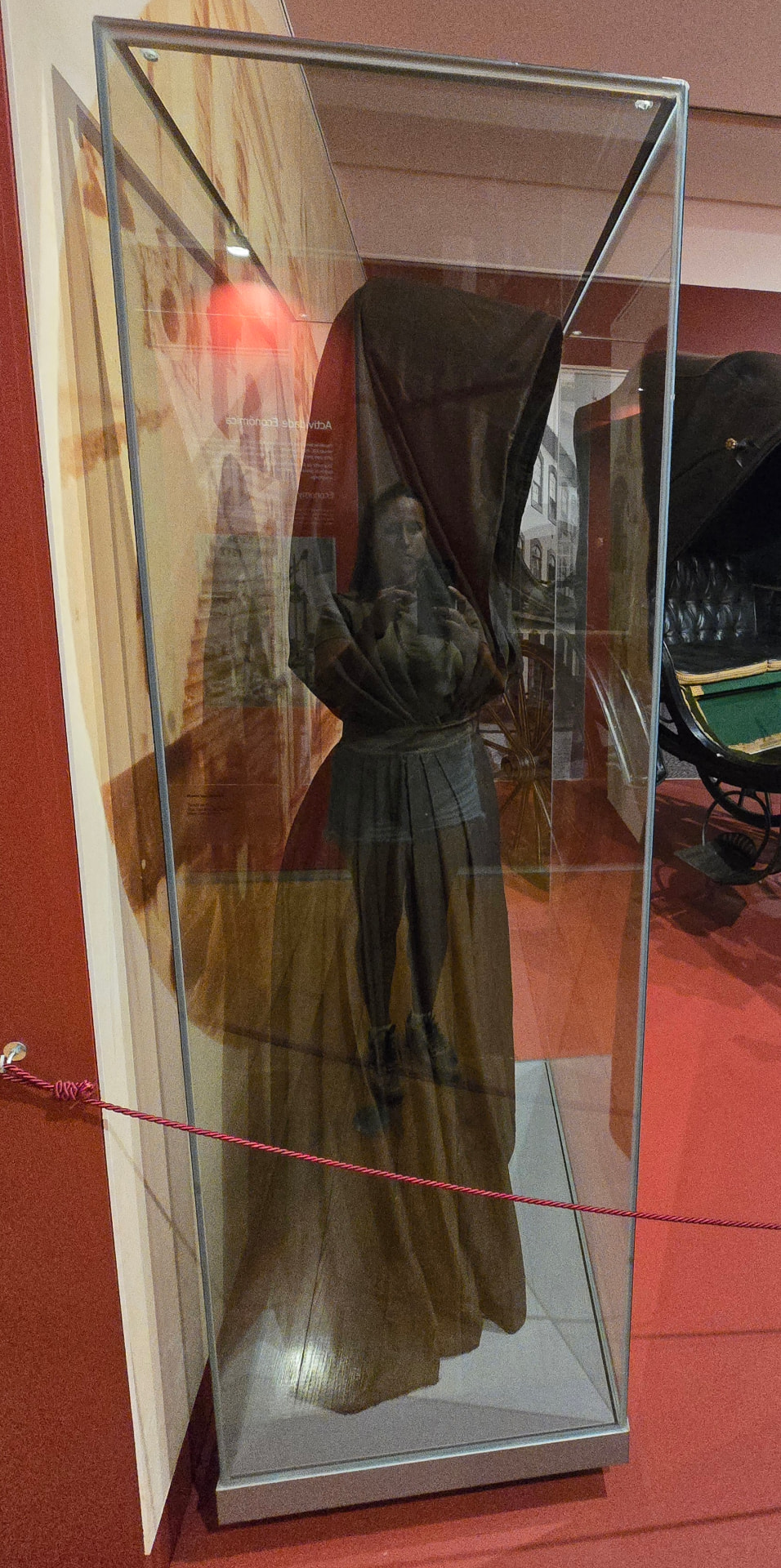
The traditional Azorean capote e capelo could envelop a woman in fabric, concealing much of her body and face. The cloak offered something women have historically had surprisingly little access to:
anonymity.
Women could move without immediately being recognized. Folklore even connects the anonymity of the cloak with secret meetings and lovers.
And then I found the saying:
Quem tem capa sempre escapa.
Roughly:
Whoever has a cloak always escapes.
Now we had a problem.
Because the other novel consuming an unreasonable percentage of my brain is called CAIM.
CAIM is probably the most ambitious and personal thing I've tried to write.
It follows a woman who receives a cloak that makes her invisible. When she sleeps beneath it, she begins witnessing women across history, religion, mythology, and folklore whose stories were erased, rewritten, demonized, or simply told for them.
Lilith.
Eve.
Pandora.
Cassandra.
Mary Magdalene.
Witches.
Women turned into monsters.
Women turned into warnings.
Women who disappeared.
Women whose names survived but whose stories didn't.
And women whose names disappeared too.
Meanwhile, I am wandering around Terceira finding women in cloaks who could disappear sitting on liquor bottles.
Come on.
At this point, the universe was no longer dropping hints.
It had apparently hired a marketing department.
And then I pulled another thread.
Literally.
Then I Pulled the Thread
Thread was already everywhere in both books, but in different mediums.
The Fates spin, measure, and cut the thread of life.
Spider Grandmother weaves the world.
Women have spent thousands of years spinning, sewing, weaving, mending, embroidering.
CAIM has an impossible cloak made from different fibers and different histories, added to and altered across generations. The names of women appear embroidered into its lining as they are witnessed.
Even DNA is a pattern of strands carrying pieces of everyone who came before us.
And stories work the same way.
You pull one thread and you have no idea what is going to come with it.
You start researching one woman and find another.
You follow one version of a story and discover five older ones underneath it.
You tug at mythology and religion comes with it.
Pull at religion and history follows.
Pull at history and somebody's family story falls out.
Sometimes you find something beautiful.
Sometimes the thread goes much farther back than you expected.
Sometimes you tug on one tiny thing and half the pattern starts unraveling.
Which brings me to the embroidery.
Terceira has a beautiful tradition of white-on-white embroidery.
White thread.
White fabric.
Intricate patterns created through stitches, eyelets, openwork, texture.
And from a distance?
You can almost miss it.
Then the light changes.
Suddenly there is an entire pattern where a moment ago you thought there was nothing.
Thread.
Women.
Patterns.
Invisibility.
I was writing a book about an invisible woman wearing a cloak woven through women's stories while standing on an island covered in cloaked women and nearly invisible embroidery.
Okay.
I hear you.
The strangest part was that I hadn't come to Terceira looking for any of this.
I wasn't wandering around trying to assign symbolism to my manuscripts after the fact.
I'd already written the symbolism.
Then I came here and started finding it outside myself.
And Then the Island Started Looking Like Home
There was another thread I hadn't expected.
Terceira is wild in places.
Ferns uncurl beside roads.
Moss covers stone.
Vines climb whatever stays still long enough.
Tiny wildflowers appear everywhere.
Queen Anne's lace rises out of all that green. Hydrangeas billow across the hills.
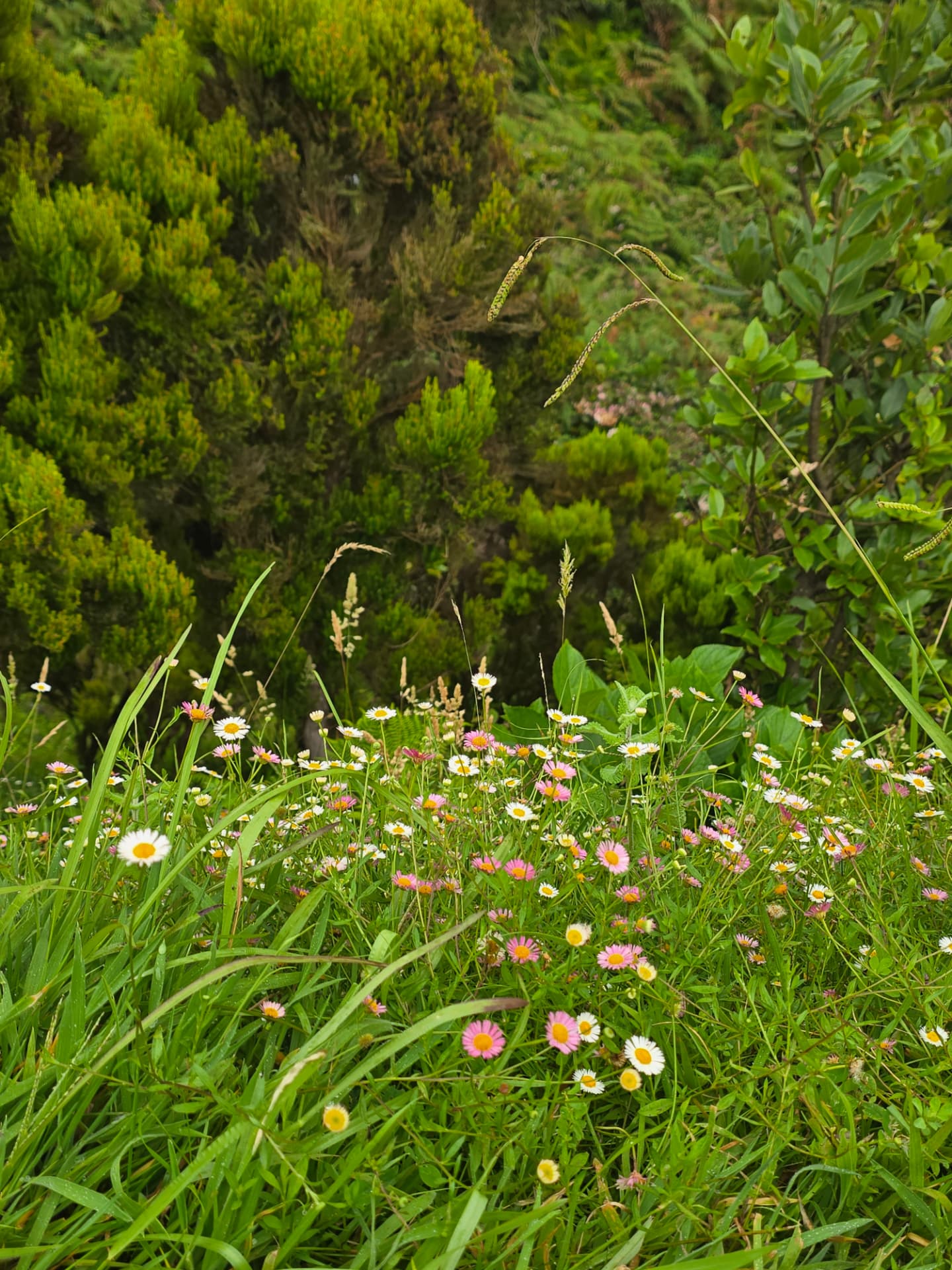
And somehow, halfway across the Atlantic, parts of it reminded me of South Carolina.
I grew up running around creeks and picking Queen Anne's lace with my grandmothers and my dad.
I've always loved moss.
Ferns.
Wildflowers.
Trees.
Things growing in places nobody planted them.
I've always felt a little like a wildflower myself.
Not something planted neatly where somebody decided it belonged.
Something that finds somewhere to grow.
And suddenly this island that felt completely new was tugging on something very old.
Roots.
There's another dangerous word for someone who has recently discovered she cannot stop thinking in metaphors.
Because reclaiming your story isn't the same thing as ripping out your roots.
I'm not interested in pretending I came from nowhere.
I'm interested in looking at what grew there.
What still feeds me.
What I want to carry forward.
What needs room to grow differently.
And what needs to be trimmed, pruned, or cut because it served its purpose and doesn't belong in what I'm sowing next.
Eventually, I did what any reasonable person being aggressively haunted by her own manuscripts on a Portuguese island would do.
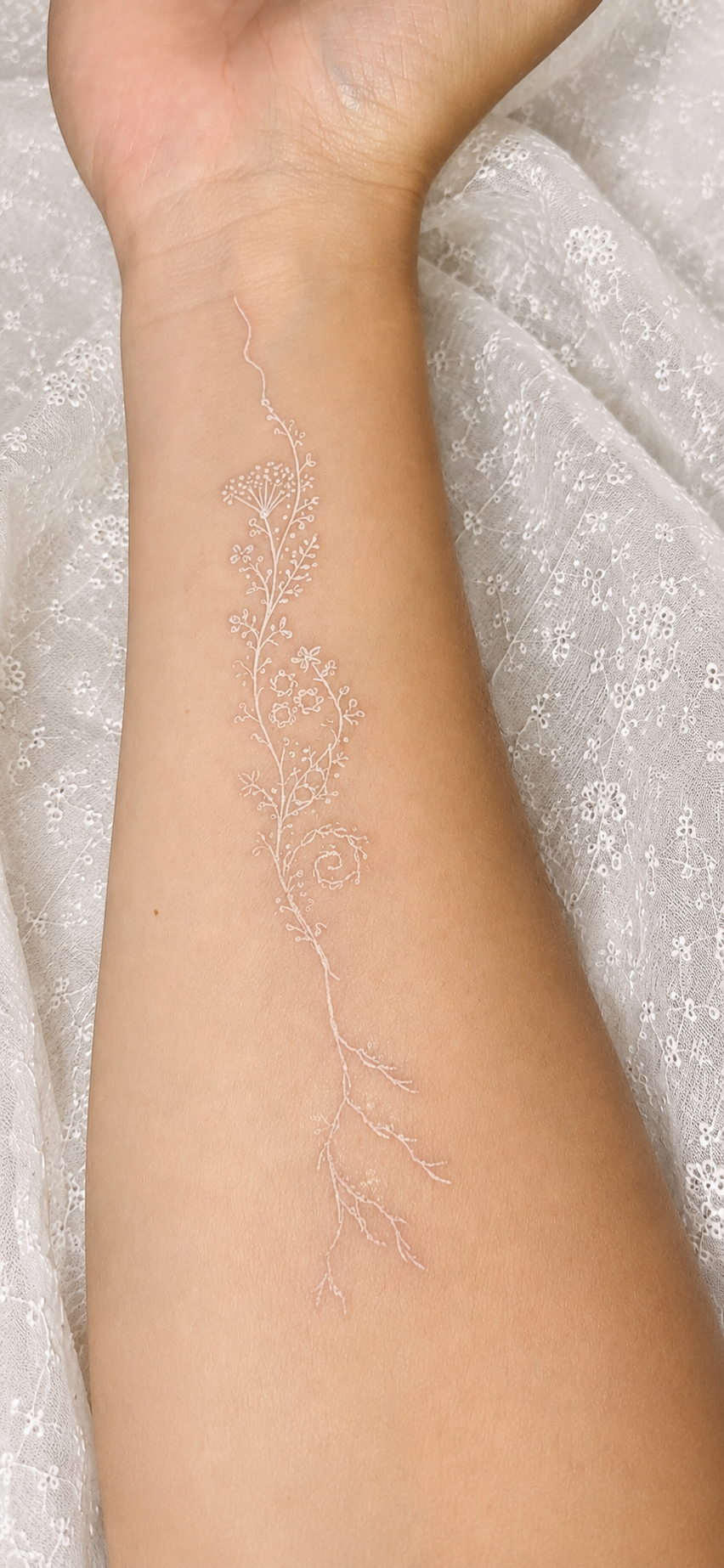
I got a tattoo.
Picking Up the Thread
It's on my right inner wrist.
White ink.
Small.
Delicate.
Easy to miss.
I wanted it to look less like a tattoo of embroidery and more like Terceira's whitework was somehow emerging from inside my skin.
There is Queen Anne's lace.
Fern.
Moss.
Vines.
Tiny wildflowers.
Everything looks stitched.
Hidden among them are three small, completely closed circles.
A caim is a prayer of protection associated with drawing a circle around yourself three times or spinning clockwise three times.
Those circles have another echo for me too. My Granny's favorite song was Will the Circle Be Unbroken. She hummed and sang it daily.
There is also a spiral.
Because trauma isn't linear.
Neither is grief.
Or healing.
Or history.
Or becoming yourself.
Sometimes we return to places we thought we'd already left behind, except we aren't the same person when we arrive there again.
That's where the tagline for CAIM came from:
Sometimes full circle is a spiral.
But my favorite part of the tattoo is the thread itself.
At the base of my writing hand, it is intact.
One thread.
Then it becomes embroidery.
Toward my body, it begins to separate into individual fibers. They are still thread, but they almost resemble roots. Or veins. Or branches.
You can't really tell which direction the whole thing is moving.
Am I taking what I've inherited and weaving something new?
Or am I pulling on what's already woven into me and unraveling it?
Both.
That's the point.
And the white ink makes the whole thing behave differently depending on the light.
Sometimes it's barely there.
Then I turn my wrist and suddenly the pattern appears.
Of course it does.
The Branch I'm Choosing
I came to Terceira asking whether I was on the right path.
I think part of me was still waiting for permission.
Permission to publish.
Permission to take these stories seriously.
Permission to call myself a writer in the way that actually matters to me.
Permission to choose the branch.
Then I came to an island covered in fig trees.
Found cloaked women hiding on shelves and liquor bottles.
Learned that those cloaks gave women anonymity.
Found a saying about people in cloaks escaping.
Discovered white embroidery that disappears until the light catches it.
Walked through forests filled with ferns, moss, and wildflowers that somehow reminded me of home.
And realized I was surrounded by physical versions of things I'd already been writing.
I asked for a sign.
Apparently I should have specified one.
So I stopped asking.
The intact thread begins at my writing hand for a reason.
There are a lot of branches.
A lot of possible lives.
A lot of stories I could tell myself about who I was, who I am, and who I'm supposed to become.
I'm choosing the branch where I write the damn books.
Maybe that's what reclaiming your story actually looks like.
Not cutting every thread that came before you.
Not pretending your roots don't exist.
Looking at the whole tangled, beautiful, imperfect pattern and deciding what stays.
What gets added.
What gets unraveled.
What gets pruned.
And what you sew next.
I pulled a thread in Terceira.
An entire island came with it.