What I Used to Carry Home
I used to come home from the woods with my pockets full. The pockets are just bigger now.
When I was a kid, nobody always knew exactly where I was.
They knew generally.
Nikki went to the woods.
Nikki's down at the creek.
Apparently, in rural South Carolina, this was sufficient location information for a child who might not reappear for several hours.
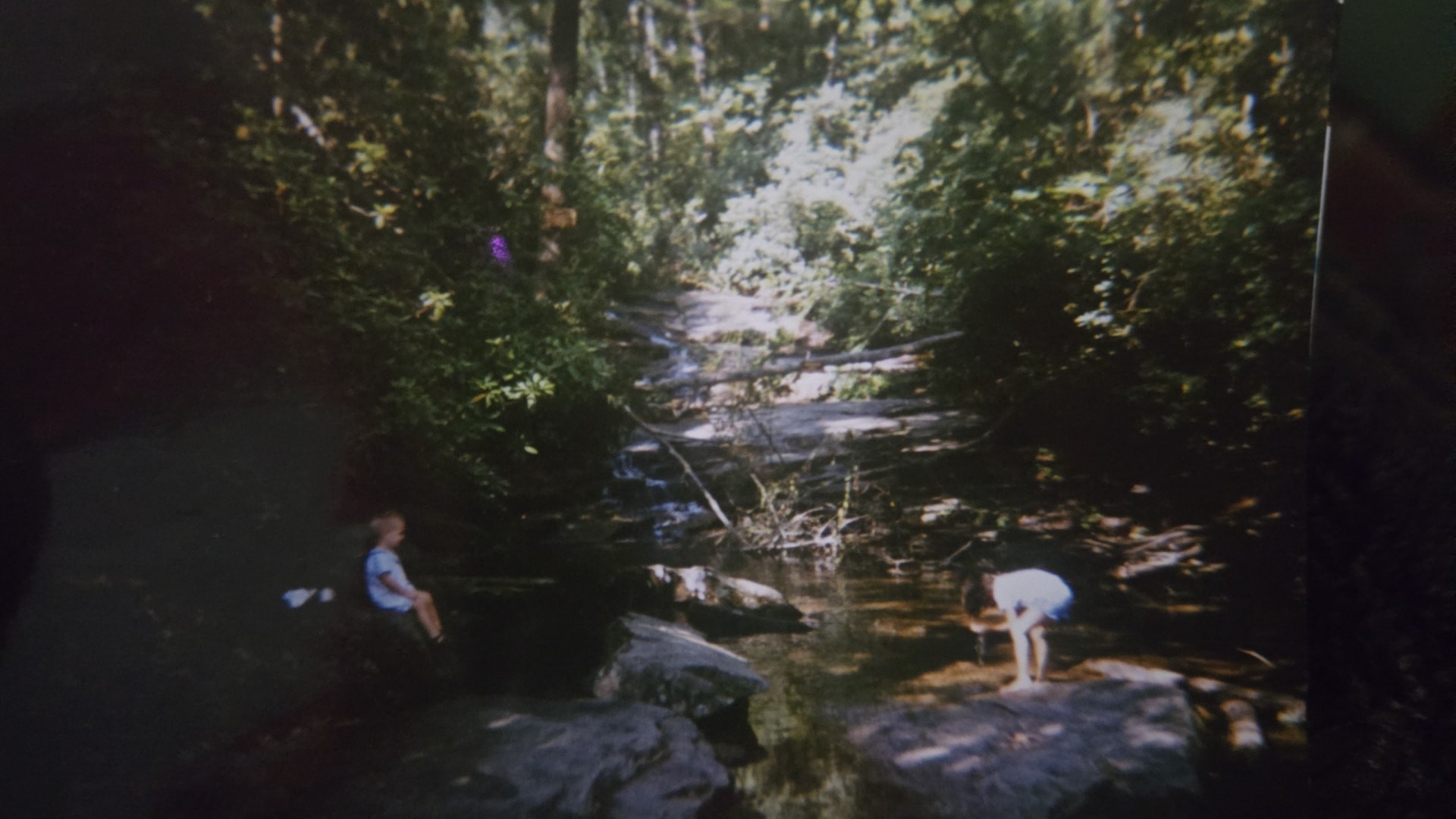
I could disappear into the woods for an entire day.
There were creeks to follow. Trees to climb. Treehouses to build. Rocks to turn over. Old bottles and arrowheads to look for. Gemstones if I got lucky. Bones. Feathers. Strange sticks. Anything unusual enough to make me wonder where it came from or what it had been before I found it.
If it was interesting and small enough, it went into my pocket.
I ate honeysuckle and berries growing wild along the edges of the woods. I built houses in trees and pulled up moss to carpet the floors.
I knew those woods differently than I knew roads.
Nobody had to tell me where I was.
A bend in the creek could do that.
So could a particular tree. A patch of flowers. The place where the bank changed. The vines. The rocks.
The landscape had its own directions.
I just knew how to read them.
Going Home
I grew up.
I left South Carolina.
I learned to navigate by instruments and charts and coordinates. I started flying airplanes across countries and oceans.
But put me back beside a creek and apparently very little has changed.
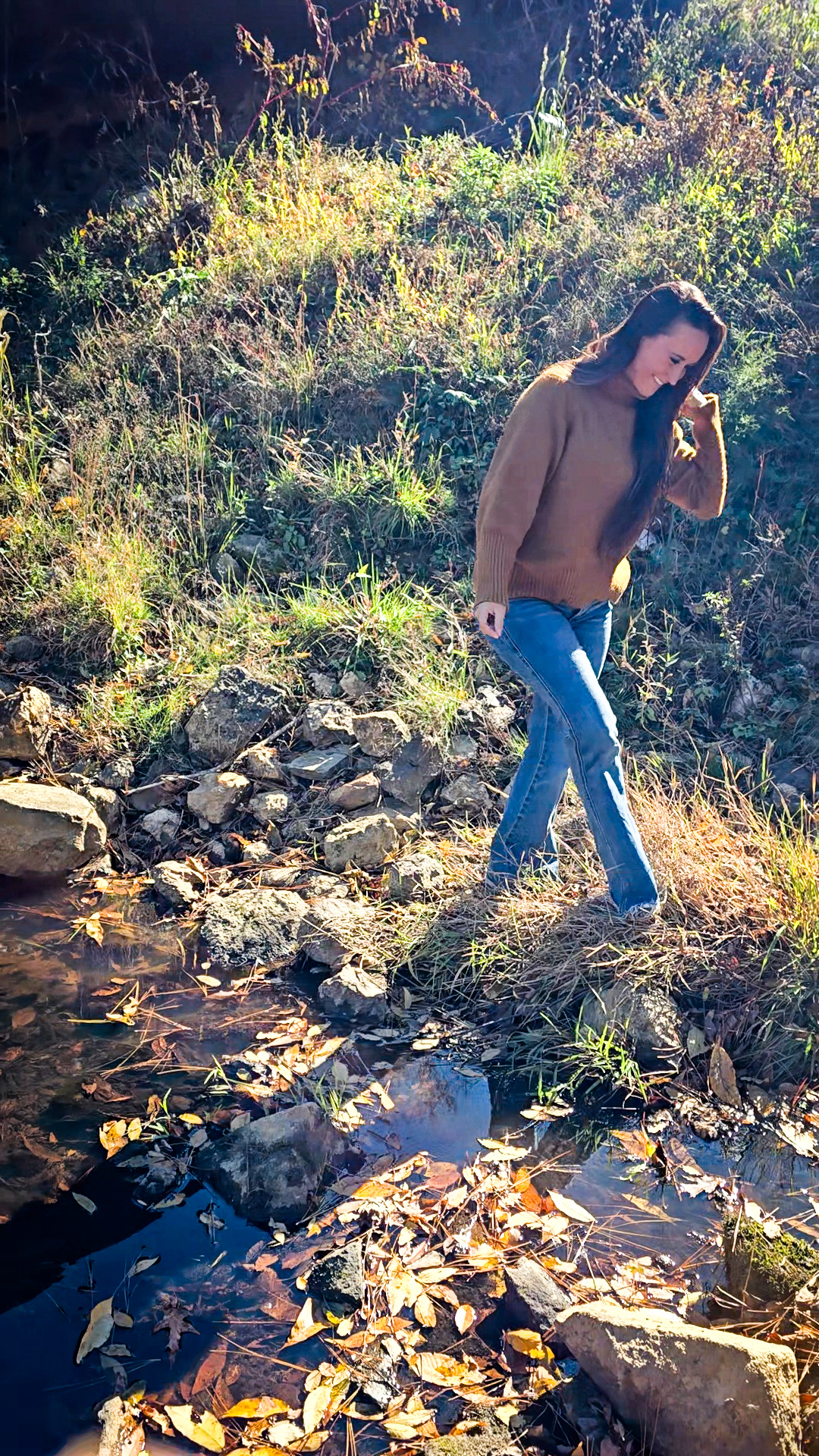
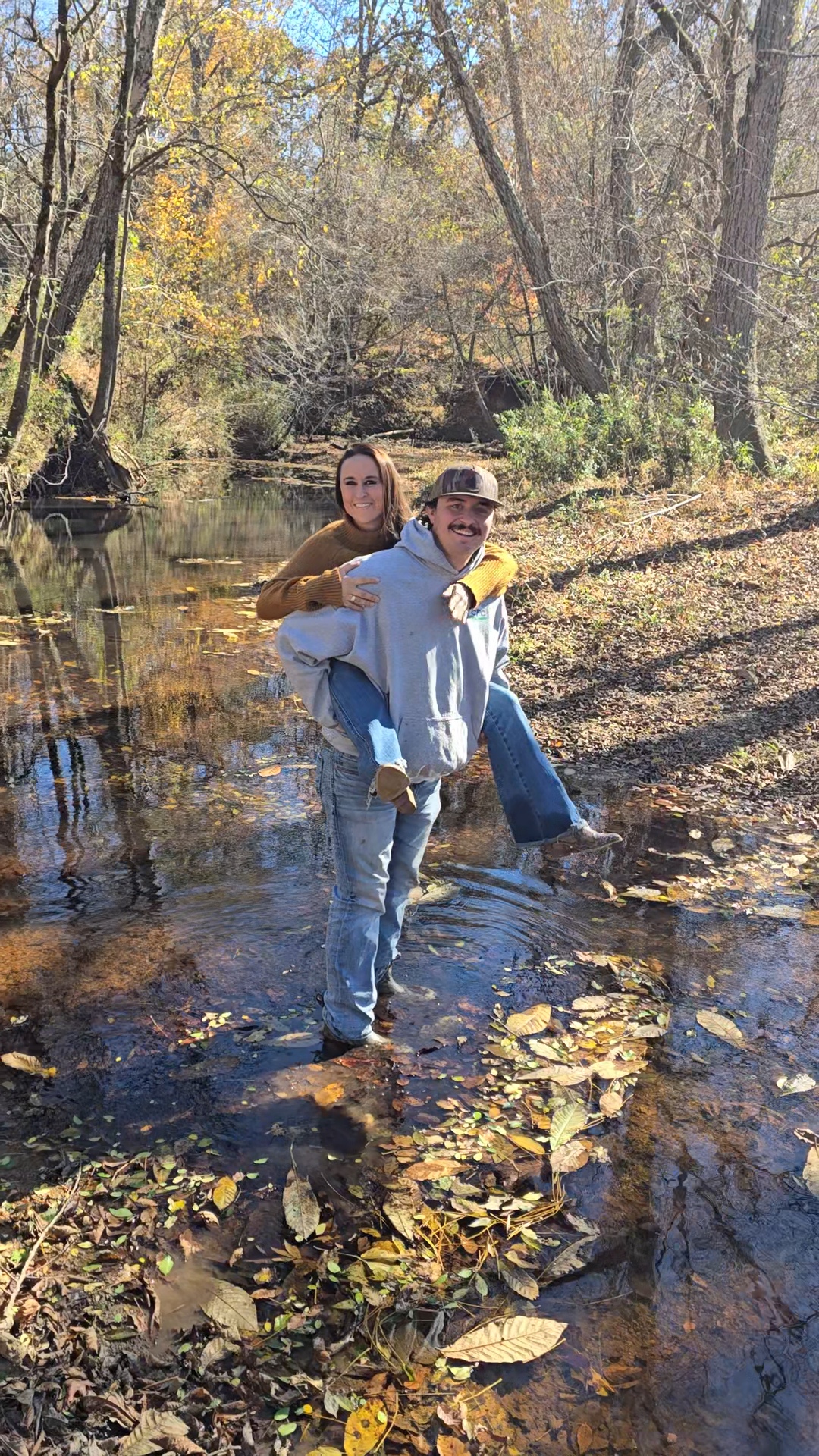
On a fall day at home with my mom, my brother, and Quentin, we drove around checking cows and eventually ended up back in the woods and down by the creek.
And I became about eight years old again.
I looked for rocks.
I looked for petrified wood.
I stopped for wildflowers.
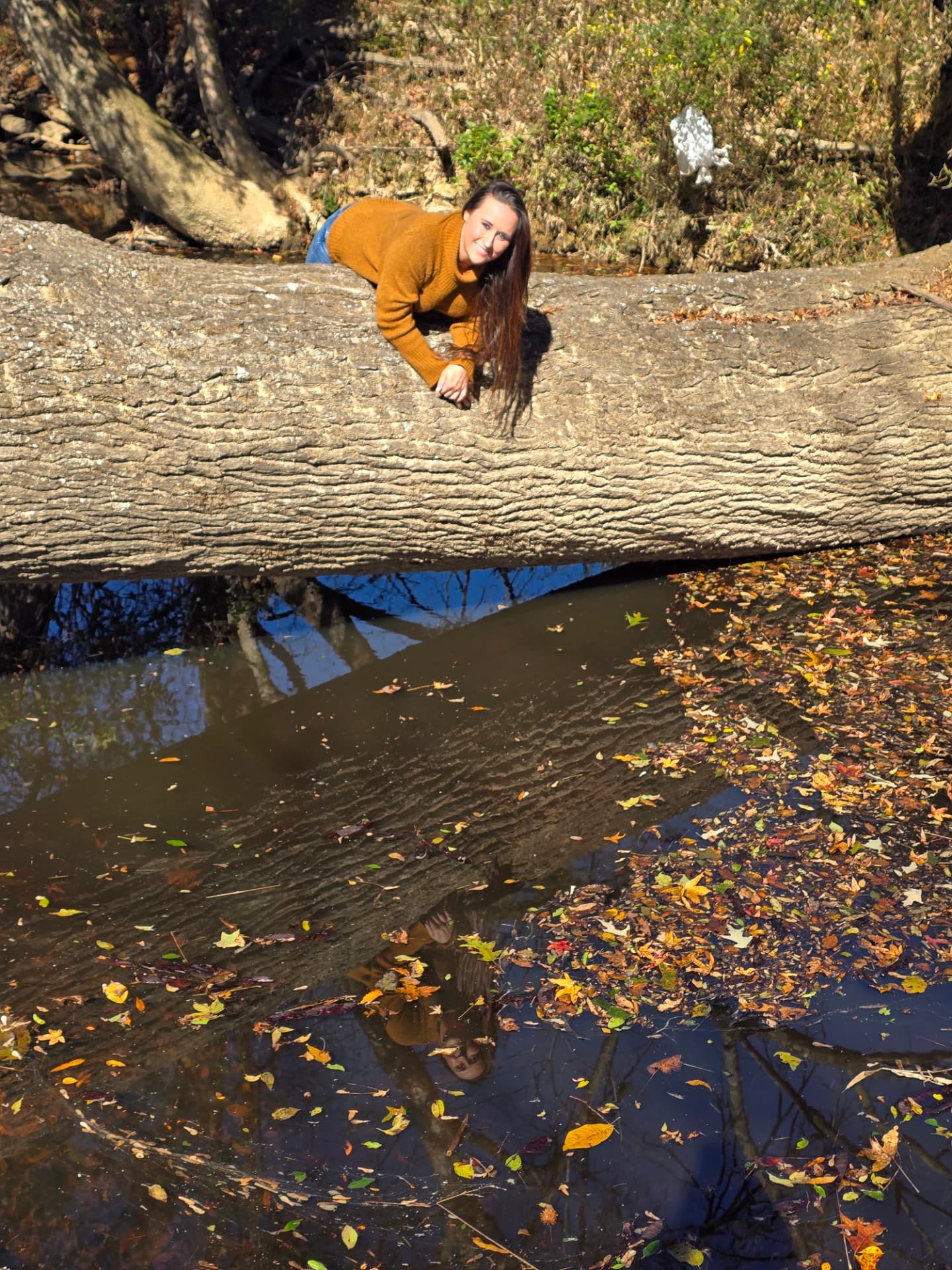
I photographed leaves floating on dark water.
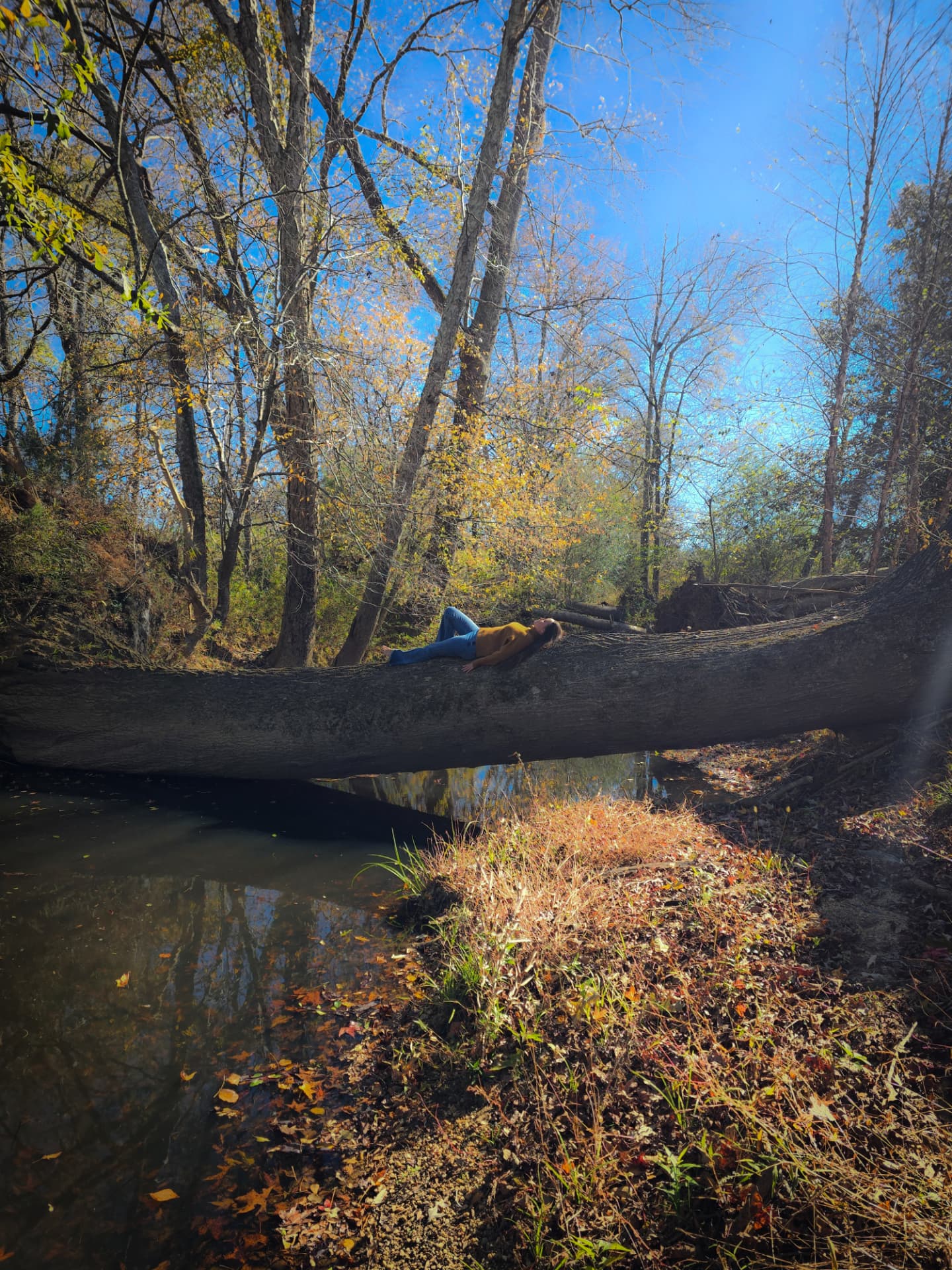
I climbed onto a fallen tree and stretched out across the trunk because there was apparently no compelling adult reason not to.
I stared into the creek.
And I kept staring.
The Other World in the Water
I have always been fascinated by reflections.
Maybe these photographs explain some of it.
The water that day was dark and still enough to hold everything above it.
Trees continued downward.
Leaves floated between two skies.
I leaned over the bank and found myself looking back.
In some of the photographs, there are almost two of me: the woman crouching beside the creek and the darker woman beneath her, distorted just enough by water to become someone else.
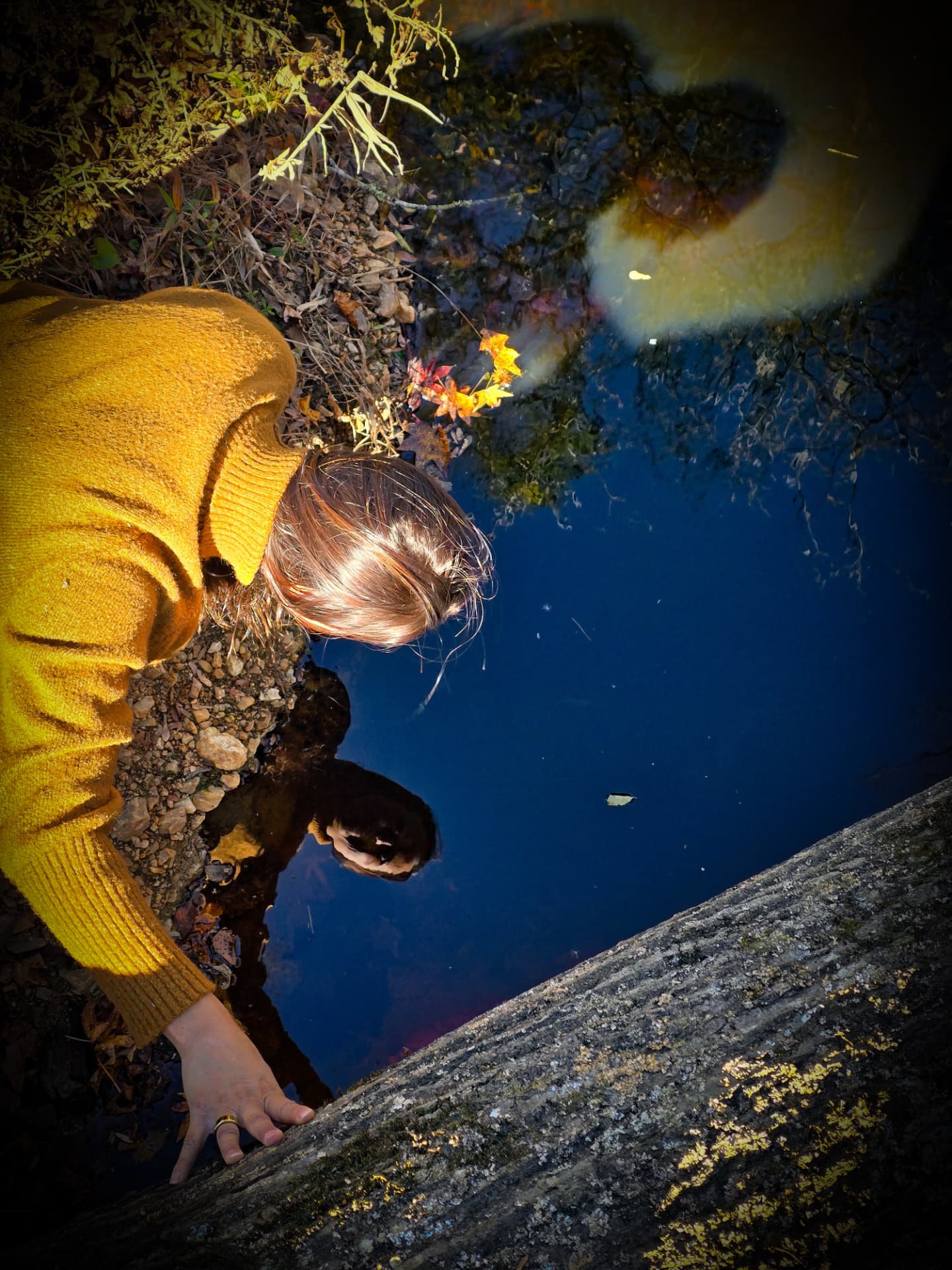
That does something to my brain.
A reflection is real.
It is happening.
You can photograph it.
But you cannot reach into the water and pull that version of yourself out.
Change your position and she changes.
Disturb the surface and she disappears.
Wait long enough and she comes back.
I suppose this is why mirrors, doubles, shadows, altered perspectives, and the question of who or what is doing the looking keep wandering into my stories.
I didn't choose those things because they sounded appropriately literary.
I spent my childhood staring into creeks.
Southern Gothic Before I Knew the Name
I didn't know what Southern Gothic was when I was growing up.
I just knew the South.
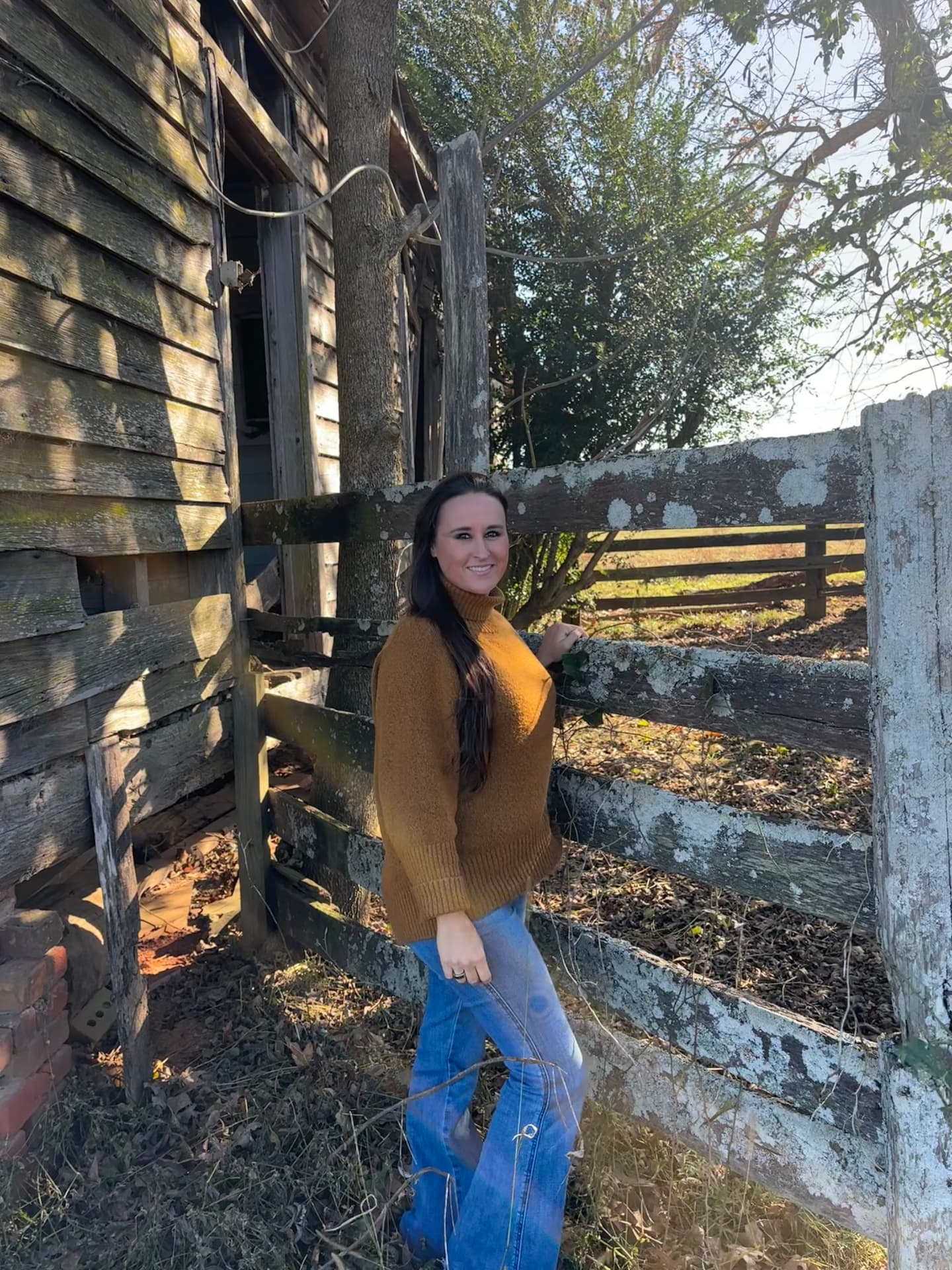
Old houses slowly being reclaimed by moss and lichen.
Weathered boards with one more layer of paint underneath the one peeling away.
Creeks carrying things downstream and uncovering other things that had been buried.
Bones in the woods.
Old bottles in the dirt.
Arrowheads that reminded you somebody had stood in the same place long before you had a name for it.
Trees enormous enough to feel permanent lying suddenly across the water.
Vines swallowing whatever stopped fighting them.
Beauty and decay were never opposites.
They grew together.
So did history and story.
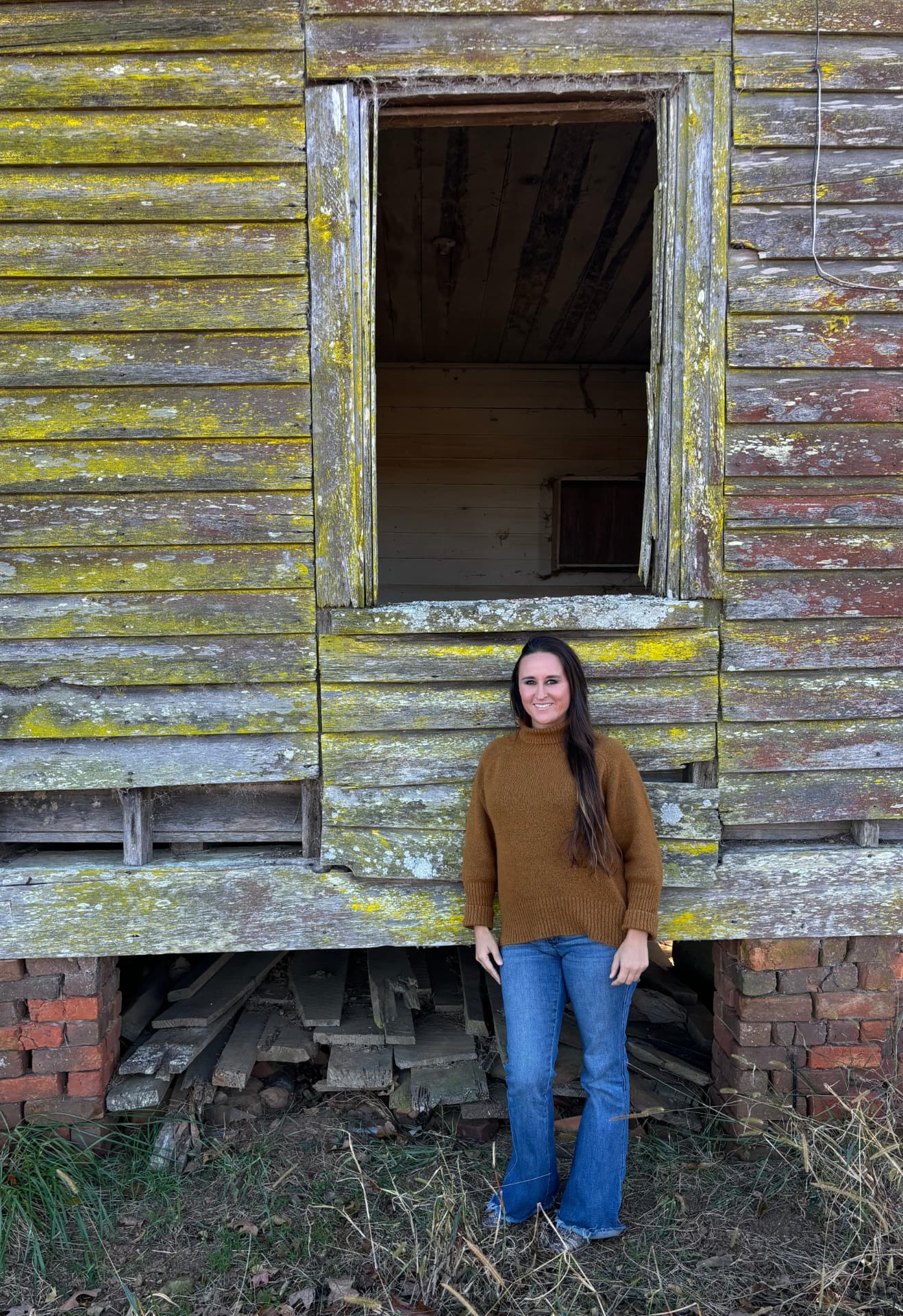
The South I knew was full of people who could tell you exactly who used to live in an abandoned house, who their daddy was, what happened to their sister, why nobody uses that road anymore, and three mutually incompatible versions of what happened one particular night sixty years ago.
Nobody called that worldbuilding.
It was just talking.
And the landscape participated.
A collapsed building wasn't empty.
It made you wonder who had been there.
An old bottle wasn't trash.
Somebody had held it.
An arrowhead wasn't a rock.
Somebody had made it.
A bone belonged to something.
Everything came from somewhere.
Everything had been something before you found it.
I think I learned one of the central instincts of my writing long before I ever thought of myself as a writer:
Nothing becomes ordinary just because everyone else has stopped looking at it.
My Pockets Are Still Full
That afternoon with my family inspired stories.
Characters appeared.
Ideas started connecting themselves to other ideas.
Something I saw suggested something else. A photograph changed the way I thought about an image. The woods offered atmosphere without being asked. Childhood memories surfaced because I was standing close enough to where they had been made.
But none of us went into the woods because I needed material.
That's important.
We were just home.
My mom was there.
My brother was there.
Quentin was there.
We checked cows.
We wandered around.
My brother carried me through the creek.
We took pictures.
We looked at rocks.
We laughed.
I lay on a tree.
And somewhere in the middle of living an ordinary day with people I love, stories started happening.
They usually do.
I used to come home from the woods with my pockets full.
Rocks.
Bottles.
Bones.
Arrowheads.
Gemstones.
Sticks.
Whatever strange little treasure had convinced me it deserved to come home.
I suppose I never stopped collecting.
I still come home with rocks.
But now I bring back other things, too.
A reflection.
A color.
The texture of an old wall.
The way fall leaves gather against the edge of dark water.
A sentence someone says without realizing I'm going to remember it.
A character who wasn't there when I walked into the woods but somehow follows me out.
A question.
A feeling.
A story.
The pockets are just bigger now.