Reba Lou
Some things are rare because there aren't many of them. Others because there will never be another one like yours.
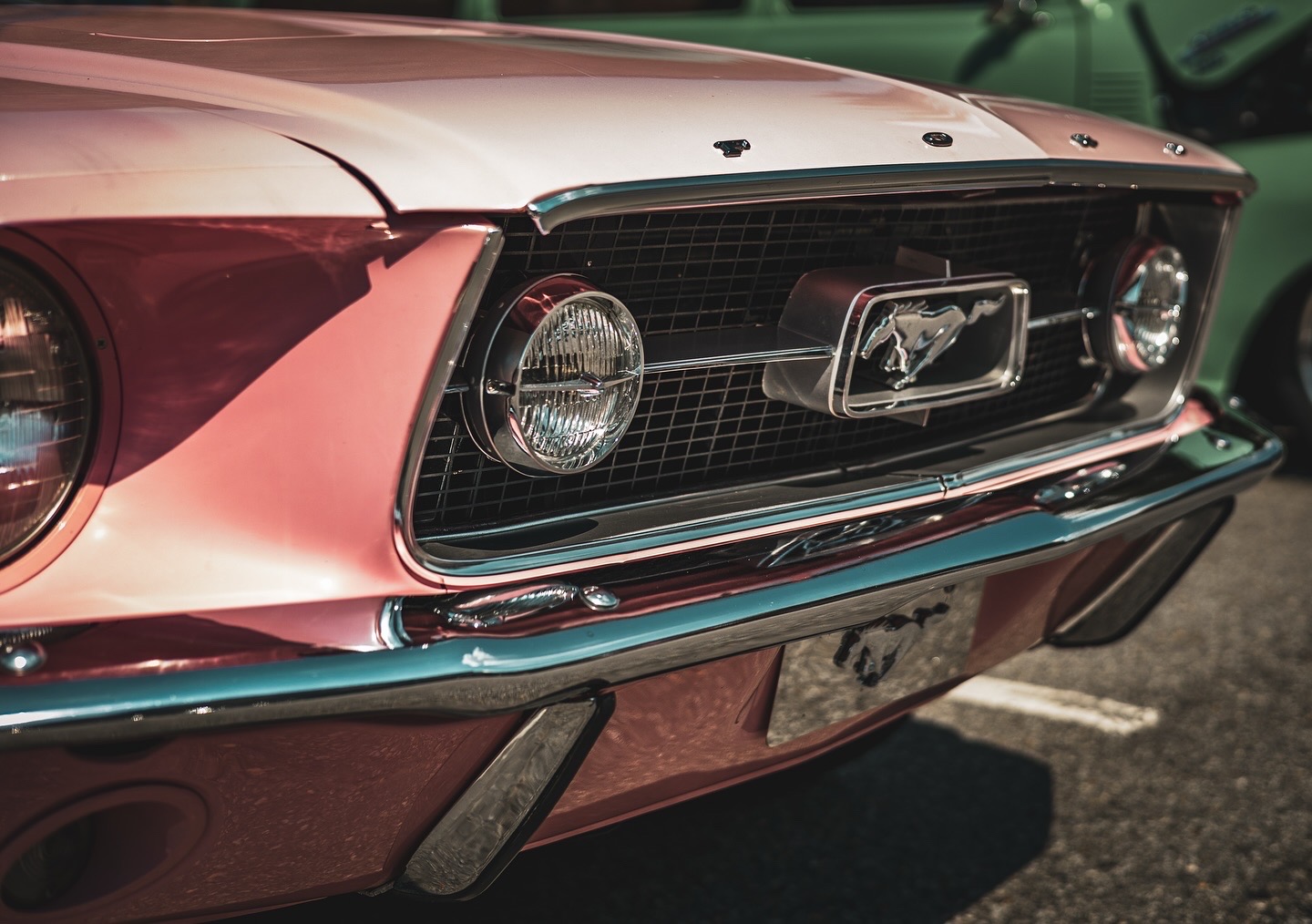
I had wanted a pink Mustang for as long as I could remember.
Not just a Mustang that happened to be painted pink. I wanted the real thing. An old pink Mustang. It was my dream car long before owning one made any practical sense.
Then one day, on my way to work, my aunt called.
Grandma Reba wasn't doing well.
If I wanted to see her, I needed to come home.
There are phone calls that divide a day into before and after.
I called work and told them I wasn't coming. I turned the car around and started the four-and-a-half-hour drive home to Saluda.
Somewhere along that drive, my phone gave me a notification.
A 1967 Ford Mustang was going up for auction in Greensboro, North Carolina, about an hour from where I live now.
And it was pink.
Not repainted pink.
Playmate Pink.
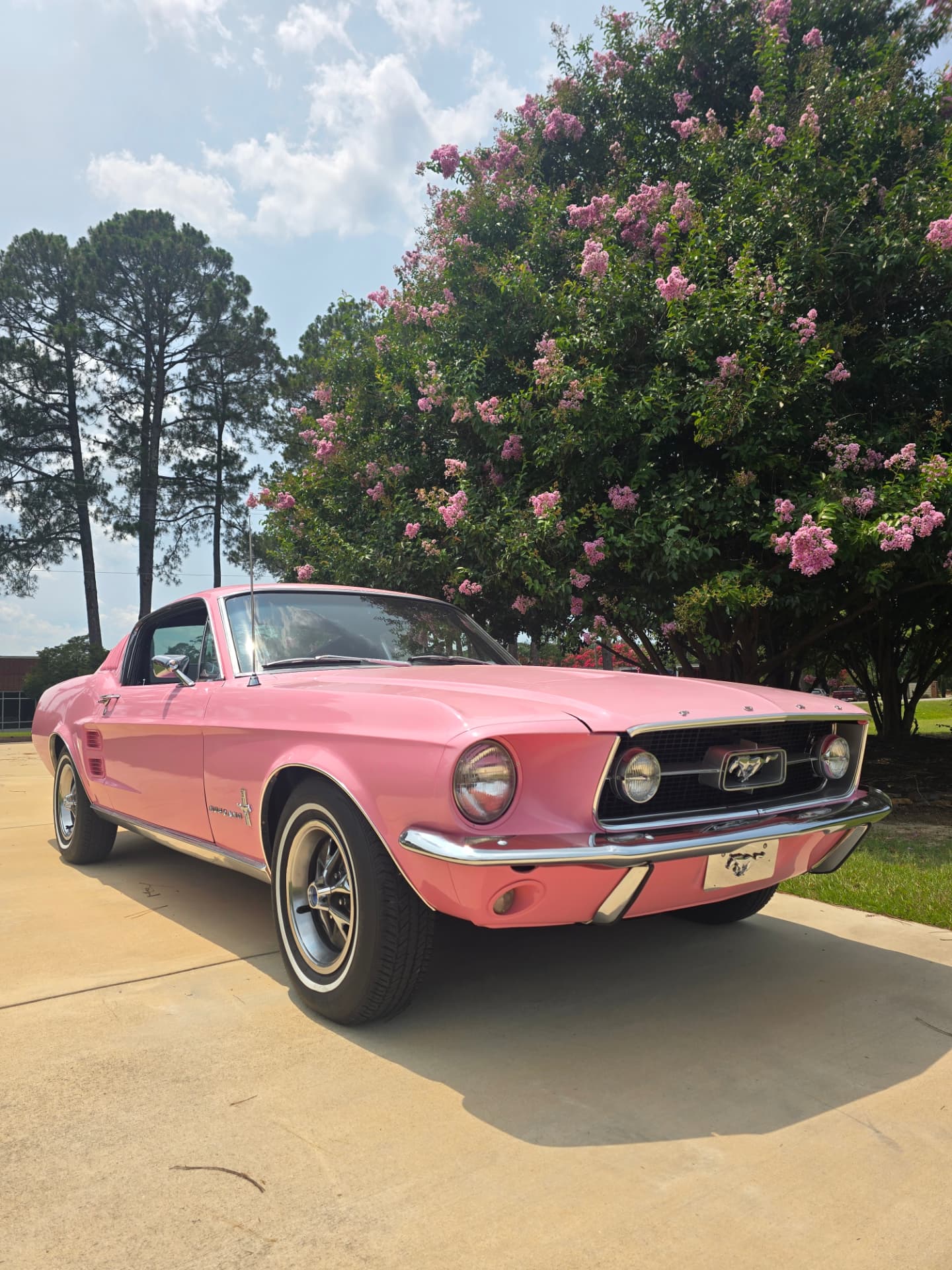
A real, factory Playmate Pink 1967 Mustang.
I sent the listing to Quentin.
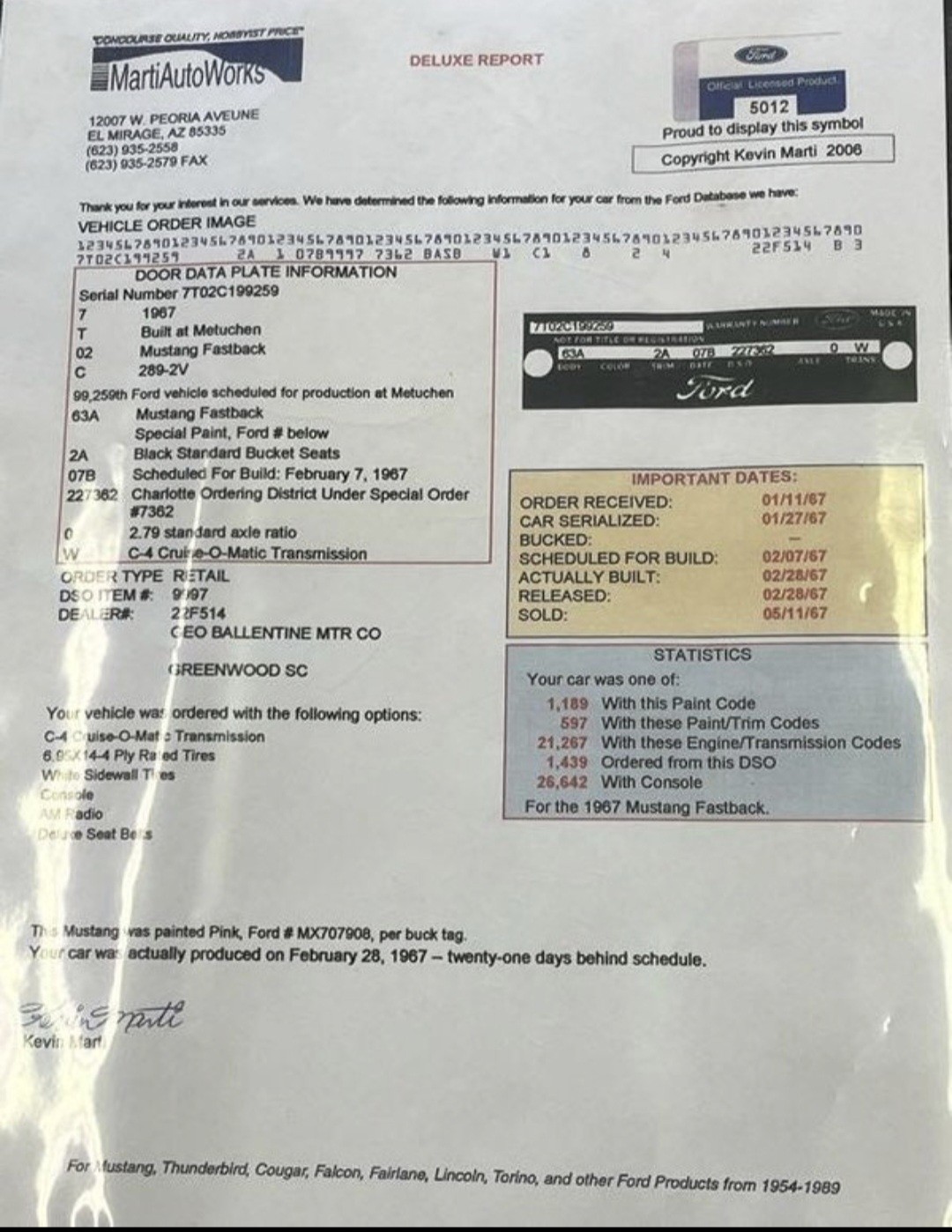
He was trying to get back from a trip so he could come down and be with me and Grandma Reba, and while I drove, he started digging through the listing and reading the Marti report to me over the phone.
Original.
Matching numbers.
Beautifully preserved.
The more he read, the more ridiculous it became.
"This is the dream car."
It was.
And then he read where it had originally been delivered.
Ballentine Ford. Greenwood, South Carolina.
I knew that name because I knew the Ballentines.
I grew up with them. They were family friends. My dad knew them. My aunt and uncle knew them. They belonged to the same little constellation of families and places that made up my childhood.
And this car had come from their dealership.
Twenty years before I was born, the pink Mustang I had somehow spent my life dreaming about had been delivered to the place where I would eventually grow up.
Decades later, it had resurfaced for sale an hour from the place I now called home.
And I discovered it while driving between those two homes to say goodbye to Grandma Reba.
There are coincidences.
And then there are things that make you pay attention.
When I got home, I showed Grandma Reba the car.
I told her she had to get better because we were going to ride in my pink Mustang.
She smiled at me.
She squeezed my hand.
She told me she loved me.
I told her I loved her, too.
It was the last real conversation we had.
And I am so grateful that it was.
Because I loved that woman more than I know how to put into a sentence.
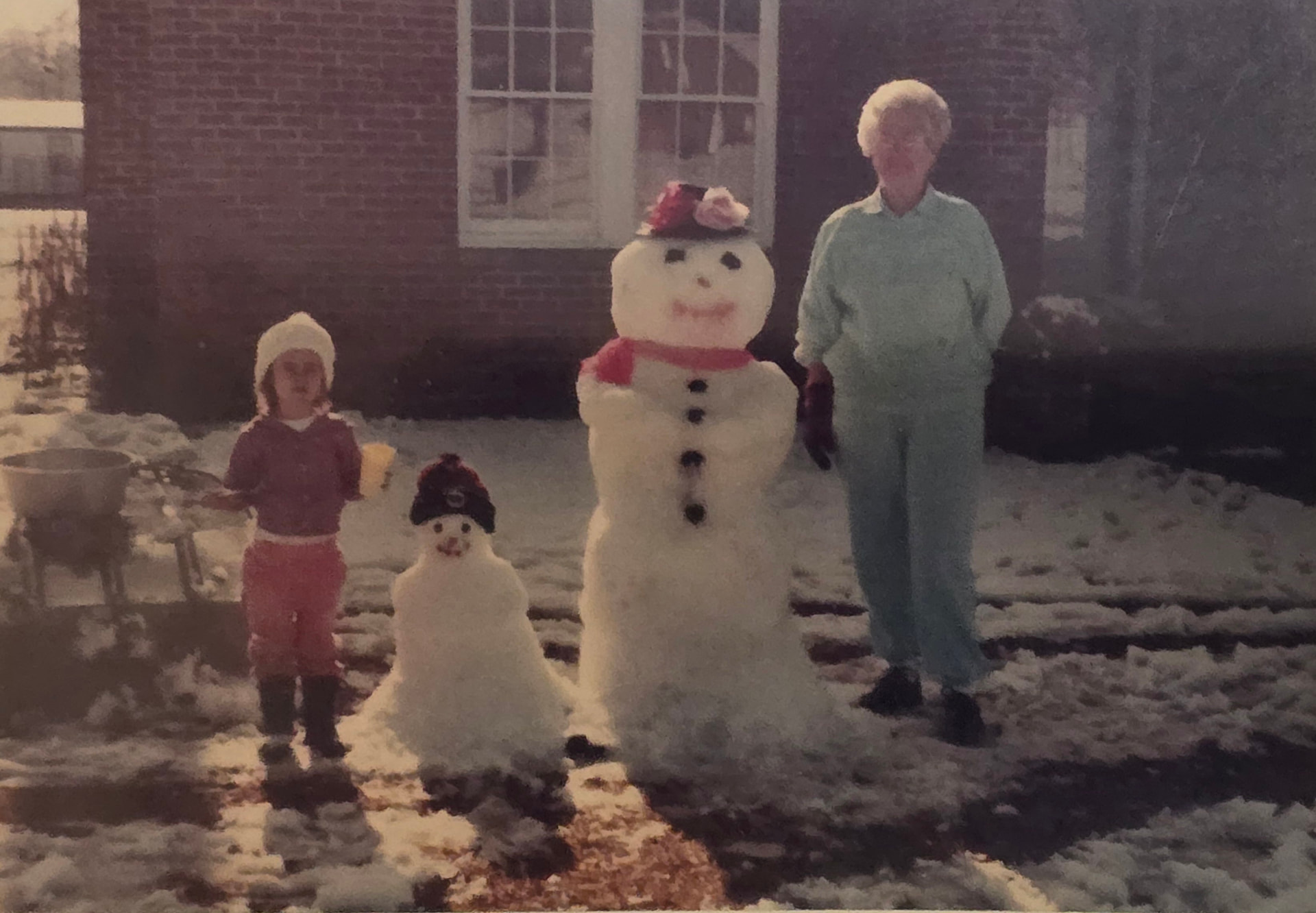
Grandma Reba loved me with the kind of love that makes a child believe everything she brings you is precious.
She kept the first fish I ever caught in her freezer.
Not to eat.
Because it was my first fish.
I brought her hummingbirds and moles and whatever other little things I found in the yard that seemed important enough to preserve, and she made room for them.
That's the kind of grandmother she was.
The things that mattered to me mattered to her because I mattered to her.
She fed me. She cared for me. She taught me to cook. She was proud of me in that enormous, uncomplicated way grandmothers sometimes manage better than anyone else on earth.
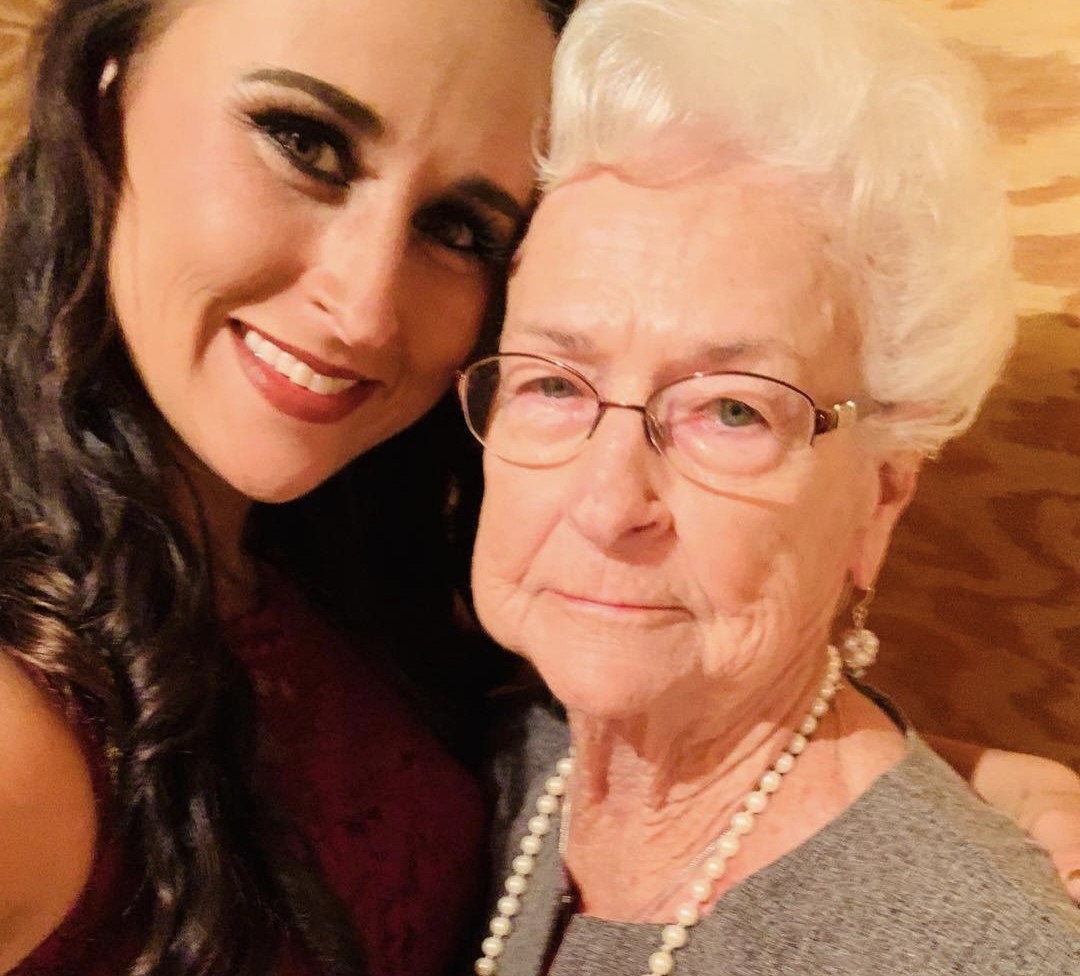
And then I had to watch her leave it.
My family gathered around her during that last week.
My siblings. My aunts. My dad. All of us.
We held her hands. We cared for her body when she could no longer care for it herself. We talked to her even when she couldn't answer. We told her how much we loved her. We promised her that we would take care of one another.
And I stood there when she died.
I watched the woman who had loved me all my life take her last breath.
There was a smell when it happened.
I noticed it immediately. Later, the nurse told me that some people say they can smell death and others never do.
I don't know exactly what I smelled.
I only know that, to me, it will always be the smell of her leaving.
There is something strange about watching someone die when you have spent your entire life experiencing them as permanent.
A grandmother is not supposed to be temporary when you are a child.
She is simply there.
In the kitchen.
At the table.
At holidays.
At the other end of the telephone.
Keeping your first fish in her freezer because apparently this is a reasonable thing to do when you love someone enough.
And then one day you are standing beside her, holding her hand, realizing that the person who helped make your world feel permanent is not permanent at all.
We buried Grandma Reba.
And I went home without her.
I was still grieving when, almost exactly a week later, I went to Greensboro for the auction.
By then, the Mustang had a name.
Reba Lou.
Reba for Grandma Reba.
Lou for Granny Louese.
Because Grandma Reba wasn't the only grandmother whose love built me.
Granny Louese had loved me fiercely, too.
She taught me to cook and sew. She took care of me. She believed in me.
Even after dementia began taking things from her, somehow she held on to this.
"Sugar, you still fly airplanes?"
She might not remember someone's name. She might lose the thread of what was happening around her. But she remembered that I flew airplanes.
And she was so proud of it.
I had given her a little teddy bear dressed like a pilot, and she kept it. It was a tiny representation of something her granddaughter had become, and she was proud enough of me that even as pieces of her world became harder to hold onto, that mattered.
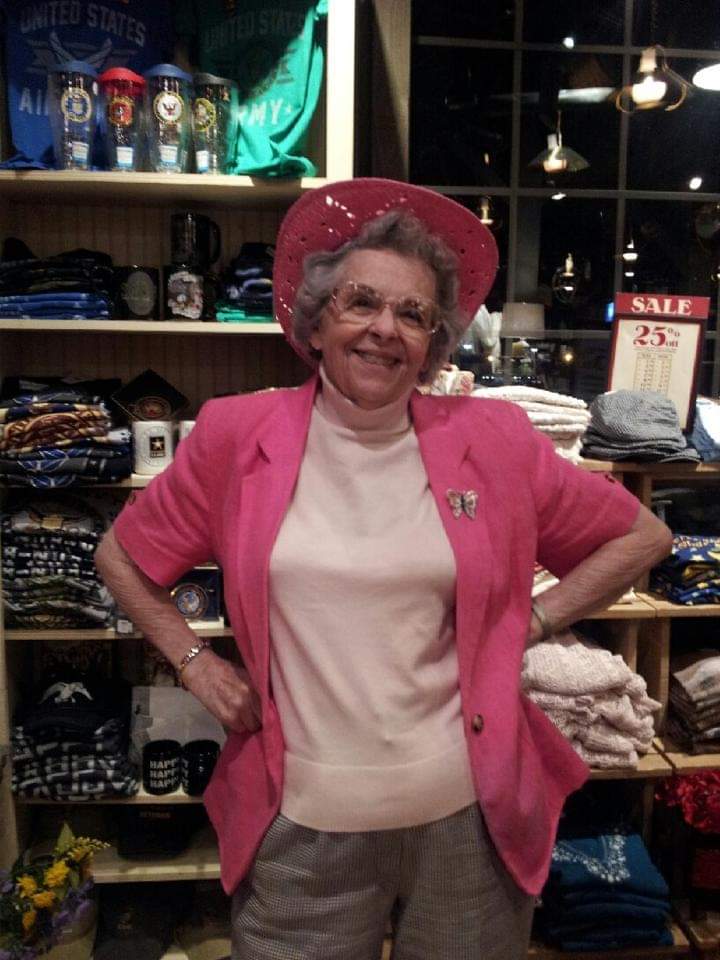
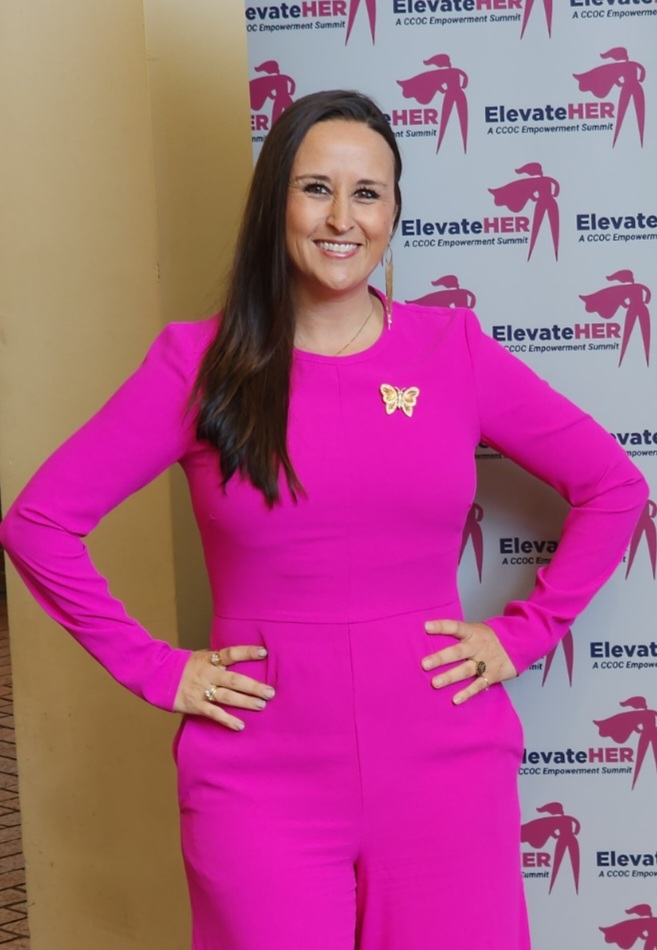
Grandma Reba was just as proud.
She tracked my flights on FlightAware. She posted about them on Facebook. Somewhere on the ground, while I was flying people across the country, my grandmother was watching that little airplane move across a map because her granddaughter was the one flying it.
I don't think I understood then what a gift it is to have people in your life who are simply, unequivocally proud that you are you.
They didn't love me because I flew airplanes.
They were proud that I flew airplanes because I was the one flying them.
That's different.
These two women helped make my life.
They taught me things I can name: how to cook, how to sew, how to care for people.
And they taught me things I probably couldn't name until they were gone.
What it feels like to be delighted in.
What it feels like to know there is someone in the world keeping track of you.
Someone watching where you're going.
Someone waiting for you to come home.
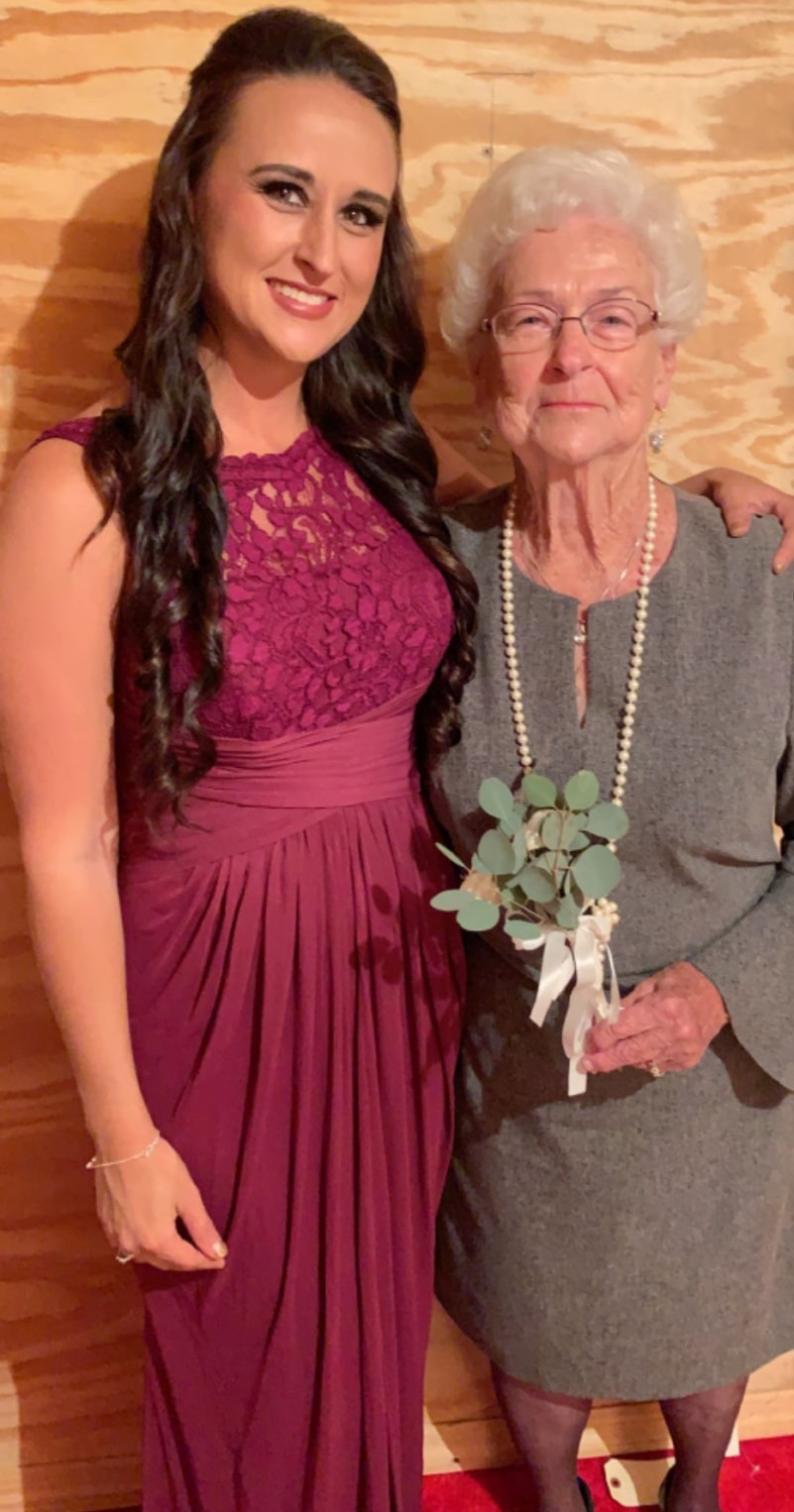
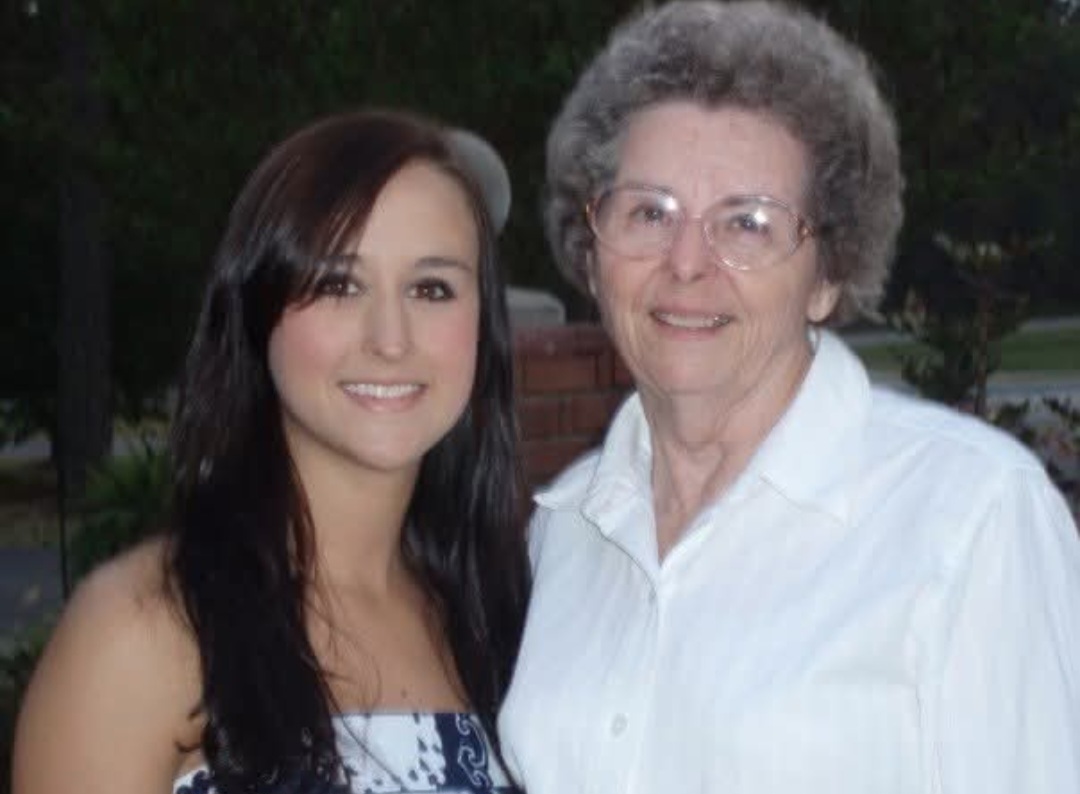
So before the Mustang belonged to me, she belonged to them.
She was Reba Lou.
I arrived at the auction absolutely terrified I wasn't going to get her.
Then I found out the owner's reserve.
It was much higher than I had anticipated.
I started crying.
Eventually I did what any emotionally devastated woman trying to purchase a rare pink muscle car in a building full of men with bidding paddles would do.
I went to get a drink and a hot dog.
The little old lady working the stand looked at me and asked what was wrong.
So I told her.
Probably more than she expected when she asked.
I told her about the Mustang. I told her about Grandma Reba. I told her I had already named the car after my grandmothers. I told her I had this overwhelming feeling that the car was supposed to be mine and was terrified I was about to watch someone else buy it.
She asked me a simple question.
Had I prayed about it?
Yes.
Then, she told me, go ahead and say thank you.
Don't wait until you get what you asked for to be grateful. If you've prayed and you have faith, say thank you now. Otherwise you're still leaving room for doubt.
And I started crying harder.
Because Granny Louese used to say that.
Then this stranger said a few more things that sounded so much like Grandma Reba that I finally told her what was happening.
That it had been almost a week since my grandmother died.
That she had just managed, somehow, to sound like both of my grandmothers.
She came around the counter.
And hugged me.
So there we were, two women who had never met before, crying and hugging beside a hot dog stand at a collector-car auction while a bunch of old men with money wandered around buying automobiles.
And for the first time since I'd arrived, I stopped worrying quite so much.
What was meant for me would be mine.
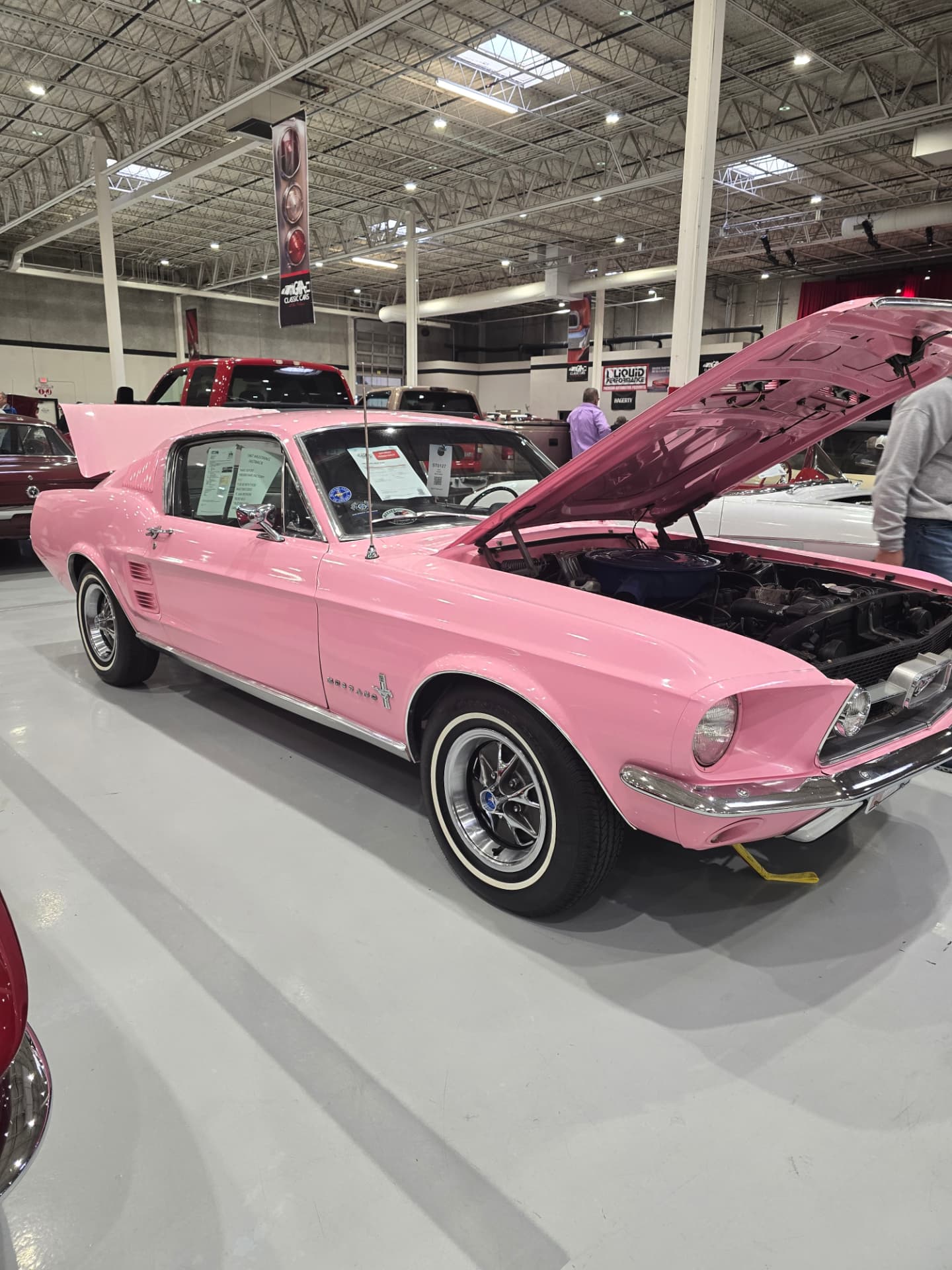
The next day, Reba Lou rolled onto the auction block.
Quentin was beside me.
They called her the cute little Barbie car.
Two men started bidding.
And I froze.
I watched them bid on my car without actually doing anything to prevent either of them from purchasing it.
Finally, I looked at Quentin.
"What do I do?"
"Put your paddle up."
Right.
That seemed important.
I raised it.
Soon there were only two of us.
Me and a man to my left.
His paddle went up.
Mine went up.
His again.
Mine again.
And then I heard it.
Reserve's off.
The number was much lower than the reserve I'd been told the day before.
And suddenly I knew.
Reba Lou was coming home with me.
All I had to do was keep raising my hand longer than the man to my left raised his.
So I did.
Going once.
Going twice.
Sold.
To the cute little girl.
For a second I didn't realize they meant me.
Then someone had a camera in my face. Someone else handed me paperwork. My hands were shaking so violently from adrenaline that I could barely sign my own name.
And I cried.
Again.
But this time they were tears of gratitude.
I had her.
I drove Reba Lou out of that auction and brought her home.
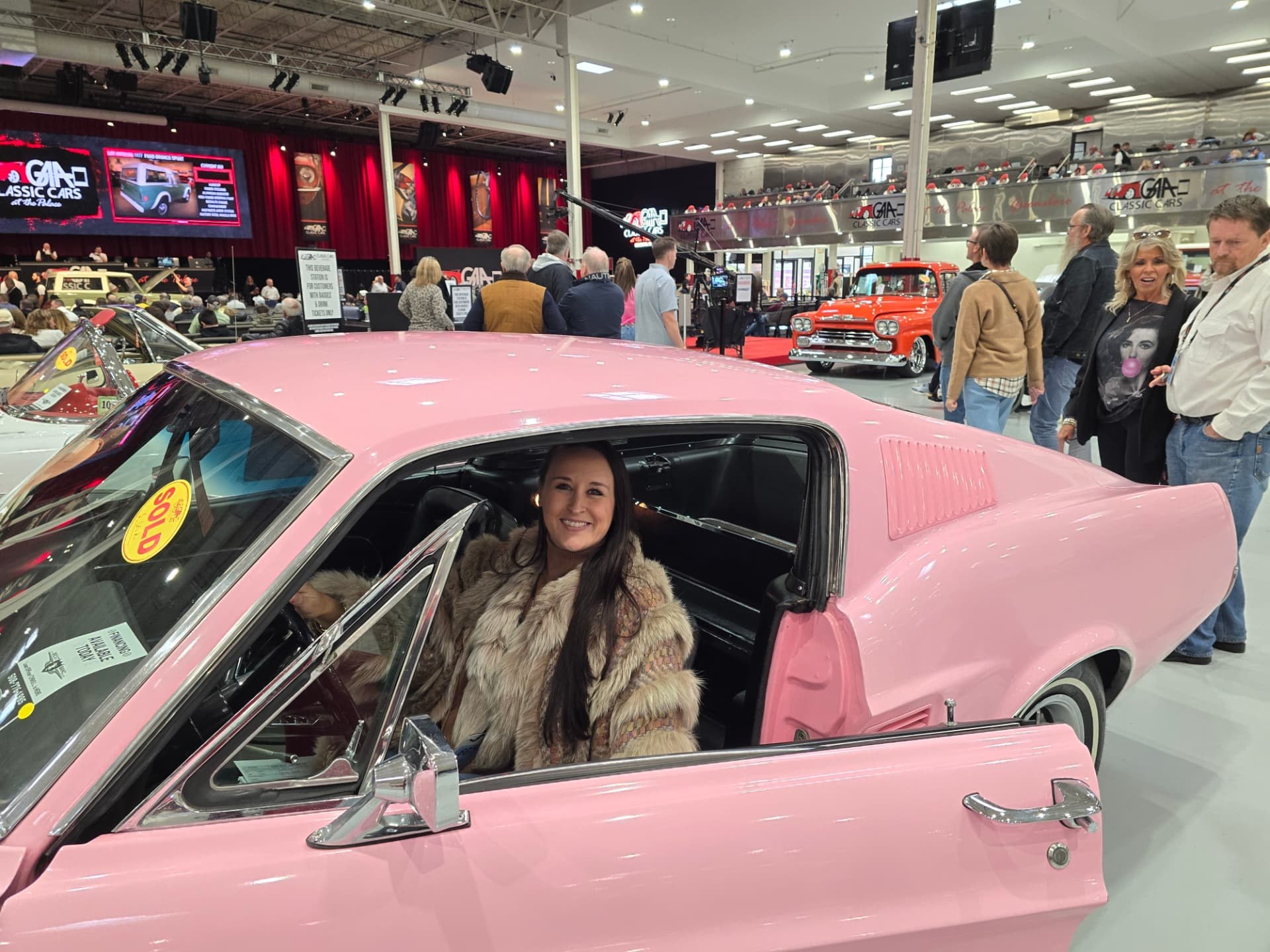
I've had her for a couple of years now, and I don't intend to ever sell her.
I've done quite a bit of research since then, and she appears to be extraordinarily rare. Playmate Pink was offered by Ford in 1967, and very few original cars survive. From what I've been able to determine, Reba Lou may be one of only a handful of surviving Playmate Pink fastbacks, perhaps as few as three, and possibly the only one retaining her original paint and matching numbers.
Someday I'd like to know exactly how rare she is.
But I've realized that the answer doesn't matter very much.
Because rarity and value aren't the same thing.
A collector can tell me what an original Playmate Pink Mustang is worth.
No one can tell me what this one is worth.
This one came from my childhood home twenty years before I existed and somehow found me again near the home I would build as an adult.
This is the car I discovered on the drive home to Grandma Reba.
The last thing I ever got to tell her about our future was that she needed to get better so we could ride in it together.
She never got to.
At least not in the way I meant.
But maybe that's part of why I can't drive Reba Lou without feeling that I'm carrying something forward.
Grandma Reba is there in everything she taught me to nurture, feed, preserve and love.
Granny Louese is there in everything she taught my hands to make.
They are in my kitchen.
They are in things I sew.
They are in habits I don't remember learning.
They are in phrases that sometimes come out of my own mouth and startle me because, for half a second, I can hear one of them again.
Grief has taught me that inheritance isn't only the things people leave behind.
Sometimes it is the things they leave inside you.
The way you stir a pot.
The way you thread a needle.
The way you love somebody else's ridiculous treasures enough to make room for a dead fish in your freezer.
The way you tell someone to say thank you before they know how the story ends.
The certainty that somebody, somewhere, is watching your little airplane move across a map and thinking, That's my girl.
And sometimes, apparently, inheritance is a pink 1967 Mustang.
Her name is Reba Lou.
She may be one of the rarest Mustangs in the world.
But that isn't why I'll never sell her.
Grandma Reba and Granny Louese spent their lives watching me go out into the world.
Now, every time I turn the key, I get to take them with me.