Pretty as a June Bug
Same words. Different bug. Entirely different story.
Wisconsin feels strangely familiar to me.
And completely foreign.
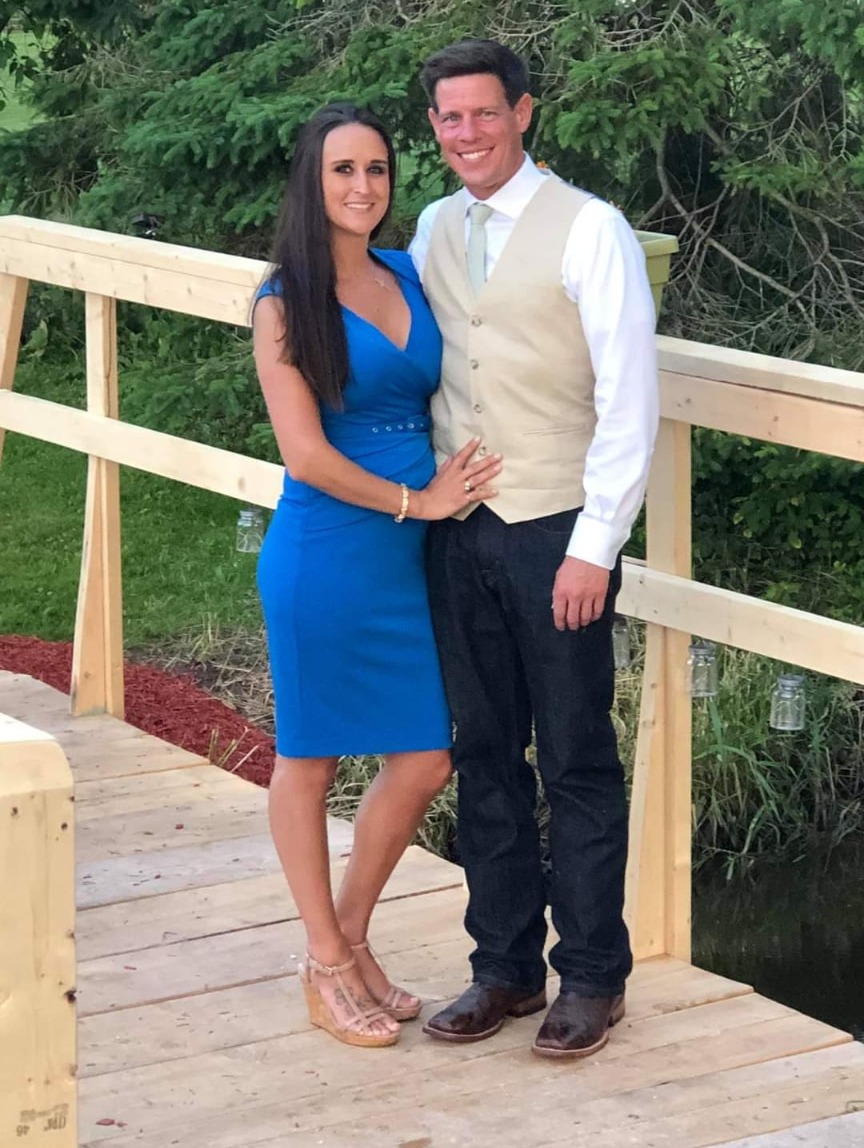
Since Quentin and I started dating, I've spent a lot of time there with his family, getting to know the version of country life that made him.
Quentin grew up on a dairy farm in Wisconsin.
I grew up on a beef and chicken farm in South Carolina.
Different animals. Different landscapes. Very different winters.
But there is something about farm life that translates.
Tractors. Fields. Planting. Harvesting. Animals that need tending whether you feel like tending them or not. Families whose lives move, at least partly, according to weather and seasons and whatever needs doing next.
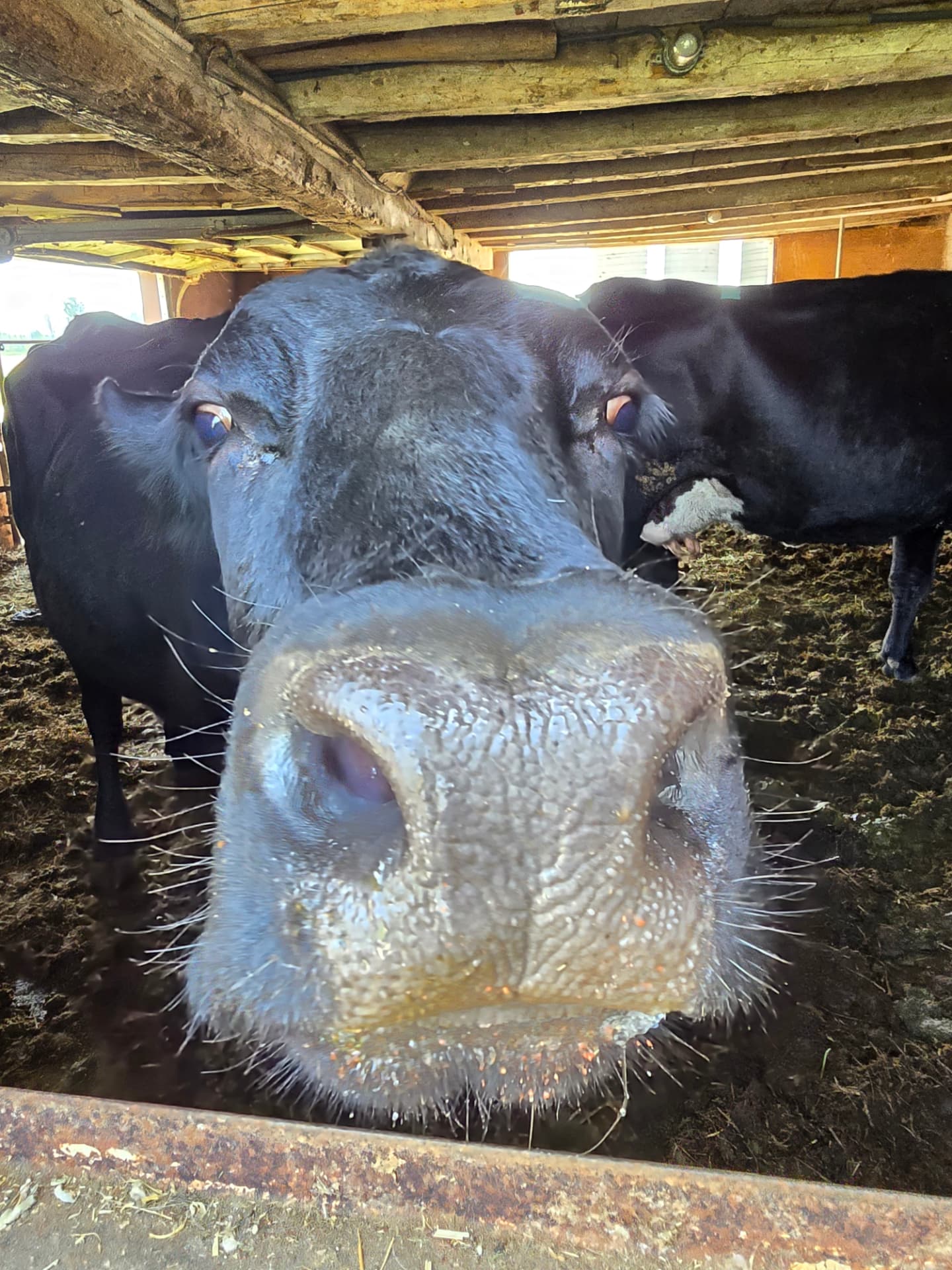
We also both grew up operating things.
Four-wheelers. Side-by-sides. Tractors. Bulldozers. Whatever piece of machinery needed to get from one side of the farm to the other.
Long before either of us sat in a cockpit, we were learning what machines feel like when they're actually working. How they respond. How weight shifts. How power changes with terrain. When something sounds right and when it doesn't.
I've wondered whether that is part of why flying came naturally to both of us.
An airplane is obviously a very different machine, but there is still that relationship between your hands, the machine, and the environment moving beneath and around it.
The terrain just happens to be air.
Even the reasons we first looked toward the sky came from home.
Quentin's father builds model airplanes, and that fascination helped inspire Quentin toward the military and eventually becoming a pilot.
My beginning was quieter.
Granny Louese would point at airplanes passing overhead and say, “Wonder where they're going.”
And we would wonder.
Who was up there?
Where were they headed?
What were they going to do when they arrived?
We made stories out of little airplanes crossing the sky long before I understood that one day I'd be sitting inside one of them.
Maybe that is another thing farms teach you.
To look at something moving in the distance and wonder where it's going.
Wisconsin adds several feet of snow and reminds me that our childhoods were not entirely interchangeable.
We go sledding with family, visit the apple orchard, play board games and cards, laugh around the table, and spend time on the farm.
I love it there.
And somewhere in all that familiarity, I keep finding tiny differences.
As a writer, those are the things I can't resist.
I learned this because of a June bug.
Pretty as a June Bug
Growing up, our family preacher was Preacher John.
He was my grandfather's good friend, deeply woven into our family and community, the kind of person who appears across decades of memories rather than in one particular role. He eventually preached my grandfather's funeral.
And Preacher John used to tell me:
“Nikki, you're as pretty as a June bug.”
I always knew exactly what he meant.
I loved June bugs.
The ones I knew in South Carolina were beautiful, with brilliant blue-green, almost oil-slick shells that flashed in the sunlight.
And, in one of those childhood experiences that probably requires a rural upbringing to explain without sounding slightly unhinged, we used to put them on strings.
Grandma Reba, Granddaddy Fred, or my dad would carefully tie a piece of string to a June bug's leg, hand me the other end, and I would run around letting it fly in circles around me.
Basically a tiny iridescent beetle on a leash.
This seemed perfectly normal.
And to us, it was.
So when Preacher John told me I was pretty as a June bug, I wasn't being compared to some ugly insect.
He was comparing me to something jeweled and shimmering that I already thought was beautiful.
Years later, I told Quentin's mom, Miss Cheri, about the compliment.
She looked at me.
“Well, that's not very nice.”
What?
I told her June bugs were beautiful.
She informed me that they most certainly were not.
Eventually, we realized we weren't talking about the same beetle at all.
The June bugs of my South Carolina childhood were brilliant, metallic things.
The June bugs she knew in Wisconsin were plain brown beetles.
And suddenly we were laughing over the realization that a compliment I'd carried around since childhood could travel a thousand miles north and become an insult.
Same words.
Different bug.
Entirely different story.
The Dogwood Problem
Dogwoods have never been simply flowers to me.
I have two dogwood blossoms tattooed on my foot, one representing my father and one representing me.
Their placement matters.
They're at my feet because they are part of my foundation, tangled up with where I came from and what I believed as a child.
When I was young, I worried deeply about my father's soul. One day he picked a dogwood blossom and showed me the Christian symbolism he saw in it: four petals forming a cross, the markings at their ends recalling nail wounds, the center resembling a crown of thorns, the white associated with purity.
Granny Louese told me another version.
In the story she knew, the dogwood had once grown tall and proud. Its wood was used for the cross at Calvary, and afterward the tree was so ashamed that it became small and humble, never again growing large enough to be used for a cross. Its blossoms carried the story of Christ's suffering.
Then there was Papa James Henry's version.
His wasn't about religion at all.
He told me that if I saw dogwoods growing on a piece of land, I should pay attention.
Good soil. Fertile ground.
To him, the tree told you something about the earth underneath your feet.
So by adulthood, a dogwood carried layers for me.
Faith.
My father.
My grandmother.
My grandfather.
Home.
Fertile ground.
Roots.
No wonder I put them on my feet.
Then I went to Wisconsin and started talking about beautiful dogwoods.
And Quentin's family essentially said:
“Those ugly things?”
Excuse me?
Once again, we eventually realized we weren't picturing the same thing.
I was describing the flowering dogwood of my South Carolina childhood, a small tree covered in those unmistakable white blossoms.
They were picturing the shrubby dogwoods they knew from Wisconsin.
We were using the same word for two very different things.
And once again I was fascinated.
Where You're Standing
Writers spend a lot of time thinking about perspective.
Wisconsin keeps giving me wonderfully mundane demonstrations of why it matters.
A June bug can be beautiful or ugly.
A dogwood can be a flowering tree carrying generations of family symbolism or an unimpressive shrub somebody would rather not have spreading across the property.
Neither person has to be lying.
Neither has to be wrong.
They're simply describing the world they know.
And the more time I spend away from the place where I grew up, the more conscious I become of how much place is hiding inside language.
Plants change.
Animals change.
Food changes.
Sayings change.
What one family considers common knowledge sounds completely bizarre to another.
Stories change, too.
A superstition carried through generations in South Carolina may mean nothing in Wisconsin. A plant that symbolizes home to one character might signal something entirely different to another. Even an innocent compliment can fail spectacularly once it crosses a state line.
Those details matter to me when I write.
Because characters don't come from nowhere.
They come from soil.
From weather.
From grandmothers and preachers.
From what grew beside their childhood homes.
From the stories adults told them about those things.
From words they assume everyone understands because everyone they've ever known did.
Until they meet someone who doesn't.
Another Kind of Home
Maybe that's part of why Wisconsin has become important to me.
It isn't the landscape that made me.
It's the landscape that made Quentin.
And spending time there has allowed me to understand a little more of the world that existed before I knew him.
The farm.
The family.
The fields.
The tractors.
The apple orchard.
The brutal cold.
The snow.
The card games around the table.
The rhythms that feel remarkably similar to the rural South until suddenly they don't.
I recognize the bones of it.
Country is country.
Family is family.
A farm always has something that needs doing.
But the details belong to the place.
And details are where stories live.
Maybe that's what I keep bringing home from Wisconsin.
Not just photographs and memories.
Another vocabulary for the world.
Another set of meanings.
Another reminder that even when two people are looking at something with the exact same name, they may not be seeing the same thing at all.
So if Preacher John ever told you that you were as pretty as a June bug, take the compliment.
He was from South Carolina.