In Good Company
I was on a work trip when I found out the airline was buying me off my next trip for training. Suddenly, the weekend I had expected to spend working was available.
At almost the same time, I received a notification about the Southern Gothic Festival happening in Camden, South Carolina. Southern Gothic, the very genre I was writing in. Authors, folklore, Southern stories, ghost tours, Victorian mourning jewelry, and antique stores to explore. Basically, my dream weekend, arriving just as my schedule rearranged itself.
I had only started sharing my publishing journey publicly that week. After so much time writing and building things privately, I was beginning to let people see what I was working on. Then this appeared: somewhere I could go, listen, learn, and meet other people doing the work I was trying to bring into the world.
I didn’t know any other authors, publishers, or editors, so the chance to meet like-minded people meant a lot. Camden was only about three hours from home and practically on the way to my friend’s wedding in Charleston, which I was already planning to attend.
It felt like kismet.
I decided to go. And suddenly, I had people to prepare to introduce myself to.
Before I left for Camden, I bought ISBNs.
That deserves its own sentence because it was a very big purchase and a very big day. I have been writing for most of my life, but buying identification numbers for books I intend to put into the world made the publishing part feel considerably less theoretical.
Then came the business cards and bookmarks. My name. My author brand. NBodied Writing House. Things I had spent so much time developing on a screen were suddenly objects I could hold and hand to someone.
I packed them for the Southern Gothic Festival, along with an itinerary that required a fairly optimistic understanding of how much one person can do in a weekend.
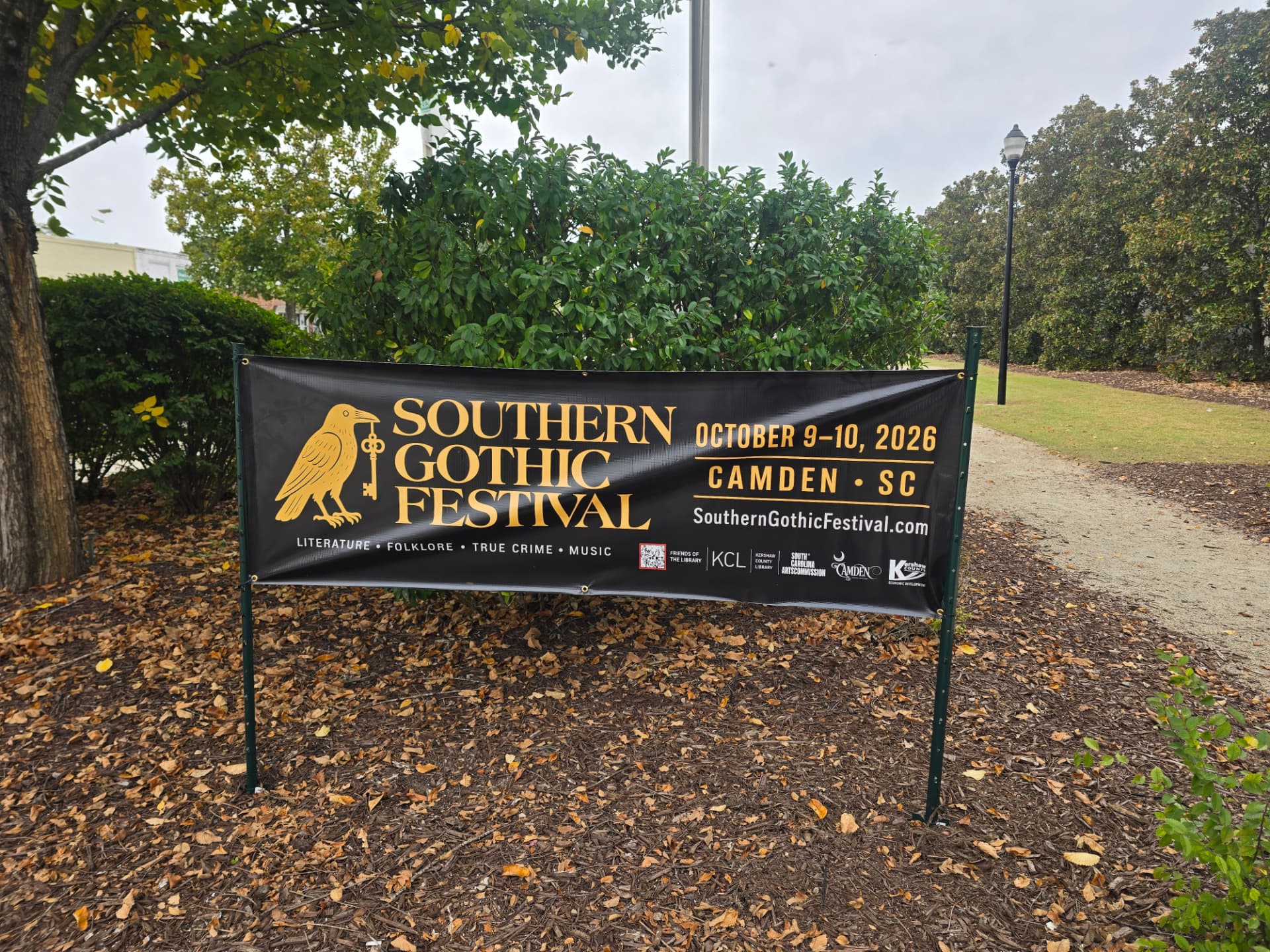
There were author panels to attend, antique stores to explore, Victorian mourning jewelry to examine, and folklore and ghost stories to hear. I was going alone. I wanted to meet people who understood the kinds of stories I was writing, and I was excited to hear how they had brought their own into the world.
I also wanted to look at old things.
Camden was very accommodating.
Between Menagerie, Vintage Collections, Sterling Fox, Rutledge Exchange, and the Artist Attic, I found plenty of reasons to stop walking. Cameos, antique jewelry, little objects with beautiful wear, and the sort of things that make me start asking questions about everyone who owned them before me.
Then I found the photographs.
Daguerreotypes. Tintypes. Ambrotypes.
I was already writing A Shadow Taken, a novel centered on a daguerreotype, when I saw my first one in person at the Poe Museum. After spending so much time researching them, there it was. Behind museum glass, understandably beyond the reach of my very curious hands.
In Camden, I finally got to hold them.
I could turn the cases, examine the surfaces, feel their weight, and study the small details that photographs of photographs don’t quite give you. These were the first I had been able to handle, and I was already thinking about what that experience would bring to the book.
Then I got to buy them.
I came home with an assortment of early photographs: at least two daguerreotypes, three ambrotypes, and a tintype. I’m still sorting out the identifications. Cameo earrings, other jewelry, a little art, and enough material to keep several manuscripts supplied with questions came home with me, too.
I had gone to Camden already writing about a daguerreotype. I left with a collection.
That felt like kismet. It also felt like excellent justification for antique shopping.
Somewhere among the jewelry and photographs, I made friends with Kim Poovey. We talked about Victorian mourning jewelry, cameos, other antique pieces, and daguerreotypes. Her mourning-jewelry presentation was already something I had wanted to attend, but getting to spend time talking with her made it much more personal.
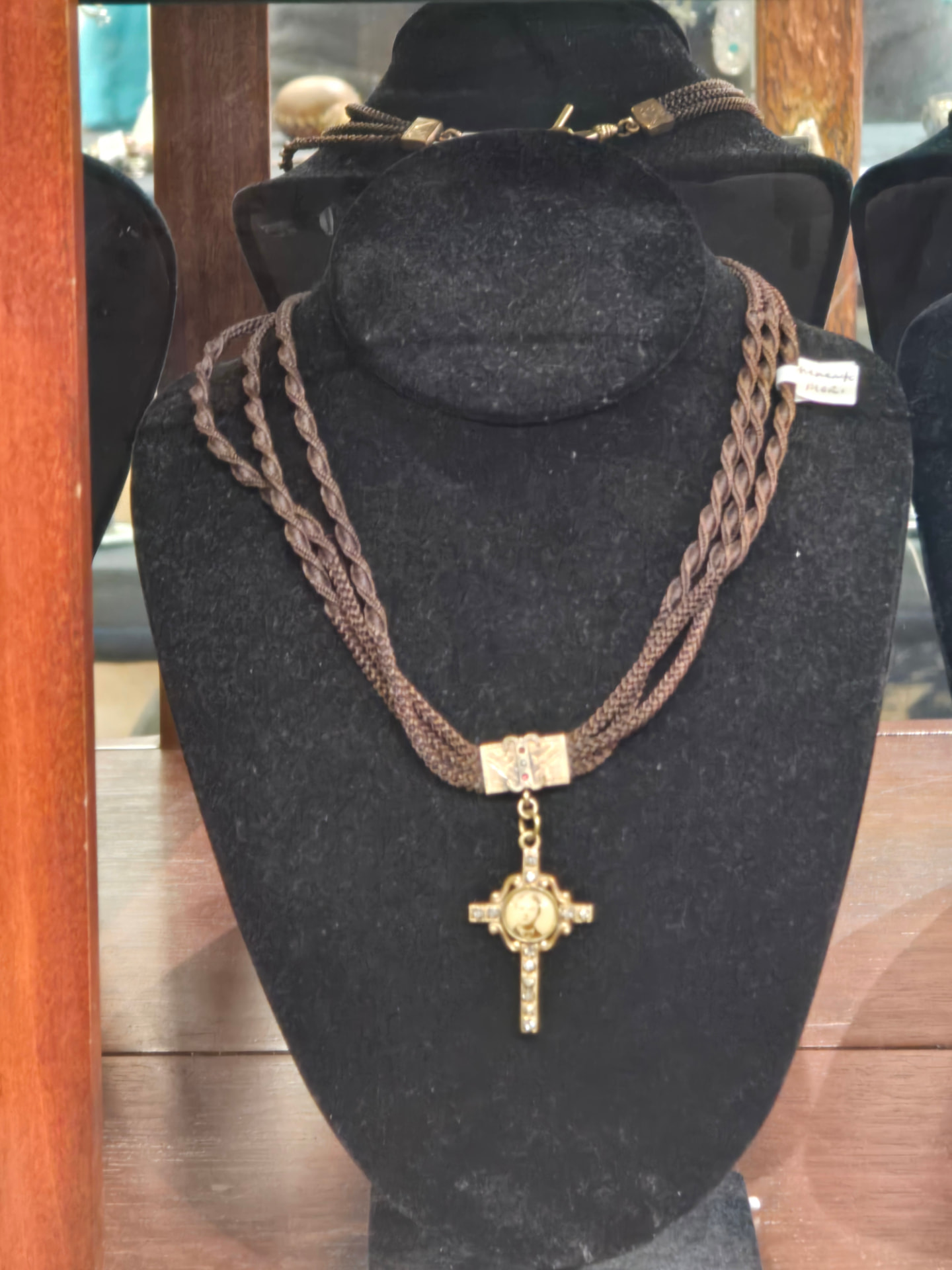
We kept finding each other in the antique stores. At a certain point, it felt as though we were following each other around town.
Kim offered to introduce me to her writing group and to editors she knows. I had arrived hoping to find a community, and here was an author offering to help me make connections within one. That meant a great deal.
There was also Mary, a retired editor and writer I met at the Artist Attic, who offered to read my work. So much of the weekend happened that way: a conversation started over one thing and opened into something I hadn’t known to put on the itinerary.
The author panels gave me plenty to think about. So did the conversations around them.
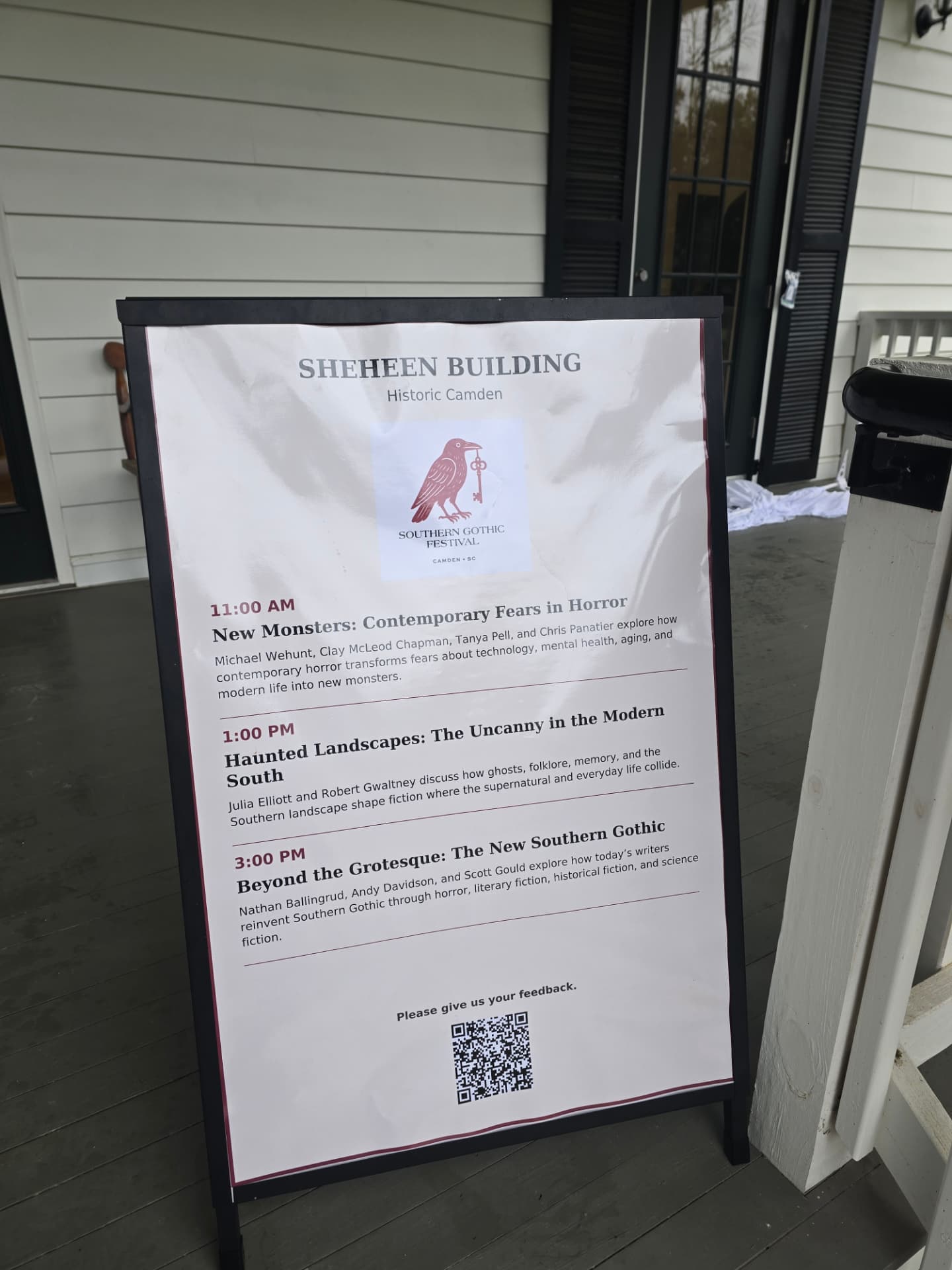
I talked with Chris Panatier about Baby, Shh!, a story I wrote when I was six. There is video evidence of me giving that little book as a gift, complete with my drawing of the creepy Sandman who haunted its pages. It had been sitting in the history of my childhood writing until Chris suggested I resurrect it.
That conversation followed me out of the festival. I began thinking about what the story could become now, with an adult understanding of childhood fear, religious anxiety, and the things a child might believe she has to do to keep someone she loves safe.
A book I made at six suddenly had somewhere else to go. A new life.
With Scott Gould and Nathan Ballingrud, the conversation turned to noodling catfish. With Michael Wehunt, I got to talk about daguerreotypes and old film, which was especially satisfying given what I had just been finding in the antique stores.
With Andy Davidson, I talked about the fear of having family judge your work. That is a conversation I was grateful to have. Writing something privately and knowing that people who know you might eventually read it are very different experiences.
I talked with Julia Elliott about growing up in the woods and with Tanya Pell about publishing. These were the kinds of conversations I had hoped for when I decided to go: specific, generous exchanges about the work itself and what it takes to let other people encounter it.
I came away with signed books, of course. But I also came away with things people had said that I knew I would still be thinking about long after I unpacked.
Outside the panels, Camden supplied its own reading material.
At the Southern Gothic podcast dinner at Broad & Vine, Brandon Schexnayder discussed Agnes of Glasgow, whose grave I later visited. The familiar legend tells of a young Scottish woman who crossed the Atlantic during the American Revolution in search of the British officer she loved, only to die before they could be reunited.
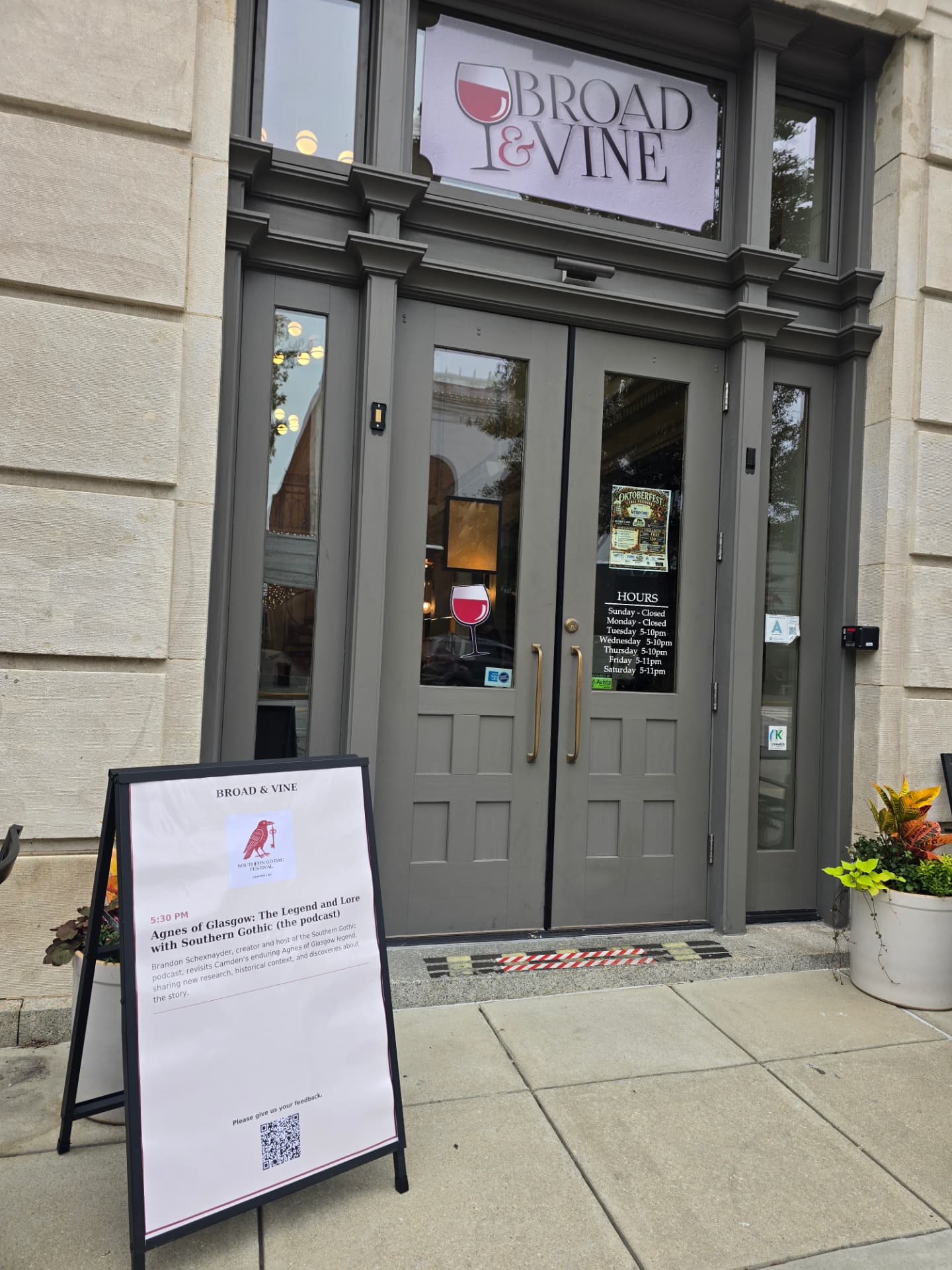
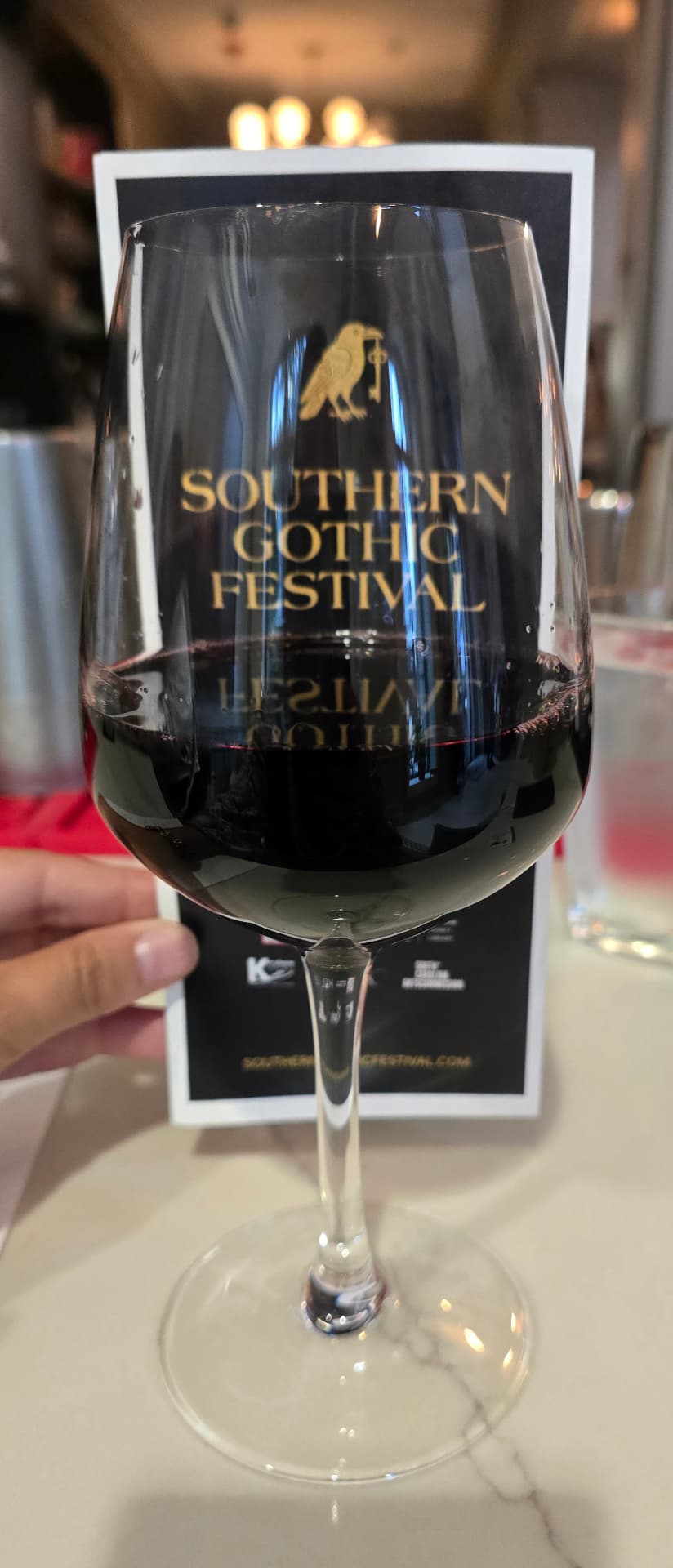
But Agnes has accumulated more than one story. The surviving details and the versions told about her don’t always fit neatly together. History, local memory, and ghost lore have become intertwined around her grave.
That fascinated me. A woman lives and dies, and generations of people keep trying to explain her. They preserve her name while changing the life attached to it. Eventually, the stories become part of what you encounter when you stand at the stone.
I had heard about Agnes over dinner. Then I went to the cemetery and stood where those stories had gathered.
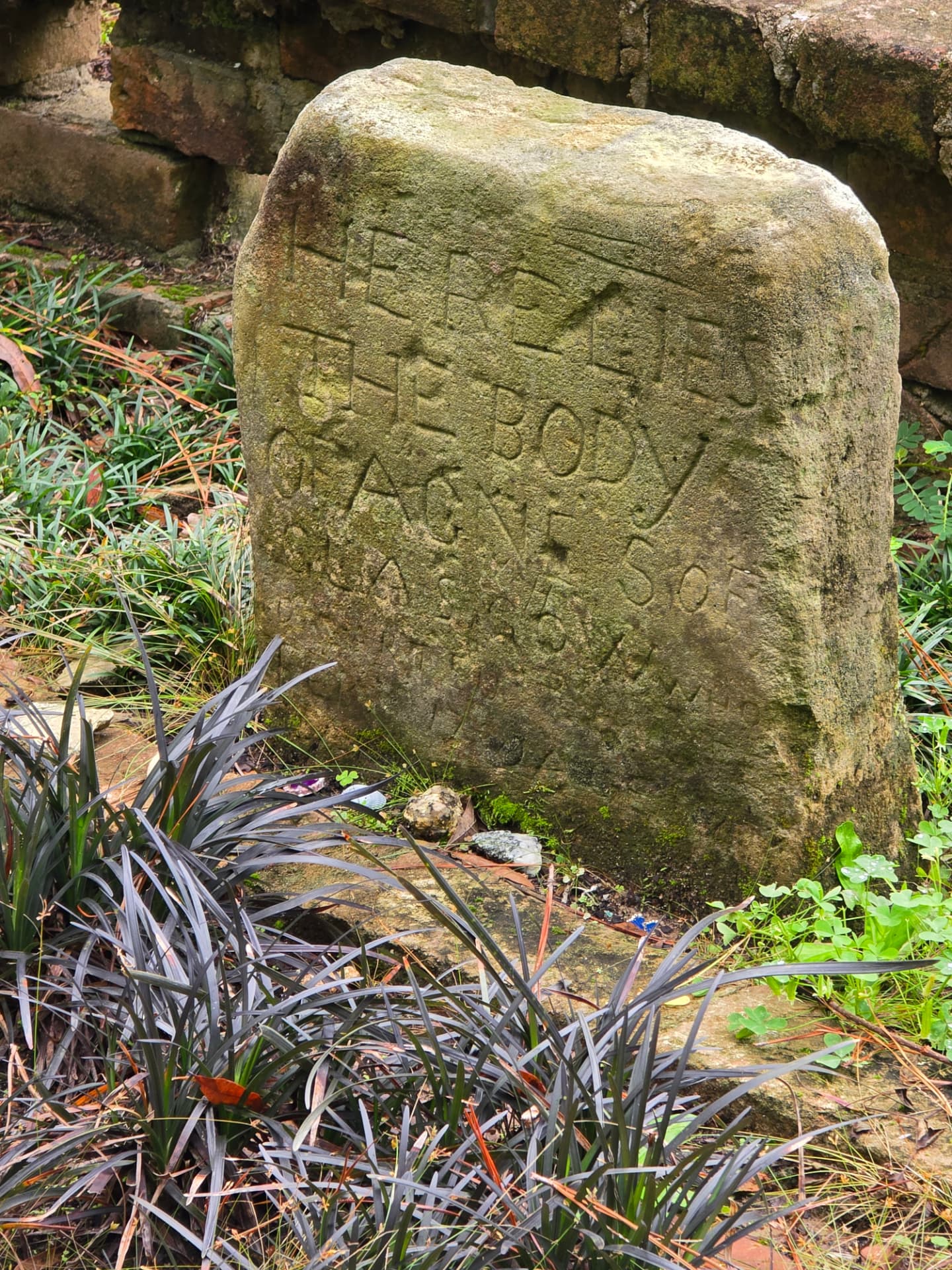
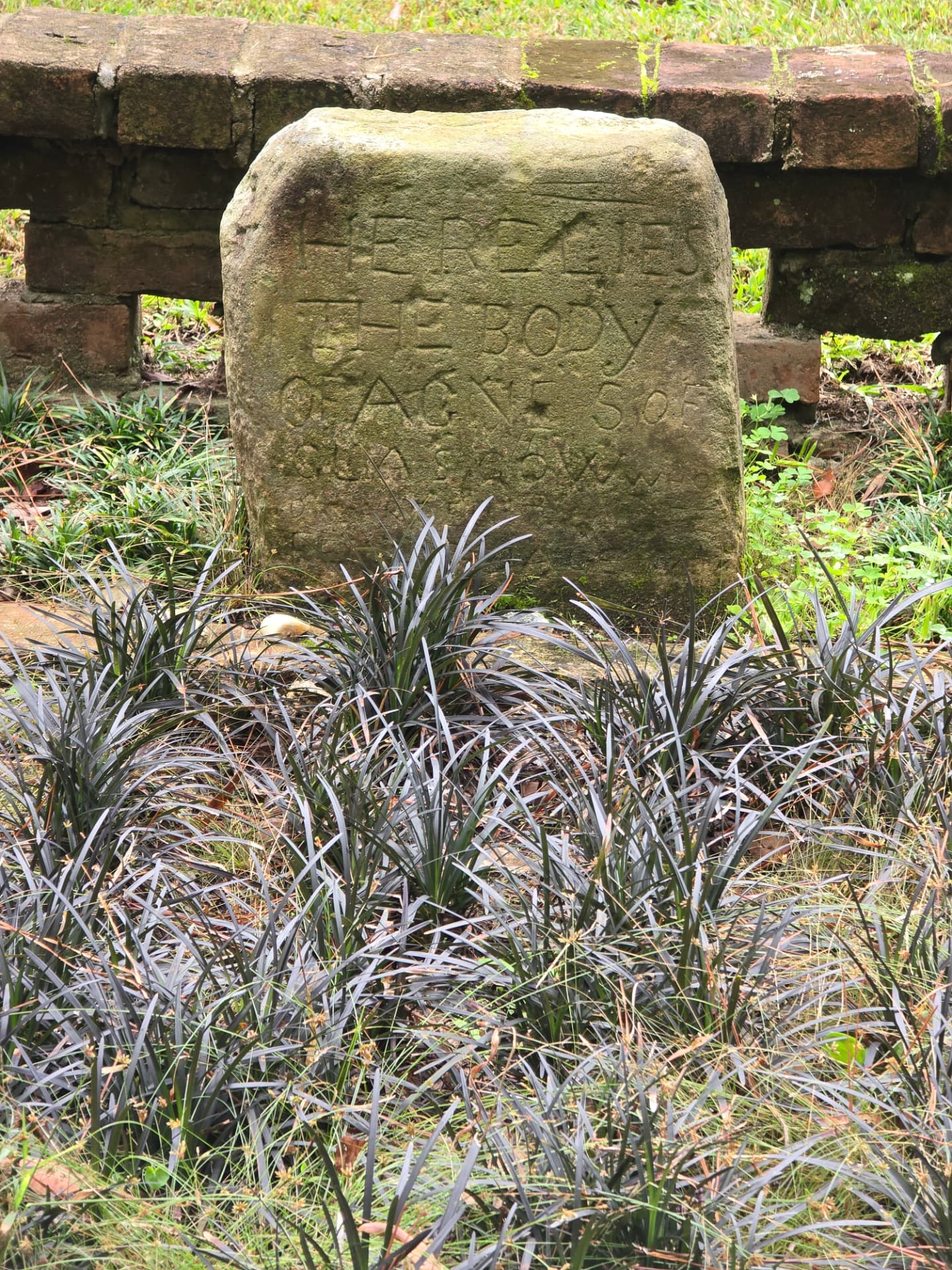
The Quaker Cemetery offered plenty of other reasons to linger. There were famous names, old graves, and accounts of people who had fought duels to the death. William McCreight Shannon’s marker records that he was killed in the last duel in South Carolina.
Then there was Neil Smith’s monument, still bearing bullet scars. According to the cemetery’s history, Henry Nixon used it for target practice while preparing for his duel with Hopkins. Nixon was killed in that duel.
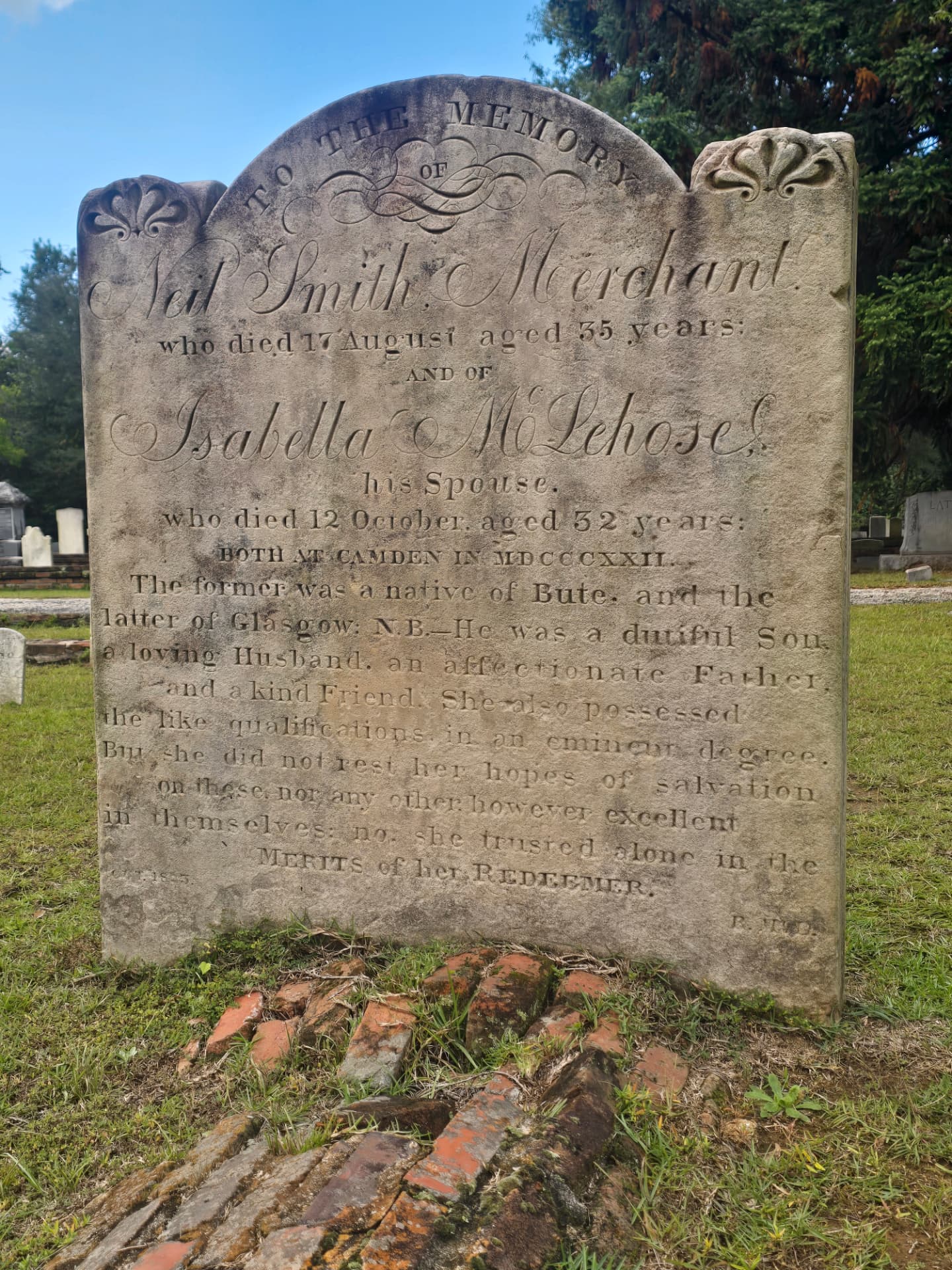
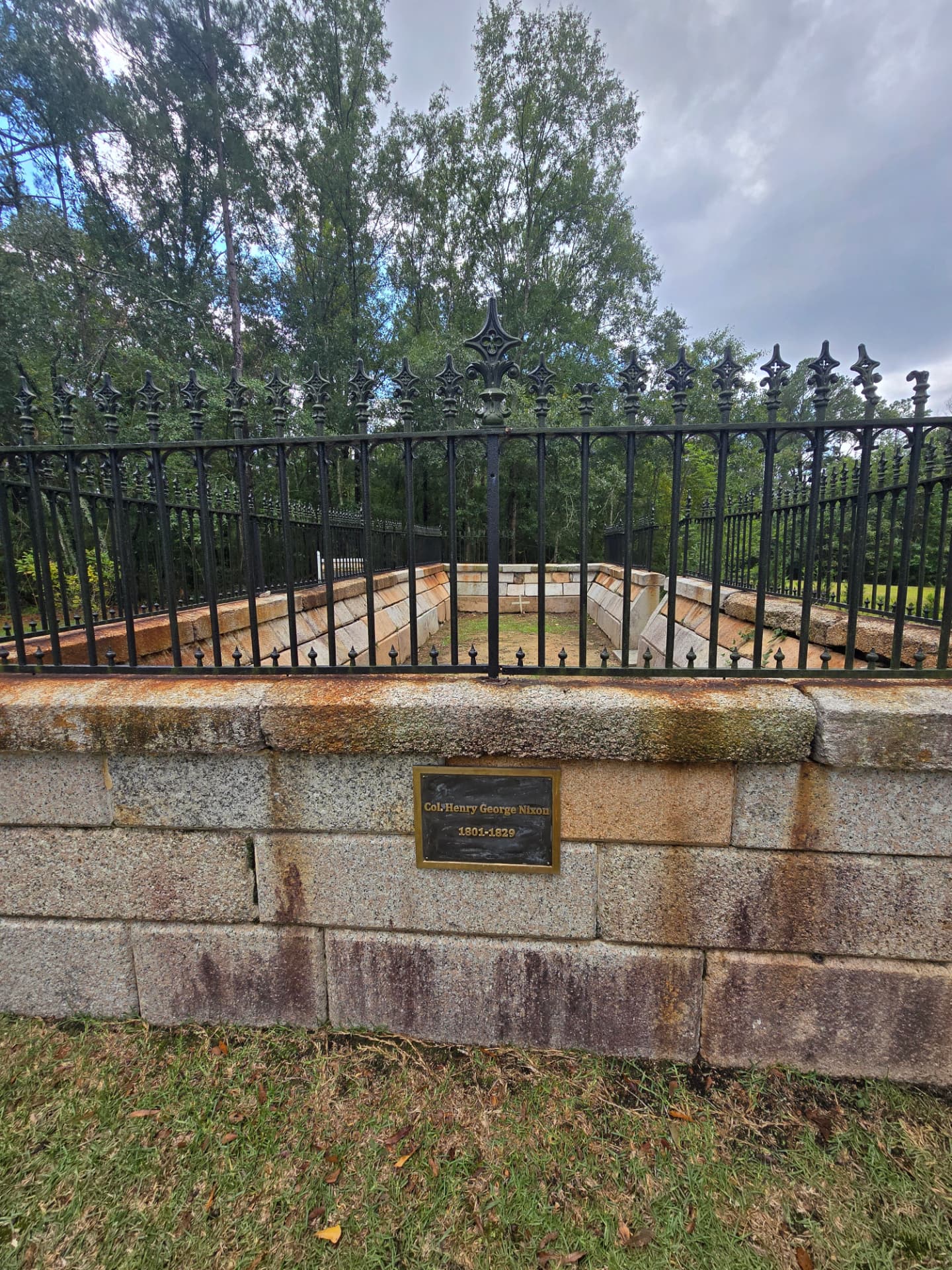
I kept thinking about practicing for a duel by shooting at someone else’s gravestone. All that preparation for a confrontation that would put him in a grave of his own.
Between the cemetery, the ghost tour with Historic Camden, and the festival’s conversations about folklore and fiction, I spent much of the weekend moving between stories and the places attached to them. An old building. A piece of jewelry. A photograph. A grave. Each encounter gave me something different to bring back to the writing.
I made friends. I bought art. I learned things. I had a very good time.
And I got to spend a weekend talking openly about the work I am building, with business cards and bookmarks in my bag and people interested in hearing what was on them. That was a bigger experience than I had quite known to expect.
After Camden, I headed down to Charleston for a friend’s wedding and time with old college friends and my parents. There was catching up, celebrating, a little shopping, and a little exploring. I also managed some research for the books, because apparently that is part of how I travel now.
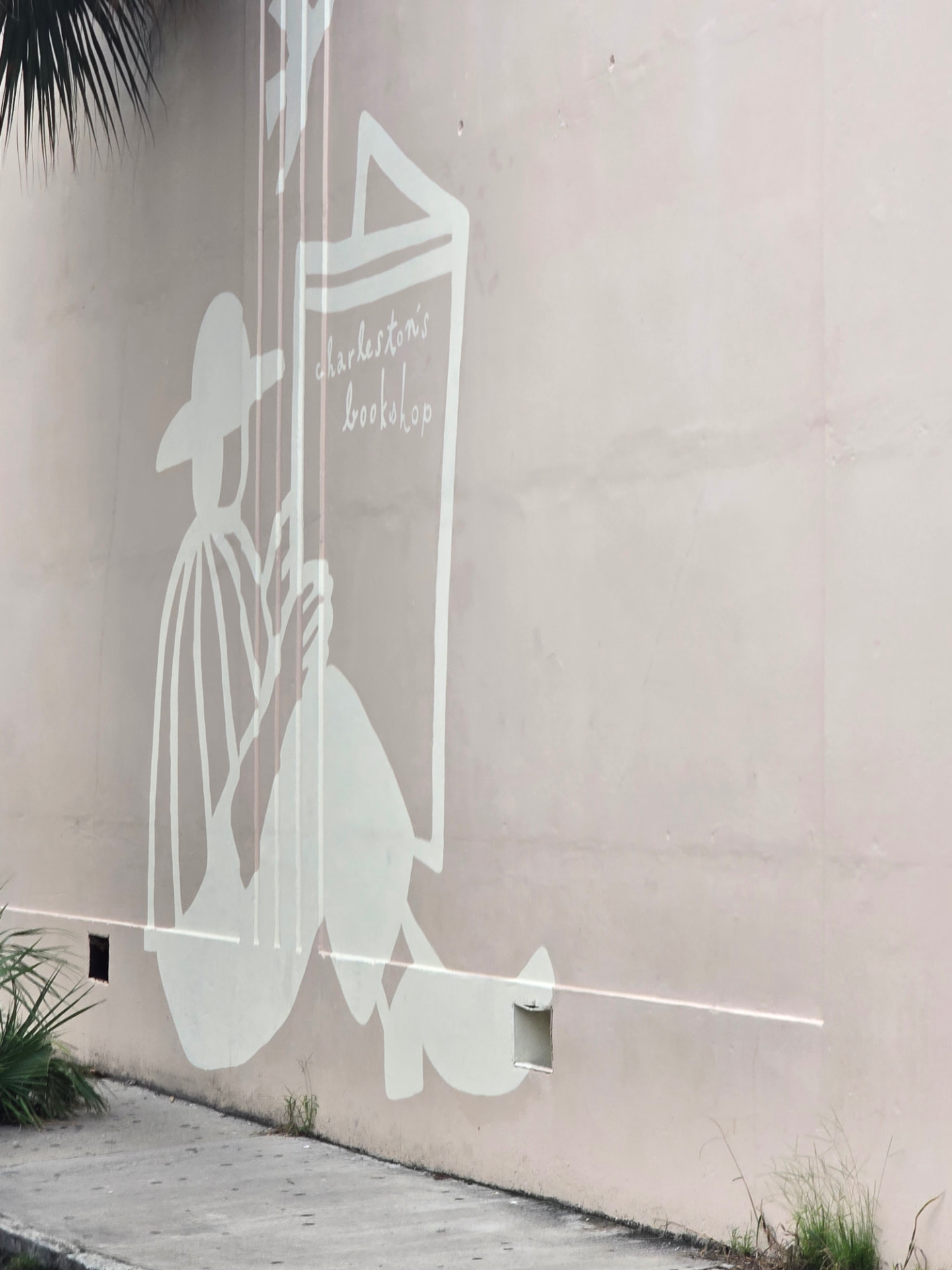
Charleston gave me a chance to spend time with people who knew me long before this particular chapter. Camden had introduced me to people I was meeting through it.
By the time I came home, I had new contacts, new books, old photographs, jewelry, art, and more notes than I had left with.
The business cards had been handed out. The ISBNs were waiting for their books.
And I have new people to tell when those books are finished!